Baltics Tour
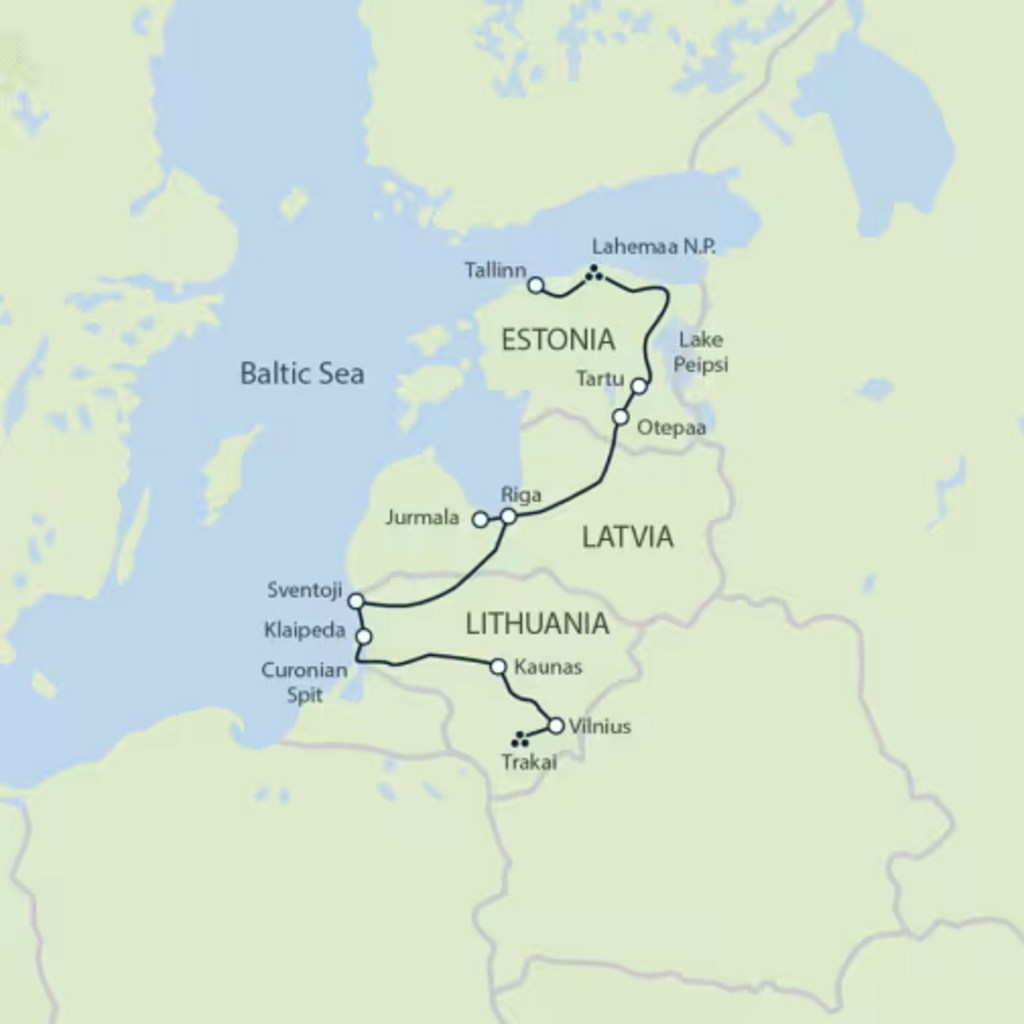
 June 2025 Rosana in the Baltics and Helsinki What | Route  


Day -2: 2025-06-07 1697


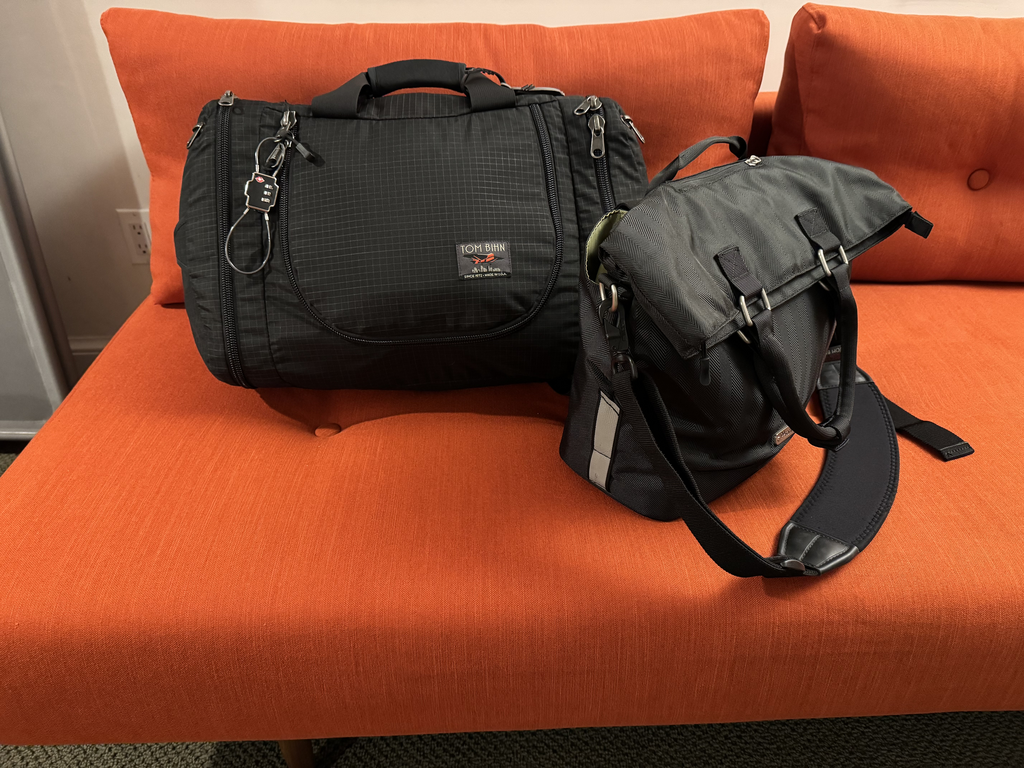
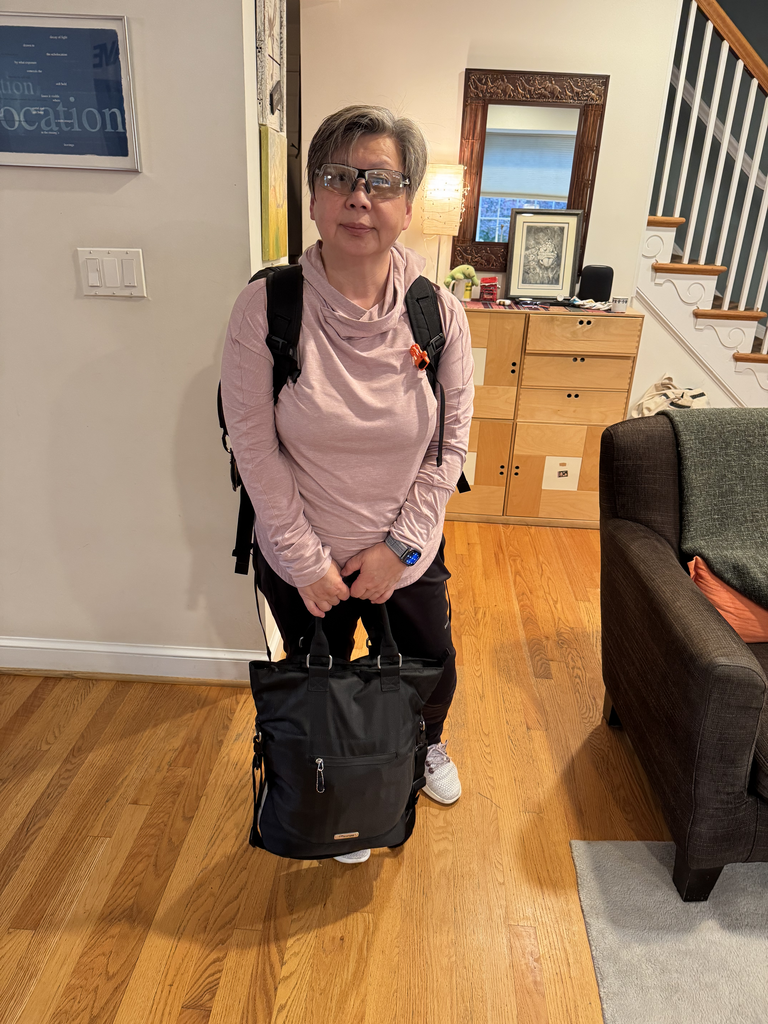
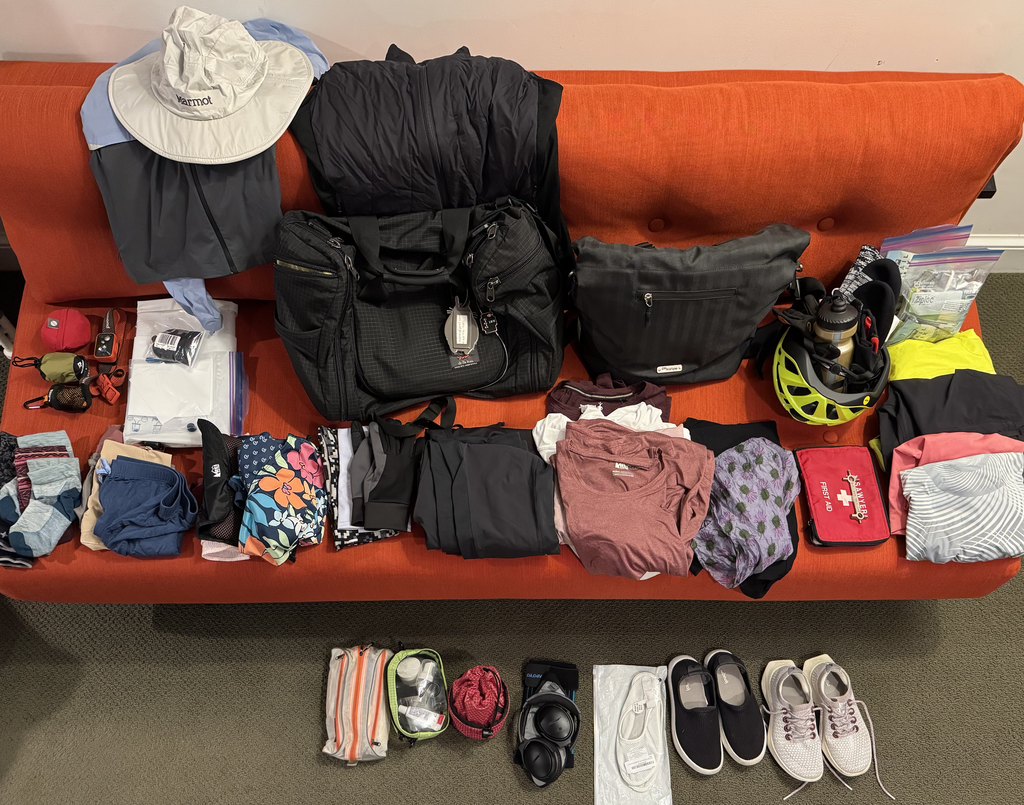
For this trip, I have managed to pack for 11 days of biking plus 3 days of sightseeing including sauna trips. My bike helmet and water bottle are in the 30L Aeronaut bag, and my traveling essentials (kindle, Bose headphones, snacks, glasses, charging equipment and extra water bottle) are in the small bike pannier that doubles as the personal item. I did pull out a pair of shorts and a hat from the final pack. The pictures are of all the items I am taking (more than I usually take), and then all items packed away (minus what I am wearing day of travel).


Day -1: 2025-06-08 1702


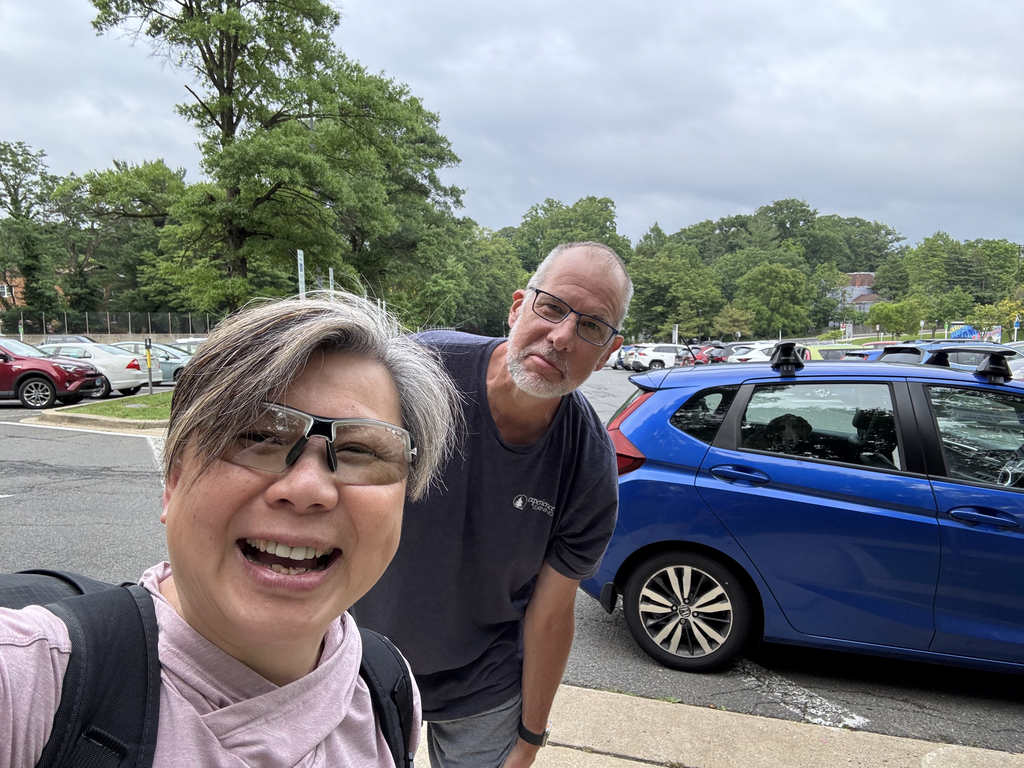
I am always anxious before the flight. It doesn't matter how early I get to the airport, or how prepared I am, there is always a chance that a later-in-the day flight will be delayed. It has been cloudy all day, but the deluge does not come until I step off the Silver line at the airport stop. For $2.90 and a 75-min ride, I am deposited at the metro station just across the parking lot from the terminal. Uber would have been at least 45-minutes and way pricier. SAS has an 8-Kg limit for each bag. The bags come in at 7.7 Kg and 3.8 Kg (darn that last 1%! Nuts are heavy) My friend Amy Pullen had invited me to join her on this trip last year. We had biked through Vietnam in Jan24 with this same company, Exodus, based in Britain. Her husband Than is doing a 2.5-month transam ride, and this trip comes just past his halfway point, and would provide a break from being the stay-at-home partner (which I have been many times.) I invited two others to join us, Mary Andrews and Lisa Orange. The four of us were the first ones to sign up and we waited to see if the trip would be a go. Enough folks joined to make this trip real. Then Amy asked if I wanted to get there early and visit Helsinki. Of course, how could I pass up seeing Aalto's work in person. So now I wait for my flight to Copenhagen with a connecting flight to Helsinki. Amy arrives from Boston five hours before me. The flight is on time, boarding in 15 minutes, and supposed to take off at 10:20 PM; but the airport area is under a tornado watch, and flight delays are stretching from minutes to hours. Fingers crossed!


Helsinki

Day 1: 2025-06-09 1709


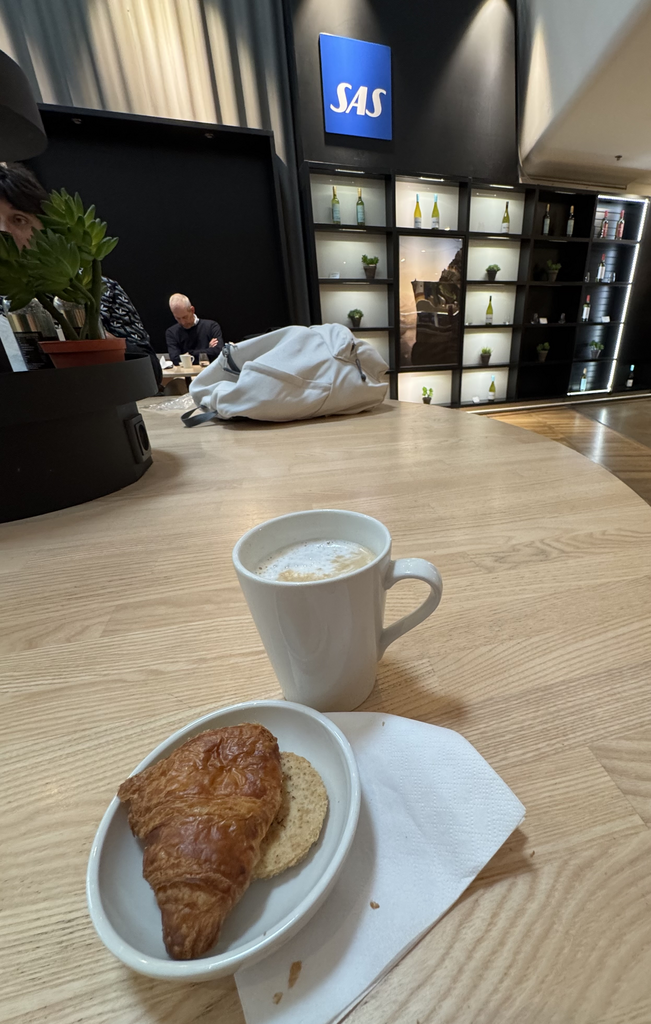
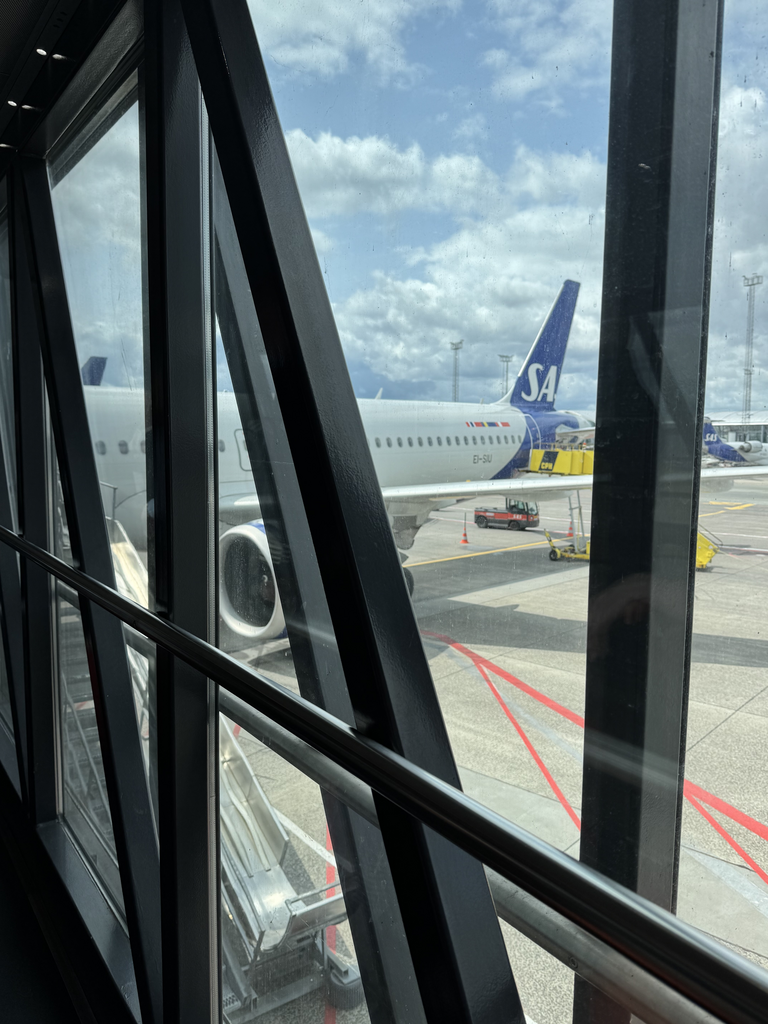
Flight SK1712 shows "closing" on all the monitors. Folks are rushing to the gate only to be confronted with a wall of waiting people. It is now 12:40. Boarding was to start at 12:20. The crew just showed up. I had a 50-min window to connect to my flight to Helsinki. All travelers have to go through passport control (yeah! Another stamp!). I had read the wait time was 3 to 30 minutes. Happy to report it only took 3. Even had time to stop by the SAS Lounge for a latte and croissant. The walk from Terminal E to Terminal B took all the 11 minutes the board said it would take. The travel motto for the day has got to be: Hurry up and Wait.


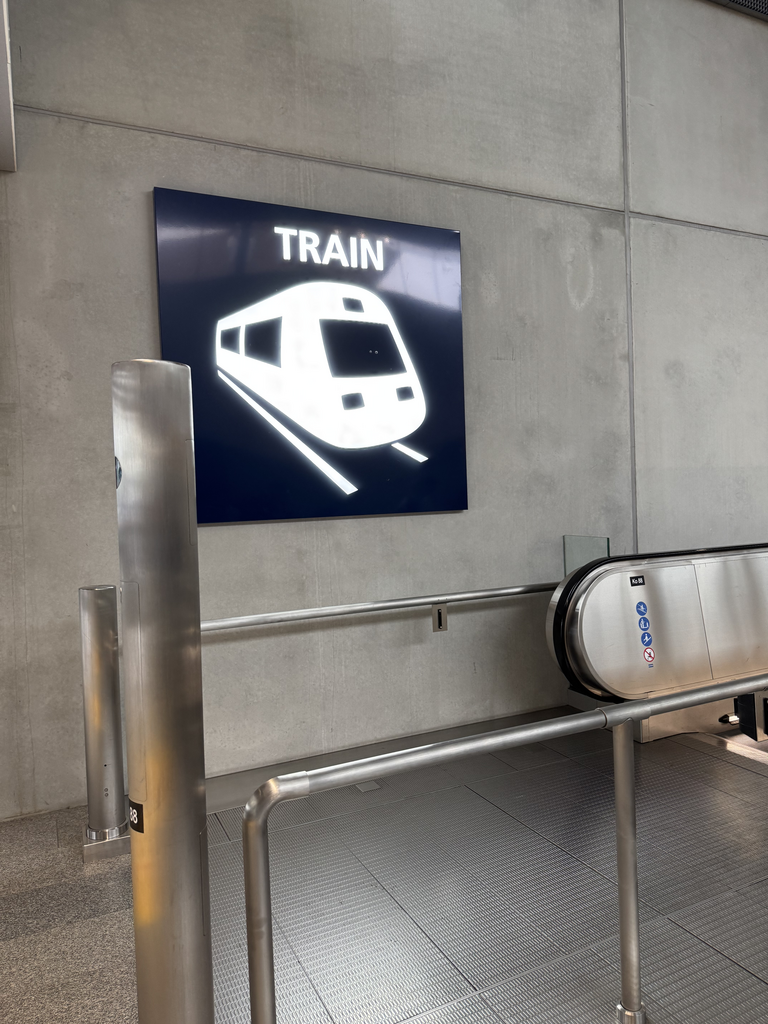
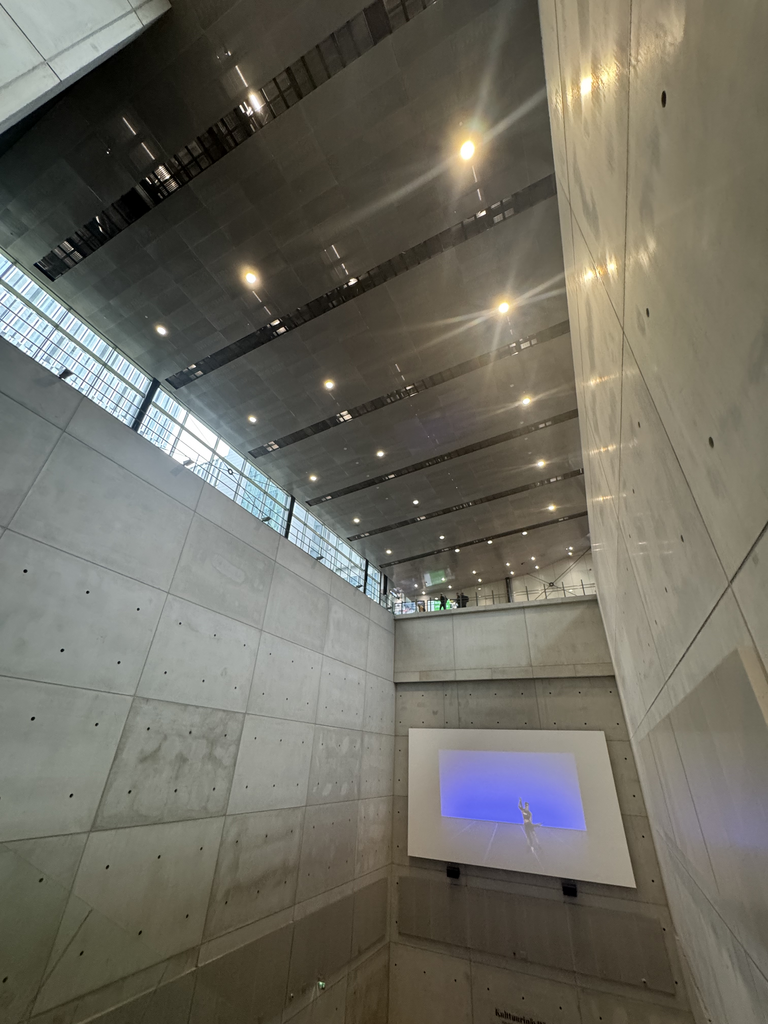
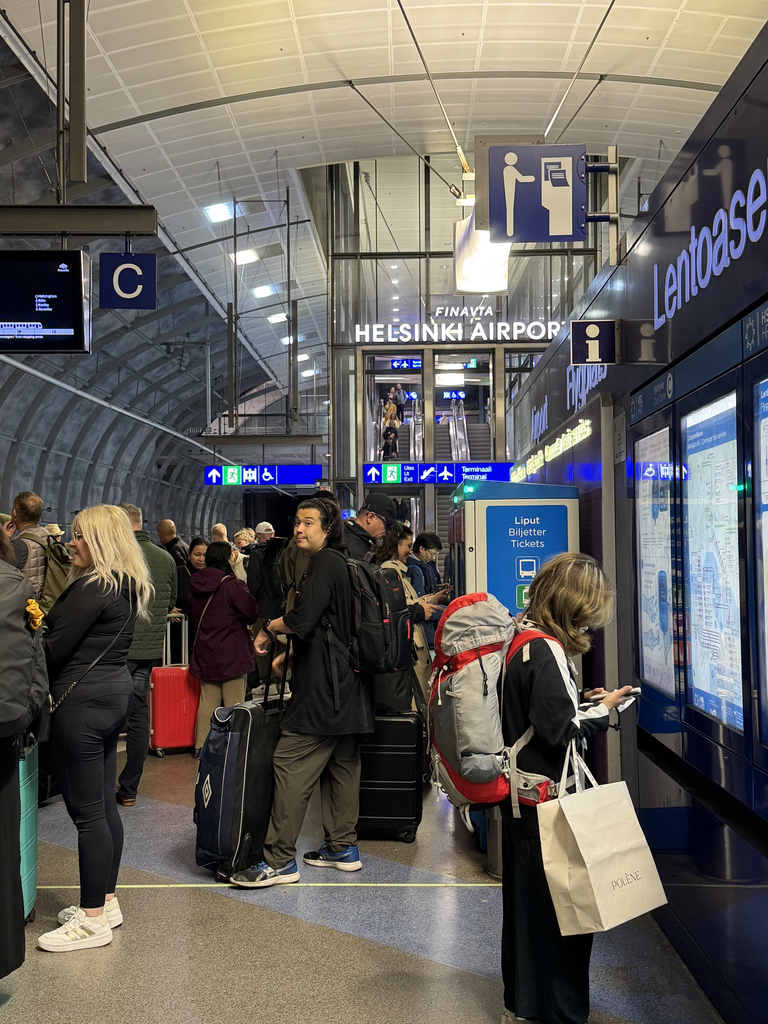
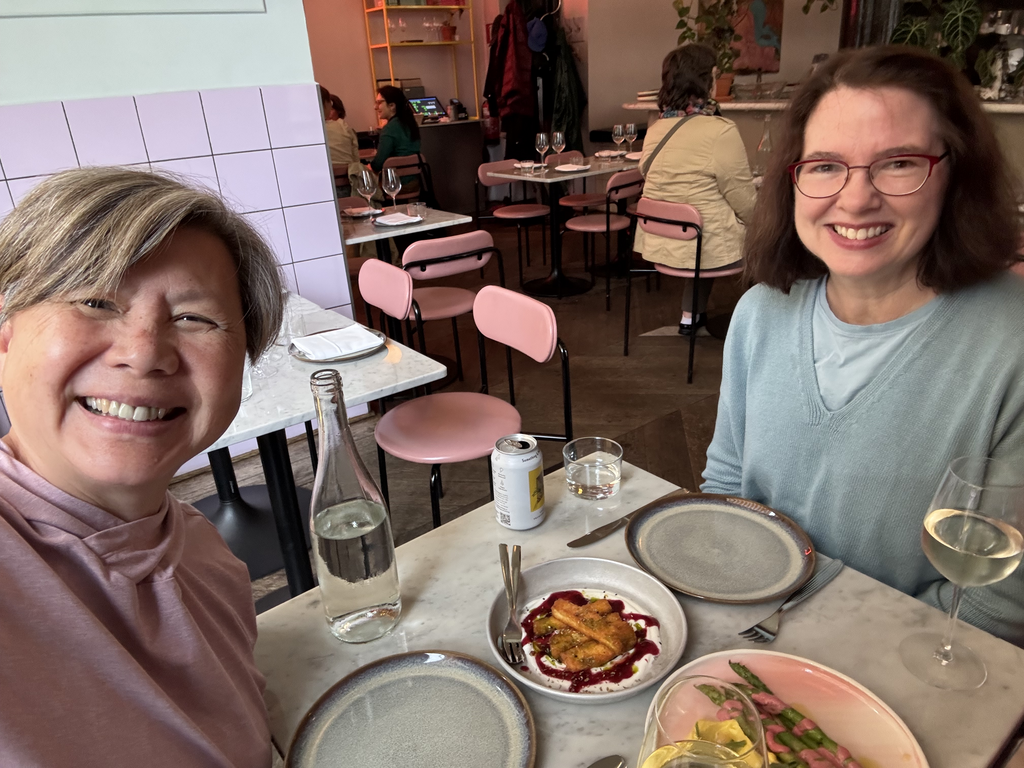
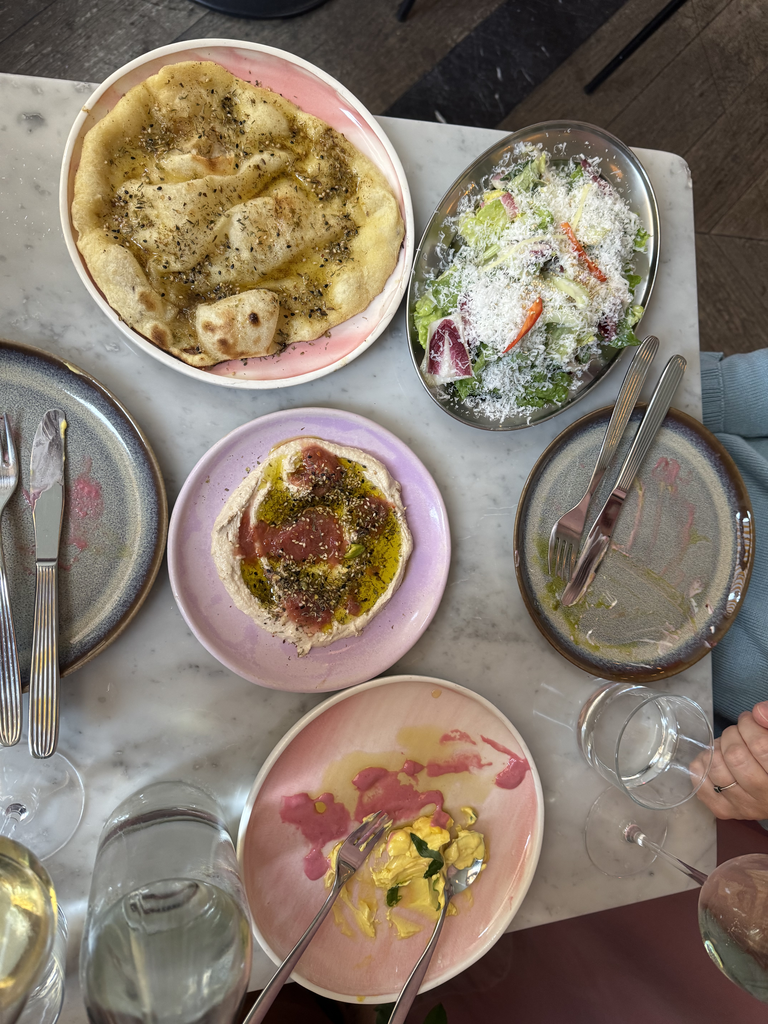
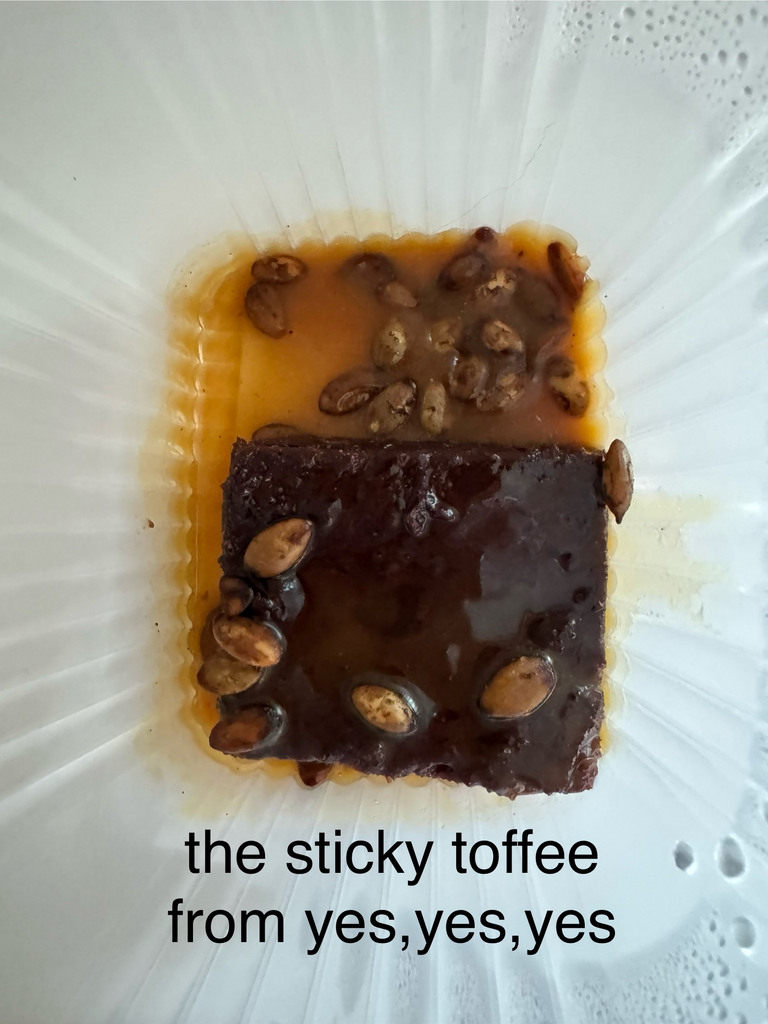
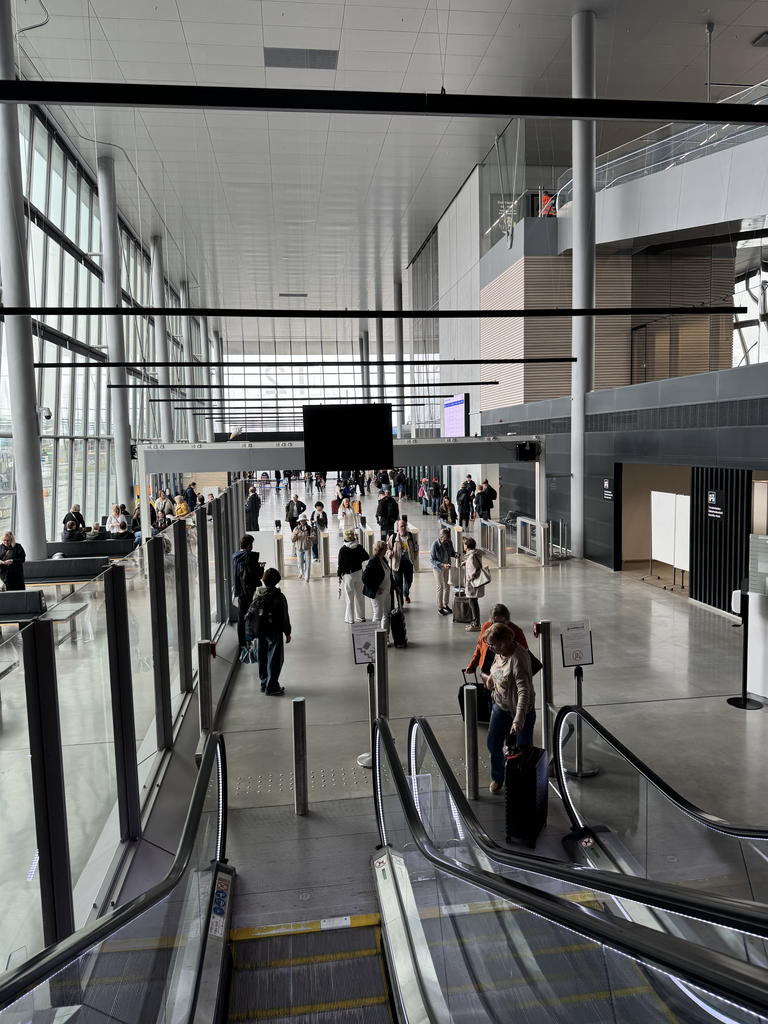
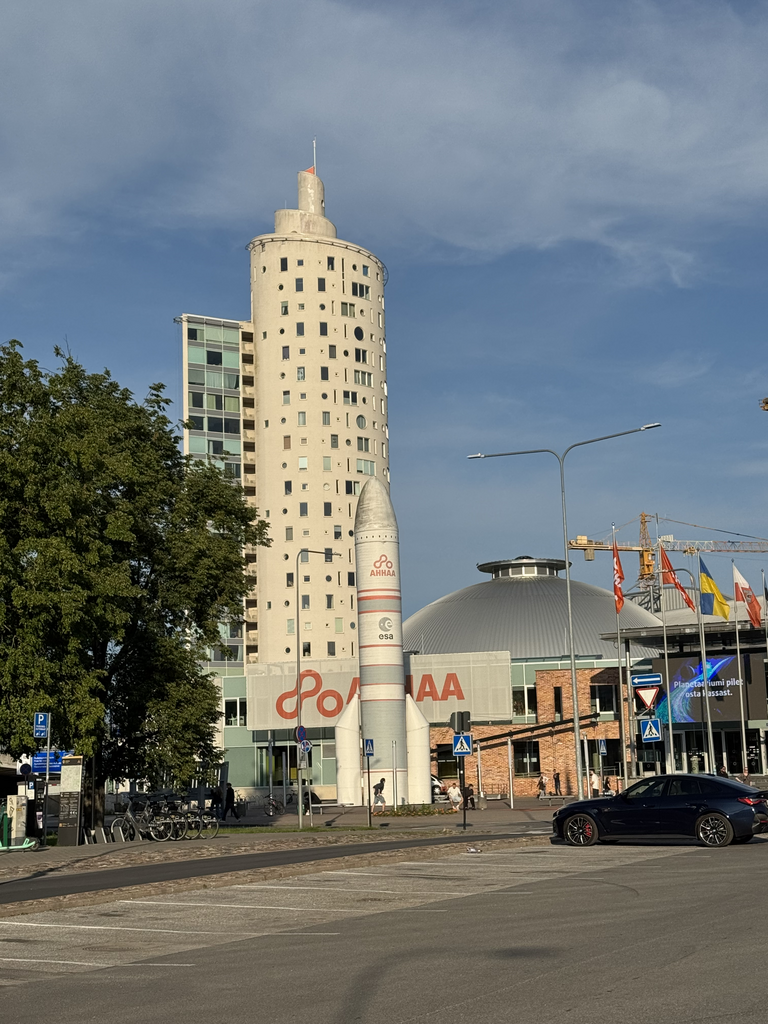
Flight to Helsinki took off late, but without incident. The delay was due to a malfunctioning door/hatch, and the replacement of a very wet seat (I didn't want to know the specifics). We arrived to clouds and rain. Amy and I had been What'sApping, so I knew to buy a train ticket for zones ABC, that it would take roughly 24 minutes to get to Helsinki Central Rail and that it was going to be a 20 minutes walk to the hotel. Have I mentioned that I love my friends, especially those with great information. For me, good wayfinding signage and interesting visuals separate a decent airport from the ho-hum. Copenhagen had both, and so did Helsinki. CPH had terminals shooting off of shopping centers. Besides the bright LEGO store, it had a prominent Resale shop for luxury goods. Speaks to a Scandinavian predilection for thrift and directness. Helsinki is another, not as flashy as CPH, HEL nevertheless shined with a three-story display of a ballet performance projected on the wall. Contactless payment is alive and well in Helsinki. Not having to dig into a wallet, or even display a wallet is a great thing when traveling. The Hotel Indigo is located in proximity to a pedestrian shopping area near the station. Amy and I ended up going to Yes, Yes, Yes, a vegetarian restaurant with a tasting menu. Delicious, but we had to ask for the main course (a risotto) and the dessert to take home. The nude (non-alcoholic) wines were surprisingly good. I only tried one, a dry white from Germany. I have some food pictures, but the proof is in the empty dishes we sent back to the kitchen (not photogenic). No Sauna tonight, but we will definitely avail ourselves tomorrow after a day to sightseeing and more walking.


Helsinki: Language+People+Architecture+Food

Day 2: 2025-06-10 1712


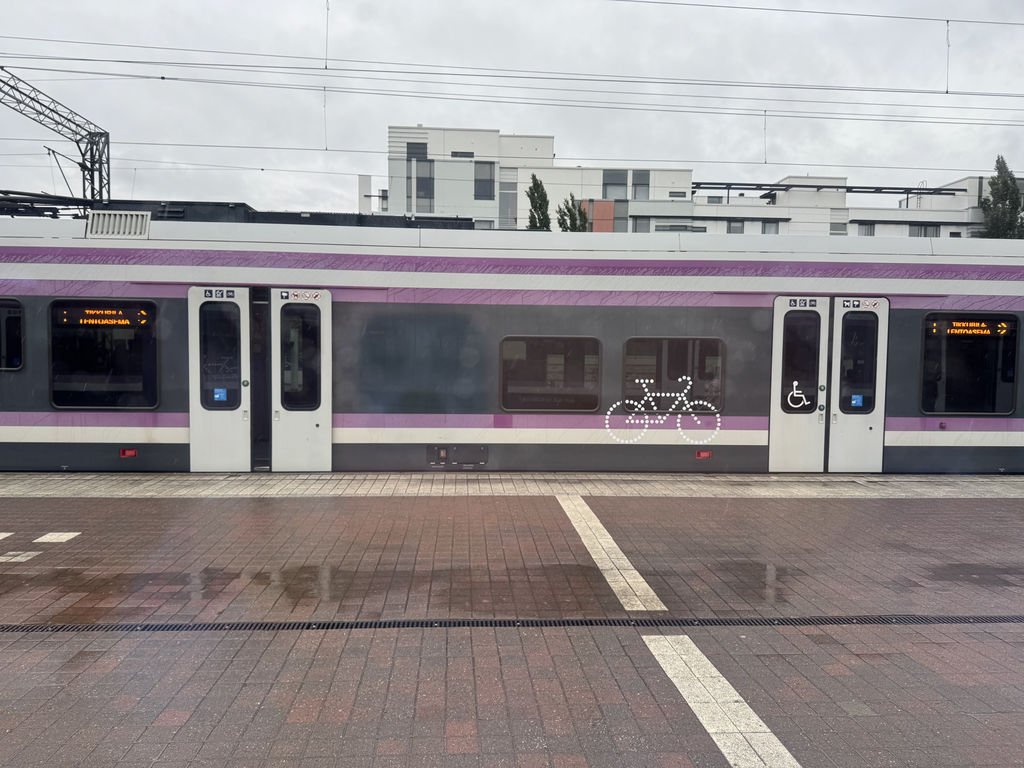
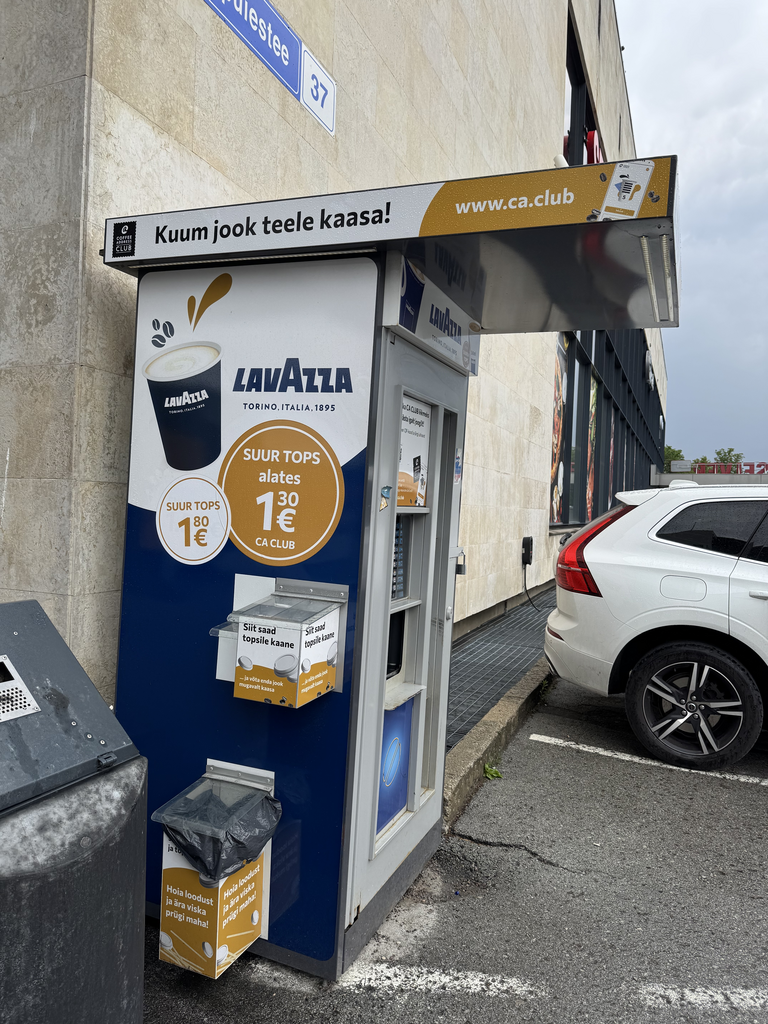
If you know me, you know I get off on details, and if you don't know me, you should not be reading this blog. Pete, though, wasn't sure I was enjoying myself based on my earlier posts. I most certainly am having a great time. Wasn't Bilbo who said that it was a dangerous world out there when you step out your door? But so is the excitement in the face of the unknown. I have been studying Finnish on Duolingo since the end of March. I just wanted to get a feel for the cadence of the language, and a good idea on how to pronounce the double a, the y, the j, especially in a word where they appear in succession. I learned a lot and too little. Finland has two official languages and a third unofficial language. The official ones are Finnish and Swedish. If at home your family speaks one, then you learn the other starting around 12 or 13. All official signage has both Finnish on top, and Swedish on the bottom. The two are linguistically very different. Finnish shares more with Estonian than with its neighbor to the West. I met a woman on the train from the airport to Helsinki who explained the signage. Reetta is from the northeast of the country and spoke Finnish at home and learned Swedish at school. I found out later that children began studying English starting in the 3rd grade, hence the unofficial third language. I wish we could have conversed in something other than English. If we had though, we would have never gotten to discuss how the rain bodes well for midsummer bonfires this year. When it is too dry, the government forbids bonfires near the forest and beaches. One year, an enterprising neighbor launched a boat with logs into the lake, and then lit it on fire. People have been very friendly and very helpful. Always folks are direct, with a no-nonsense, this is the way things are attitude. I do appreciate the directness. We did meet a surly uber driver who moved here from Kyrgygstan. He has been in Finland for 14 years and can't wait to move elsewhere. He likes the Finnish people, but when I asked what he thought of Finland being one of the happiest places on earth he wanted me to show him a happy person. I looked out the window at the blue sky, the warm sun and all the people out biking, running, and enjoying the weather. There was no convincing him. He advised us to go to Tallinn, "there," he says pointing south, "there is where the ship goes to Tallinn, where the coffee is one, instead of three euros." It is 10:32 and still very bright out. Sun sets in 45 minutes, and rises at 4 AM. Will write more about the architecture and food tomorrow on the ferry to Tallinn for the less expensive espresso and the starting city for the bike ride.


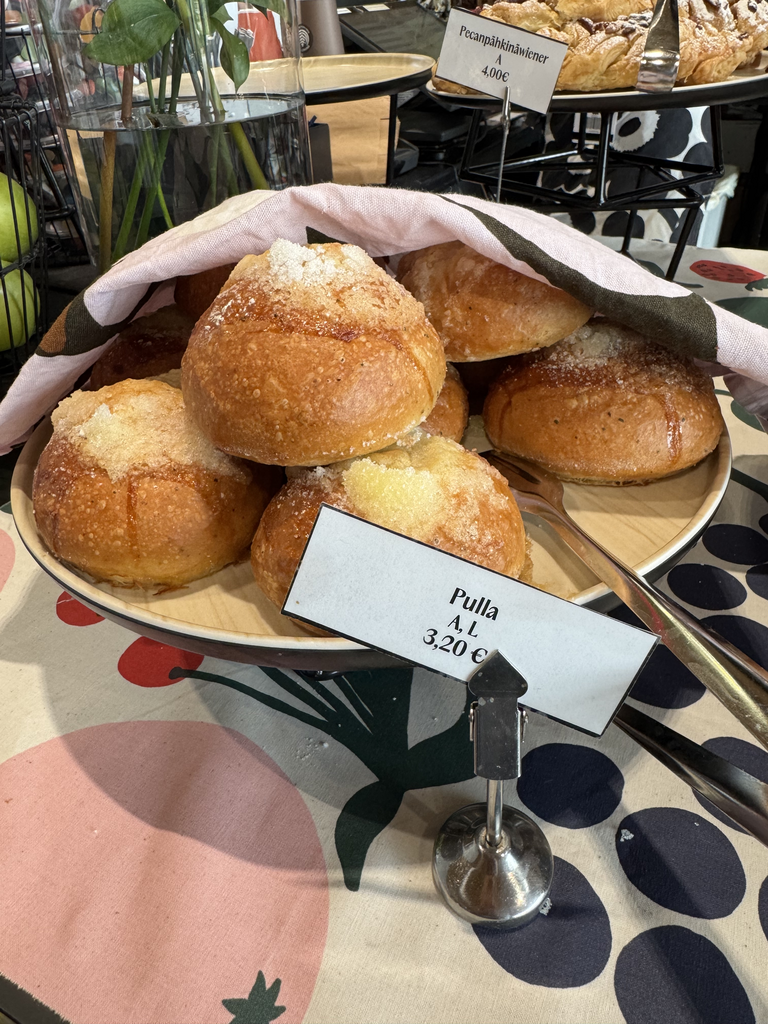
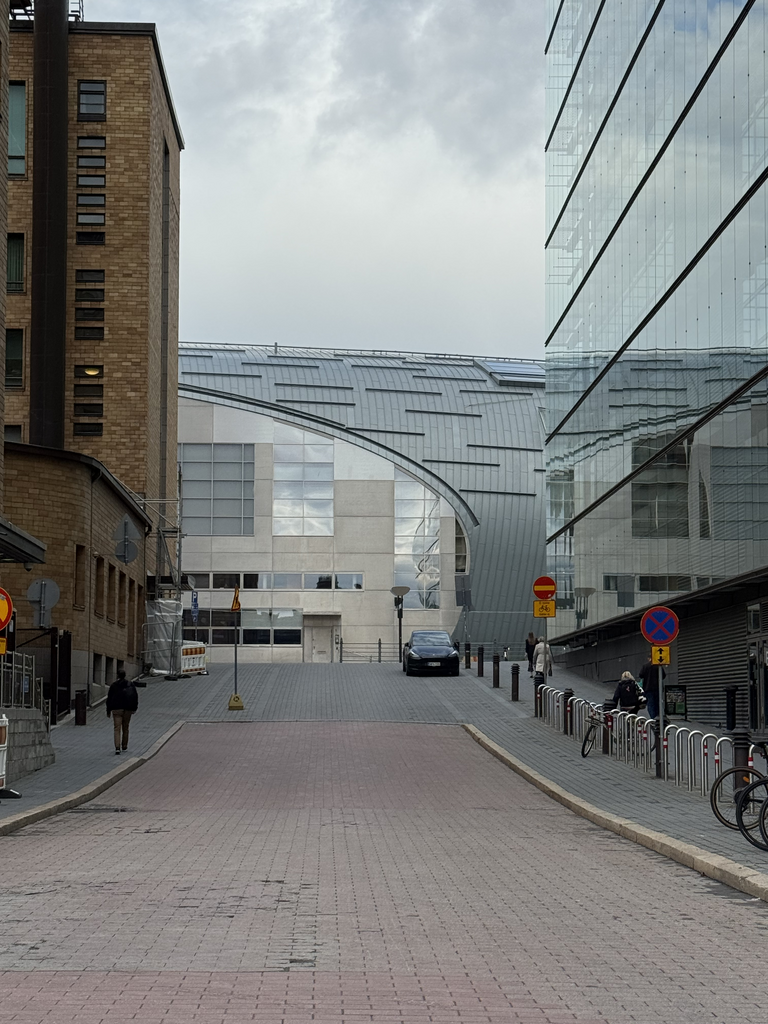
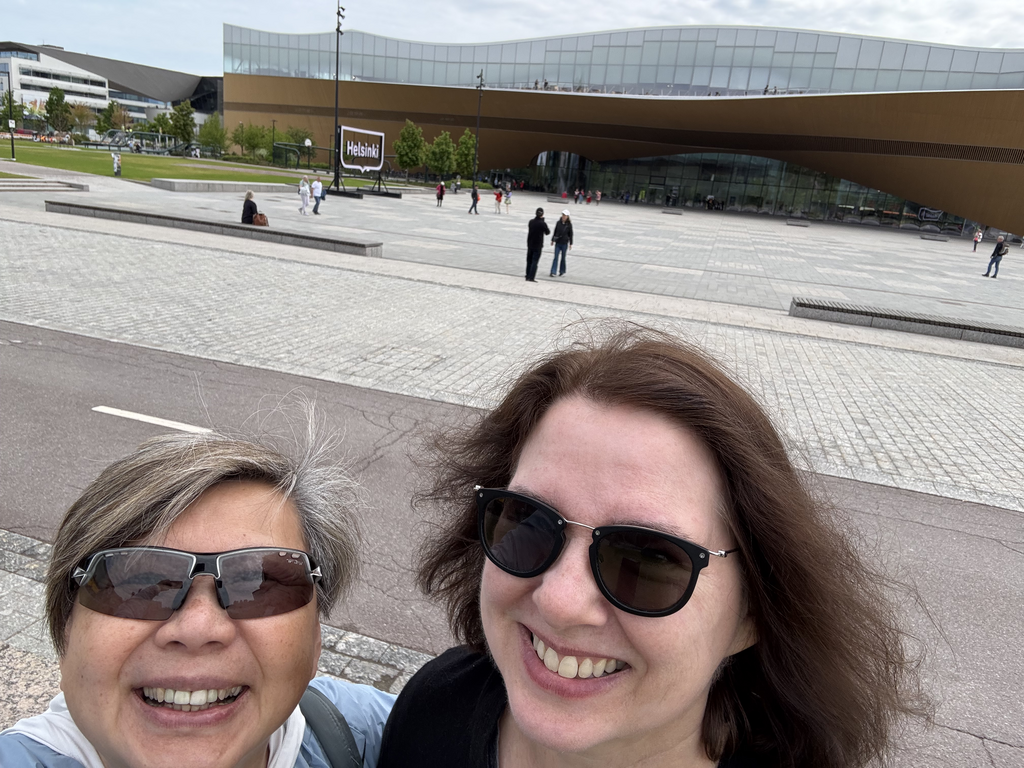
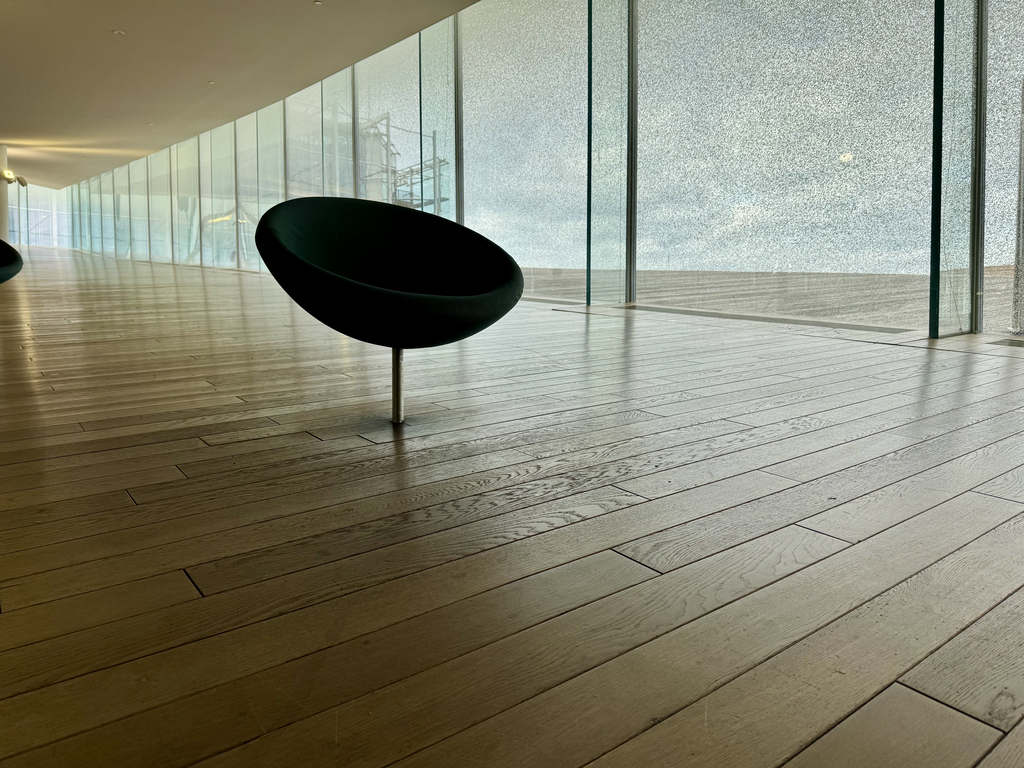
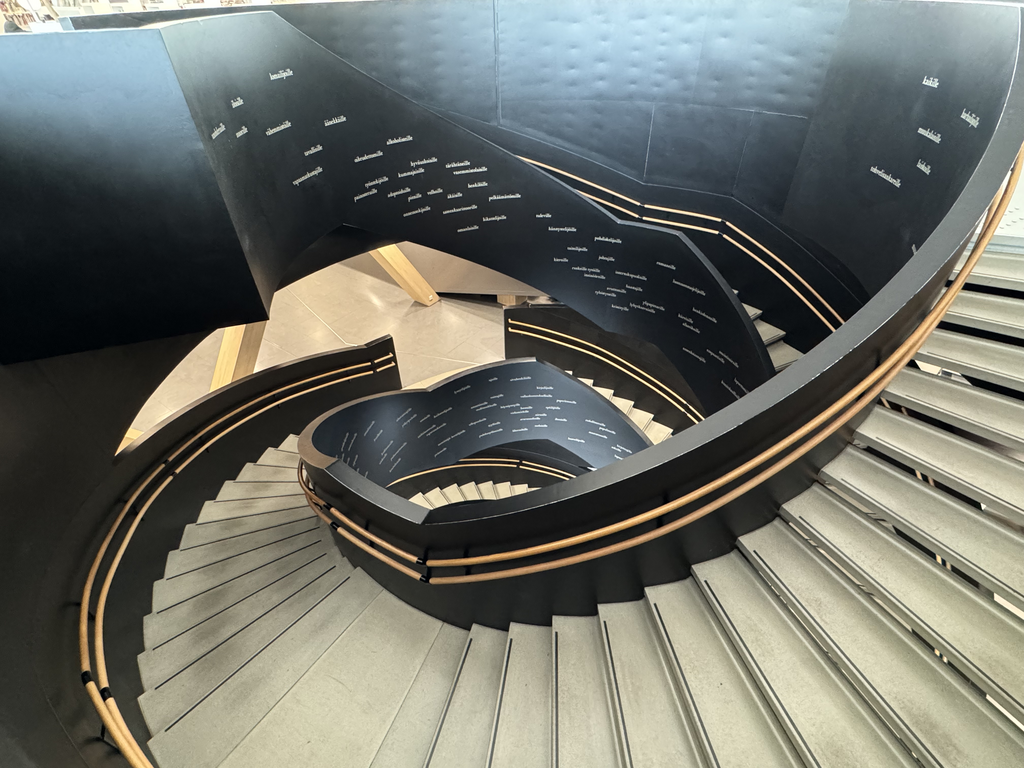
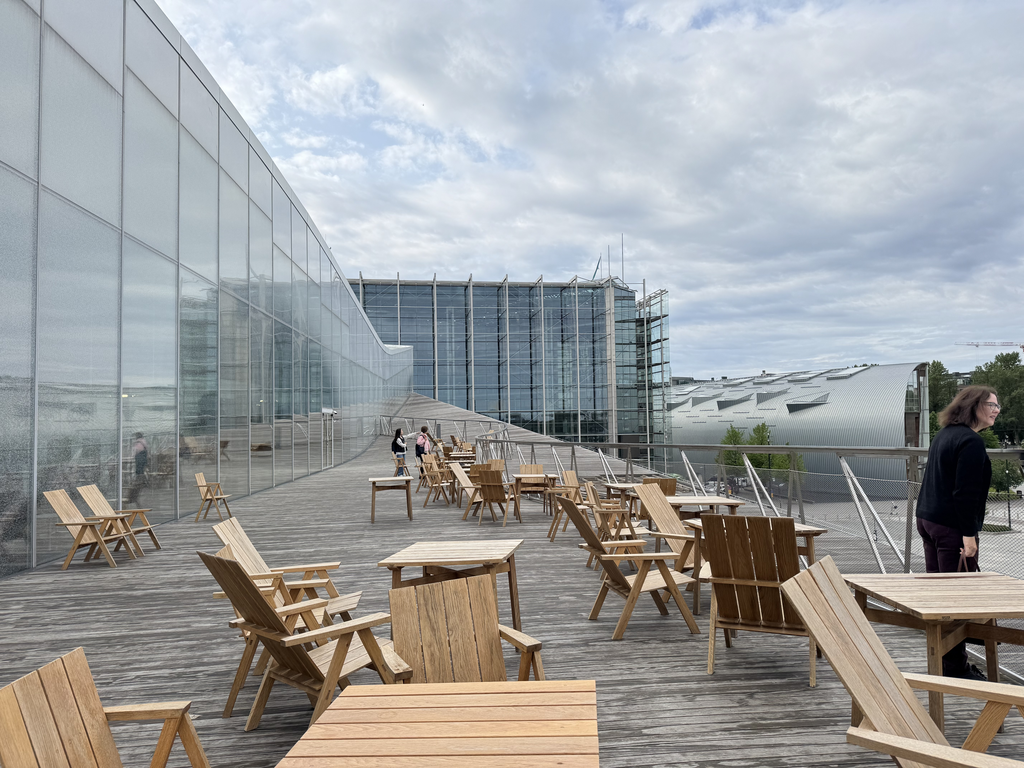
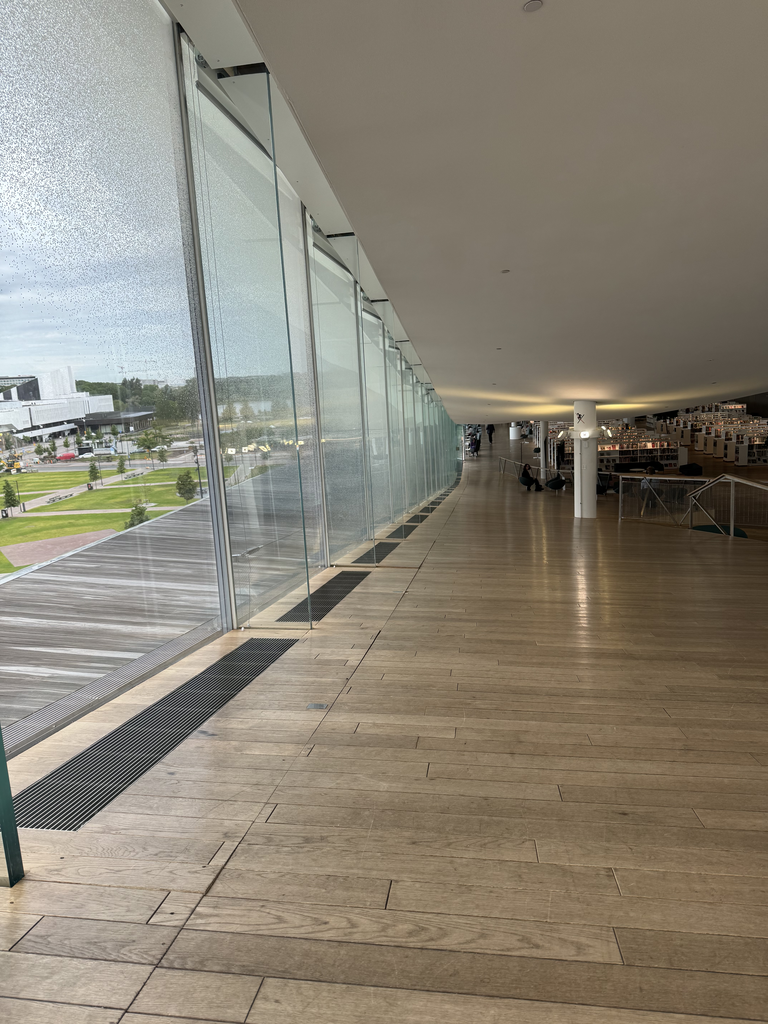
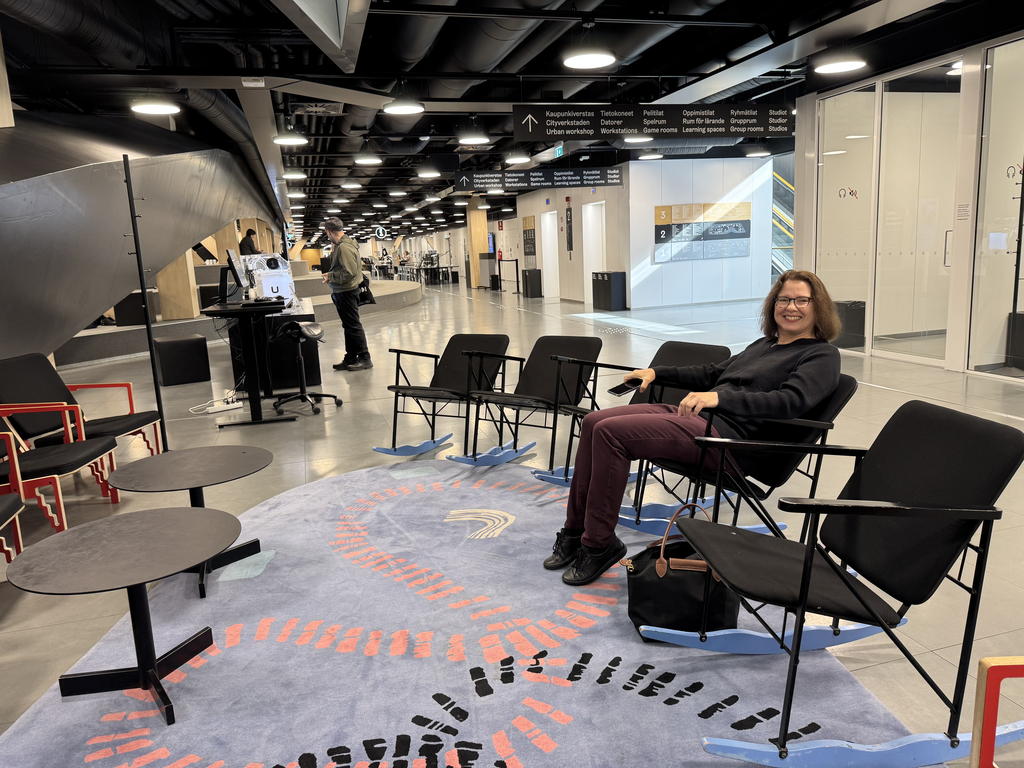
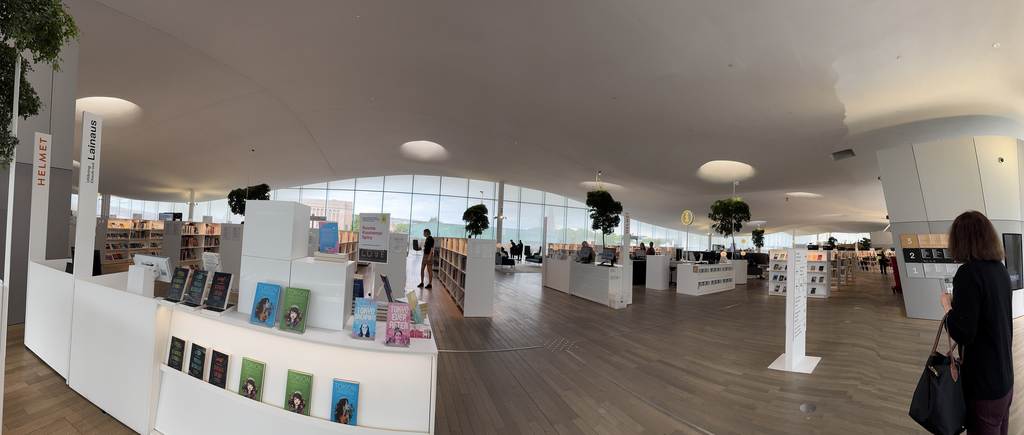
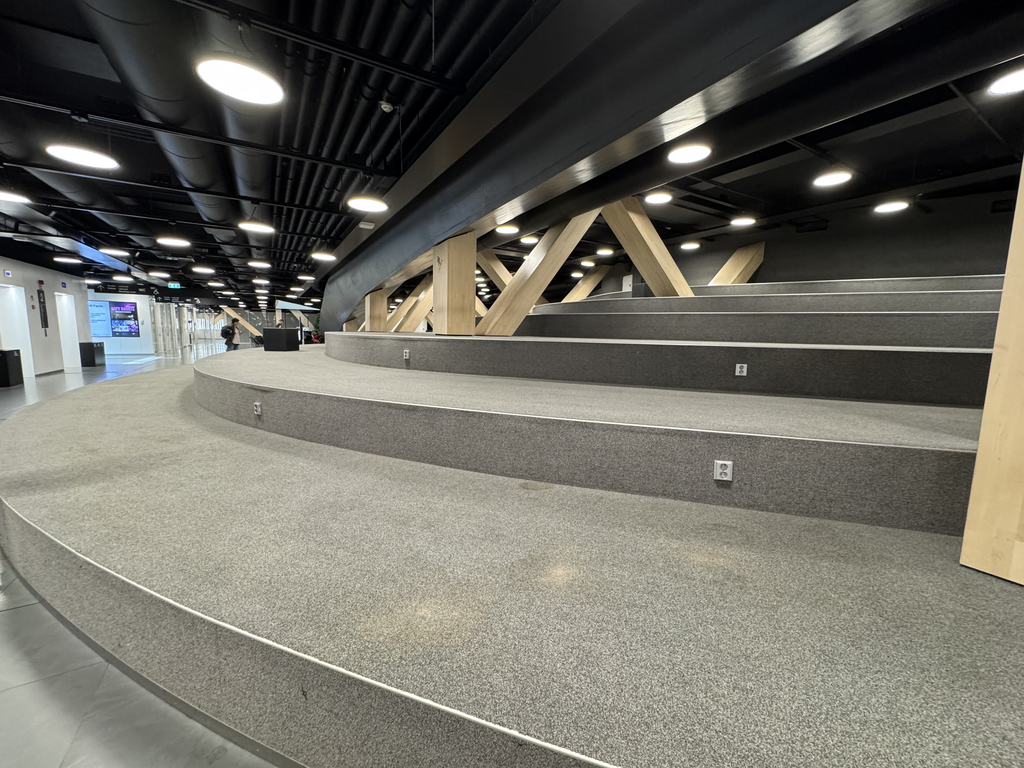
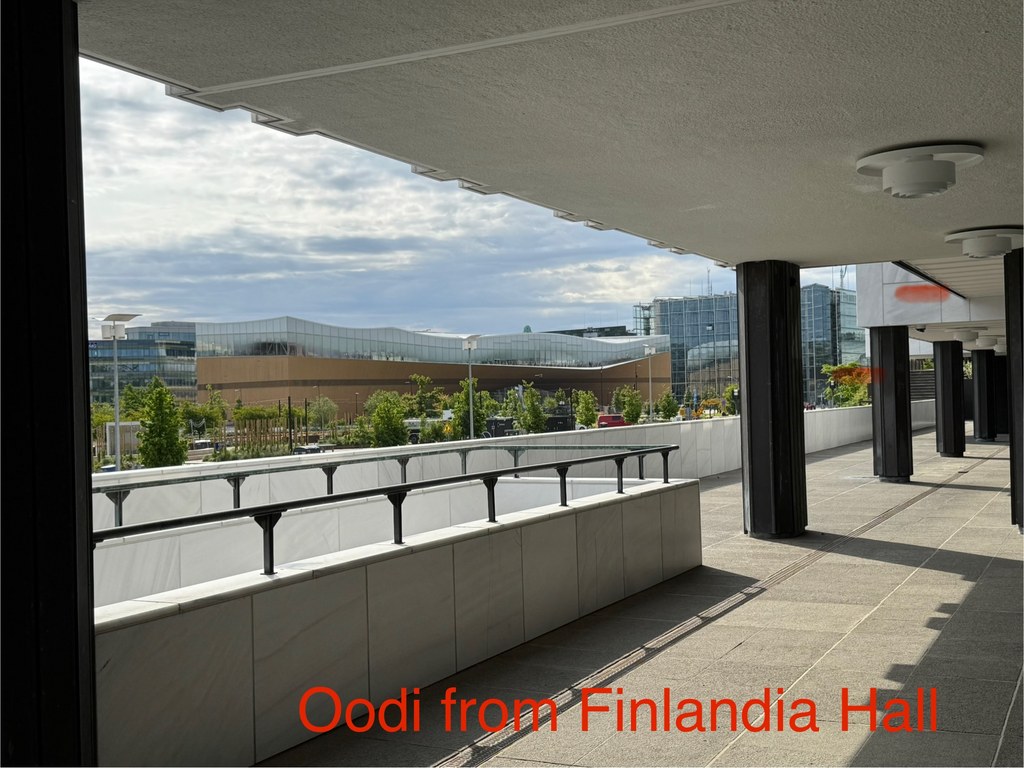
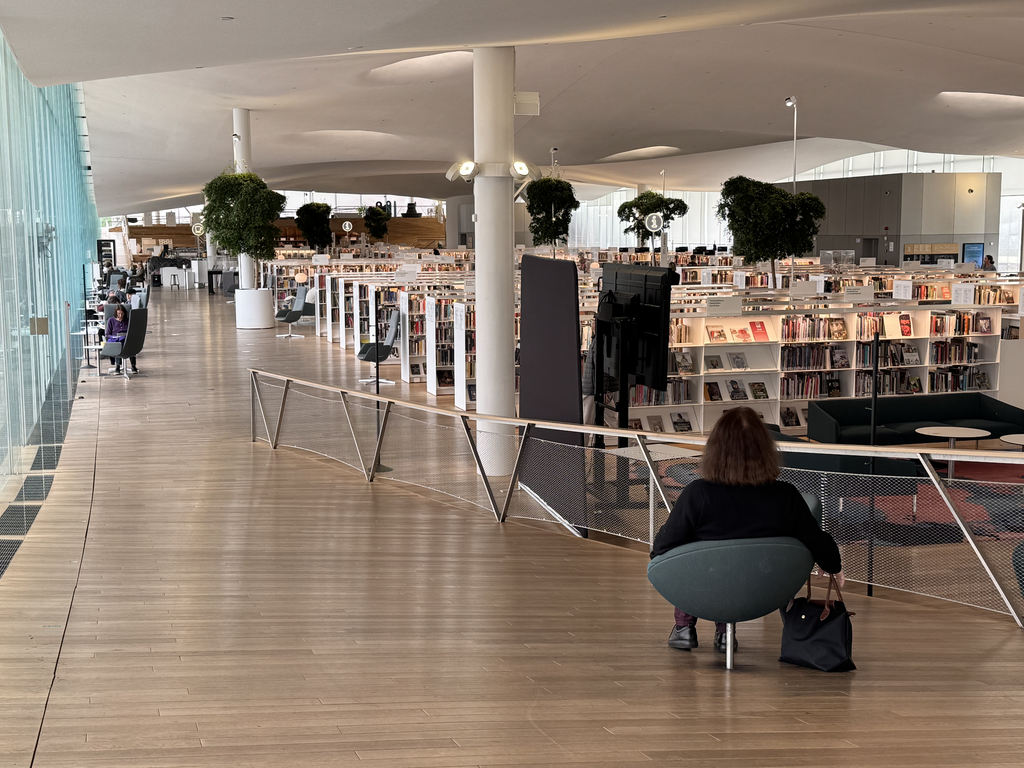
Architecture First, coffee houses are everywhere. Good coffee with a pulla (soft cardamon bun). The Finnish are big on a stop with a drink and a milk chocolate candy on the side. They are also big on good design. Our first stop is the Oodi Library. It is the central library built across from the parliament building and completed in 2019 by ALA architects. Think of a bridge over land. Two arches span a huge distance with an open first floor and basement, a second level filled with meeting and maker spaces studded with a webbing of joists that support the arches, and an open-plan third floor for books and for hanging out. Cafes are located on the 1st and 3rd floors. It is a zero energy building that has been planned to last 150 years. It can even accommodate a future train line below the basement! Amy and I loved the building for its design, concept and execution. It is a place for the people. The name, meaning Ode in Finnish was chosen from thousands of entries. It is not named for a person. It sits across from parliament and the terrace on the 3rd floor is on level with the parliamentary floor. And the spaces within were so functional and sublime. This really showed me how Finnish architects have taken Alvar Aalto's beliefs to new heights. He had said that "We should work for simple, good, undecorated things, but things that work in harmony with the human being and organically suited for the little man in the street." We also saw many of Alvar Aalto's buildings, from his house and his studio to the late-career Finlandia Hall. All following this motto. Walking around the city feels like seeing parts of Vienna, along with the tram lines in place. Art nouveau + special kind of functionalism. I really love this city. Additional Food Note We went to Nolla, meaning "zero"in Finnish, for dinner at the Chef's table adjacent to the kitchen. The concept is zero waste and locally sourced. Give them kudos for being able to realize what they set out to do. I did take food pictures, but they don't do justice to the taste and source material. Think pineapple sorbet with made with left over skin with very little meat, or carpaccio from cattle that is old and had to be culled, lemon zest from another juice shop. It was a calm kitchen, no shouting, no waste, very clean. They are recognized as a Bib Gourmand restaurant by the folks at Michelin. Yes, the food was delicious! Did we make it to the sauna? You bet!


The Gulf of Finland and Tallinn

Day 3: 2025-06-11 1715


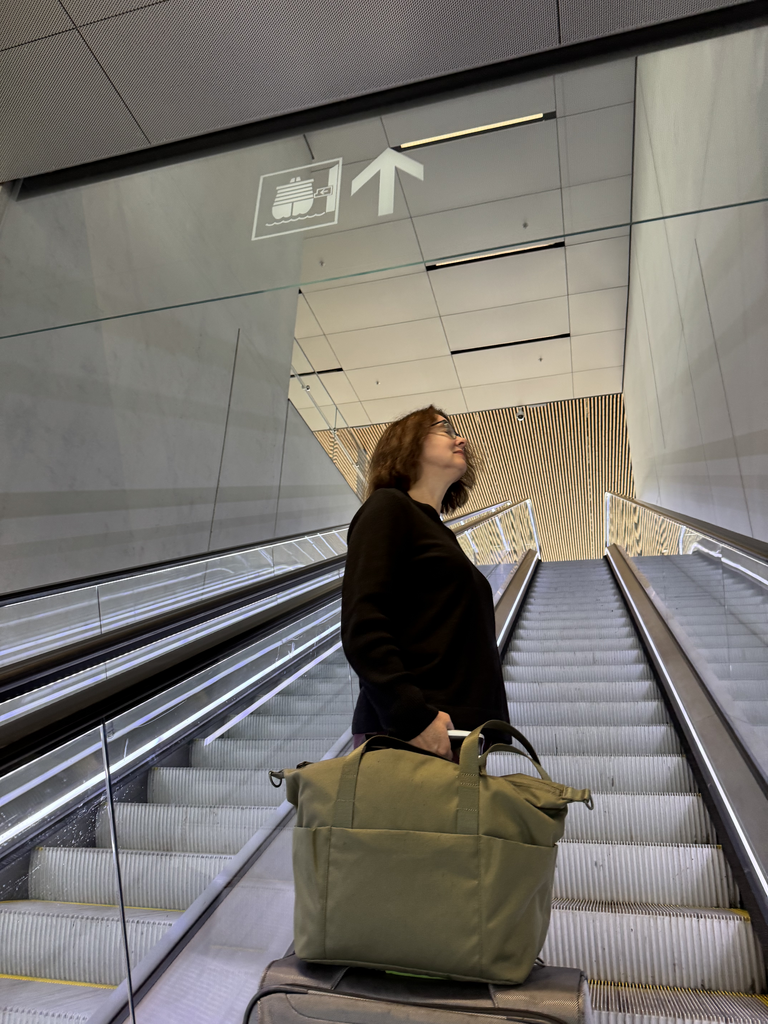
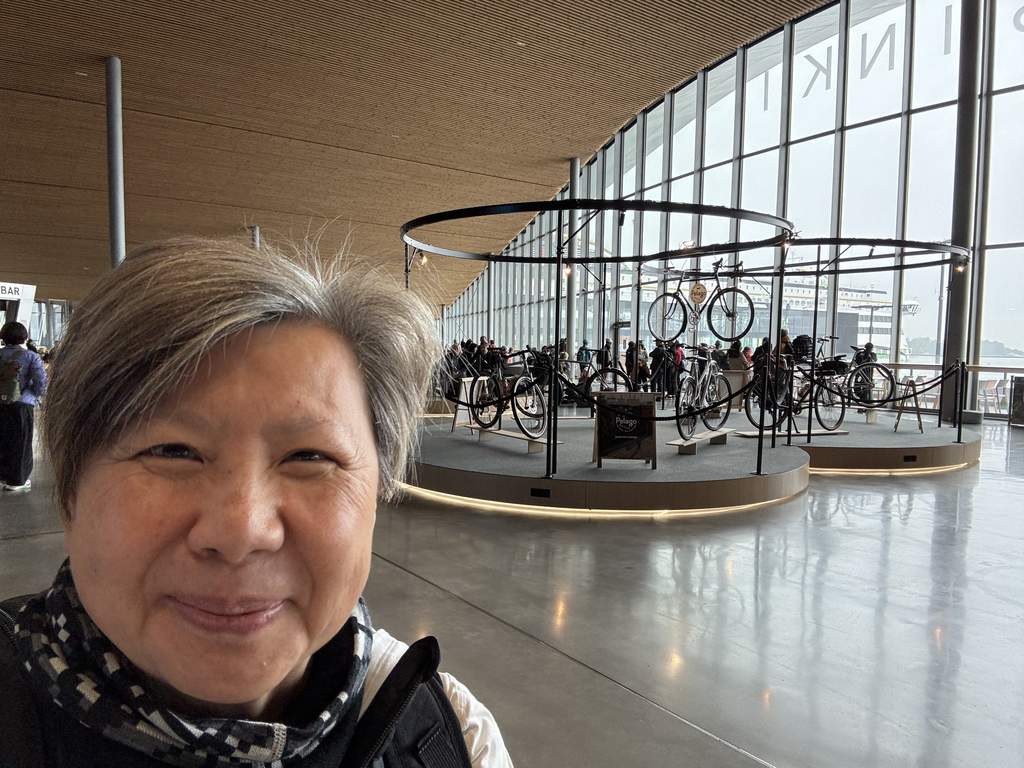
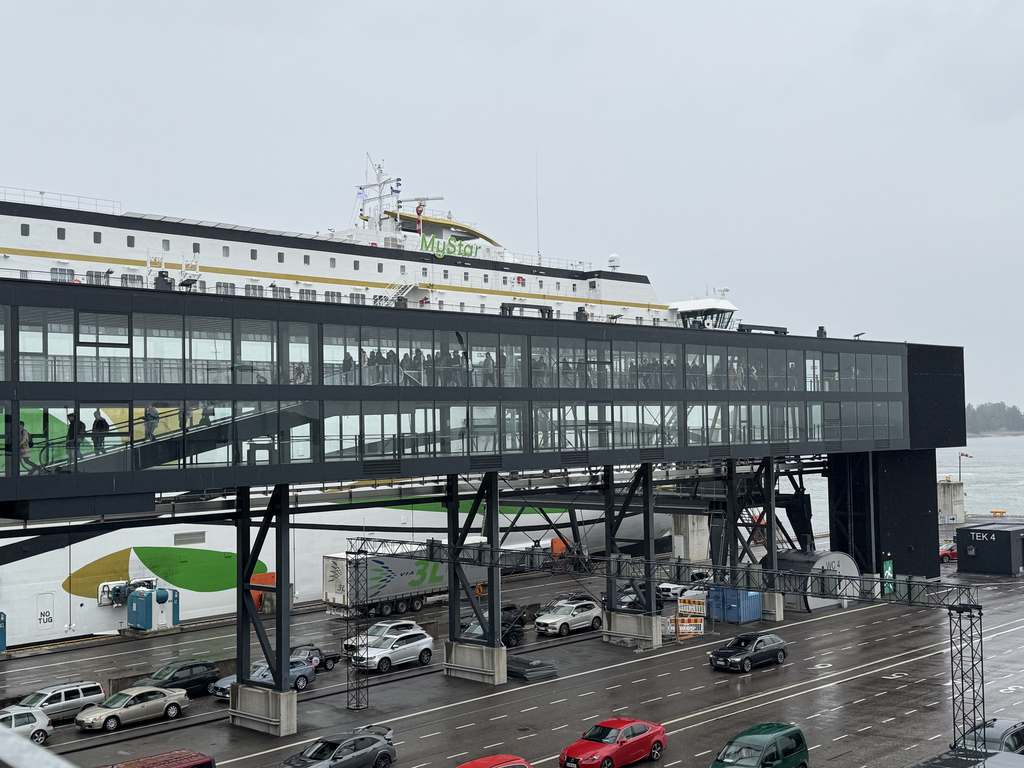
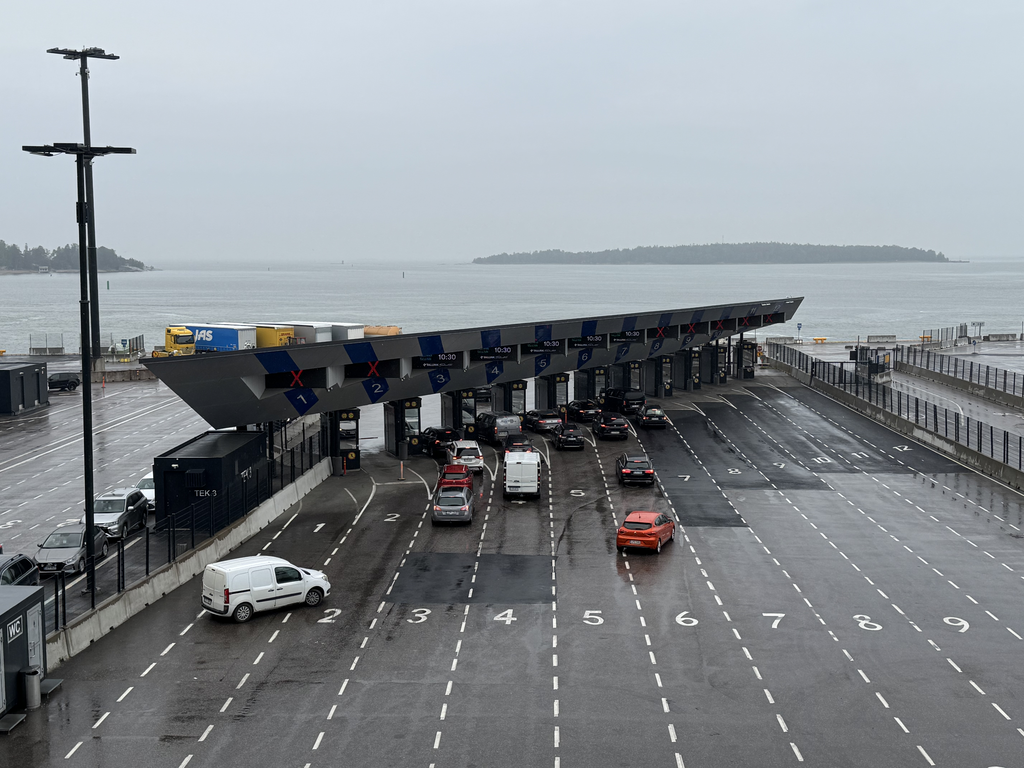
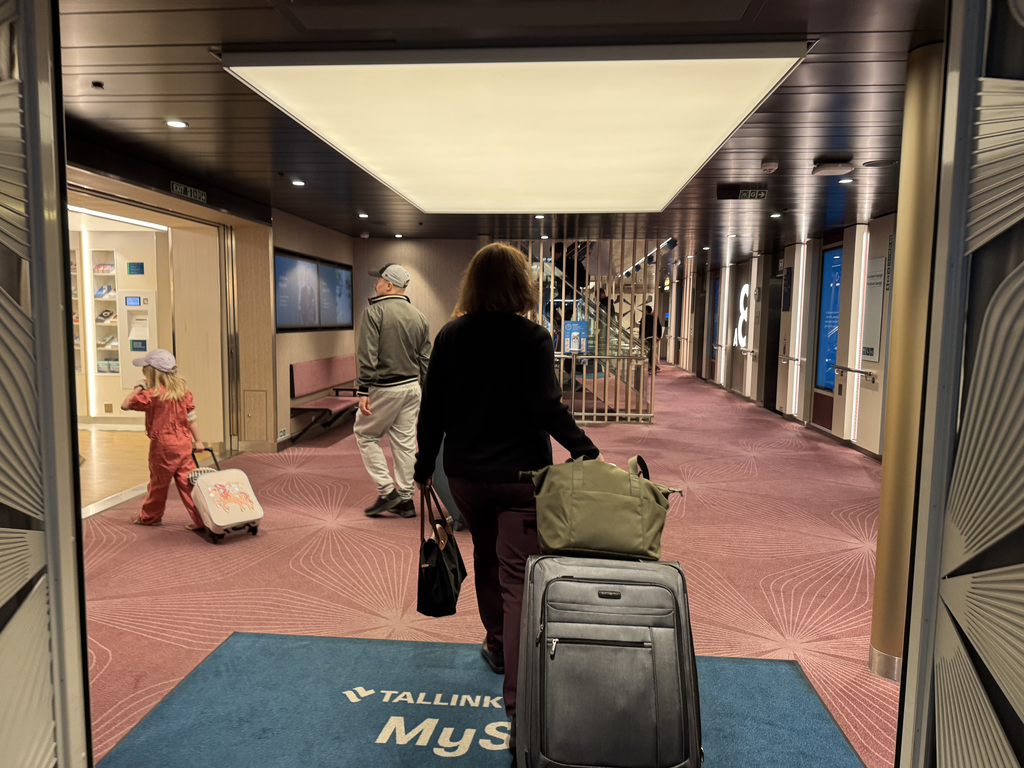
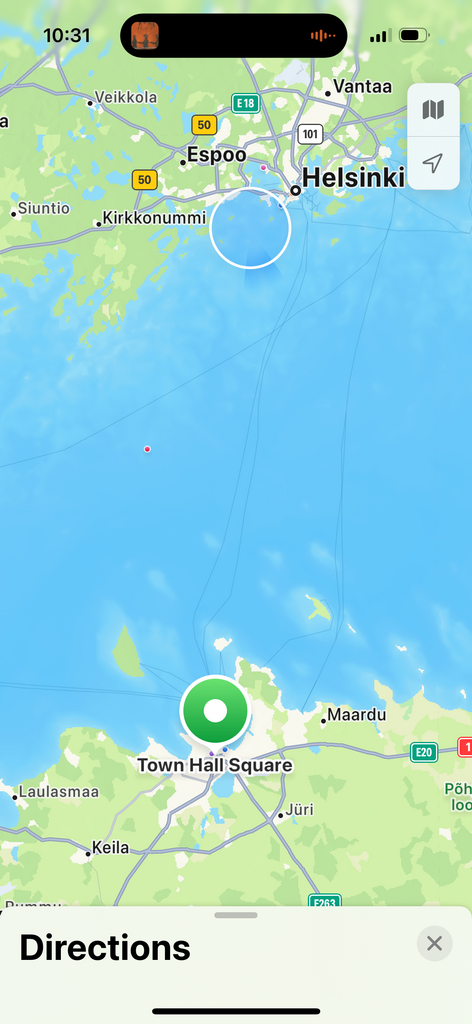
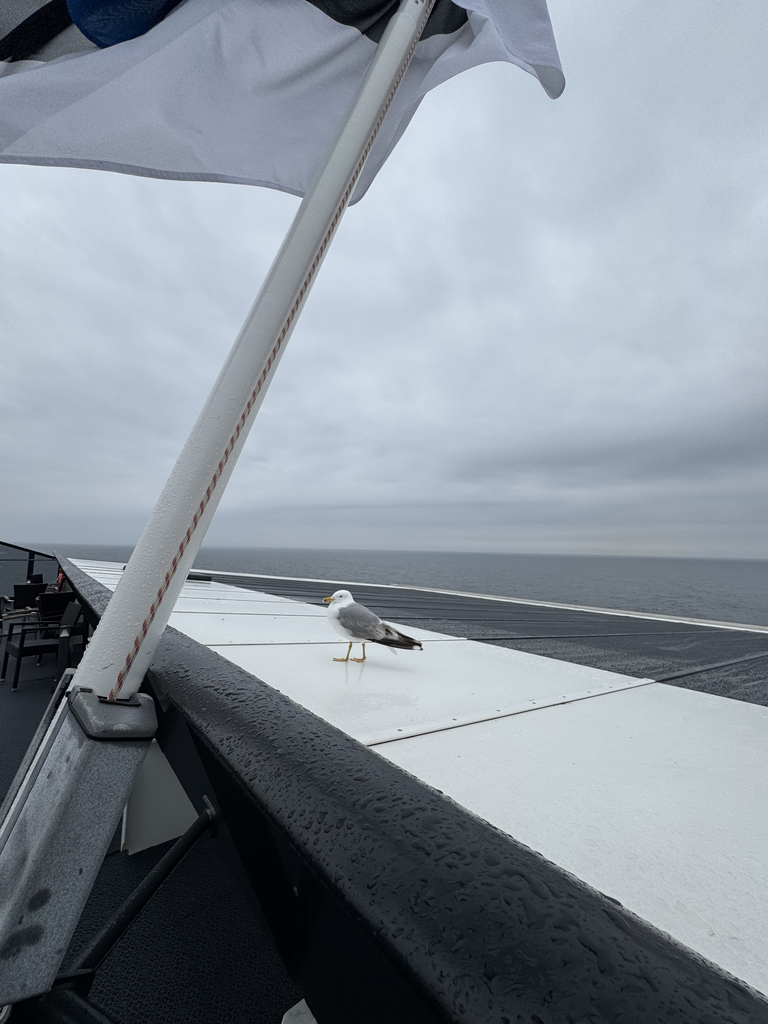
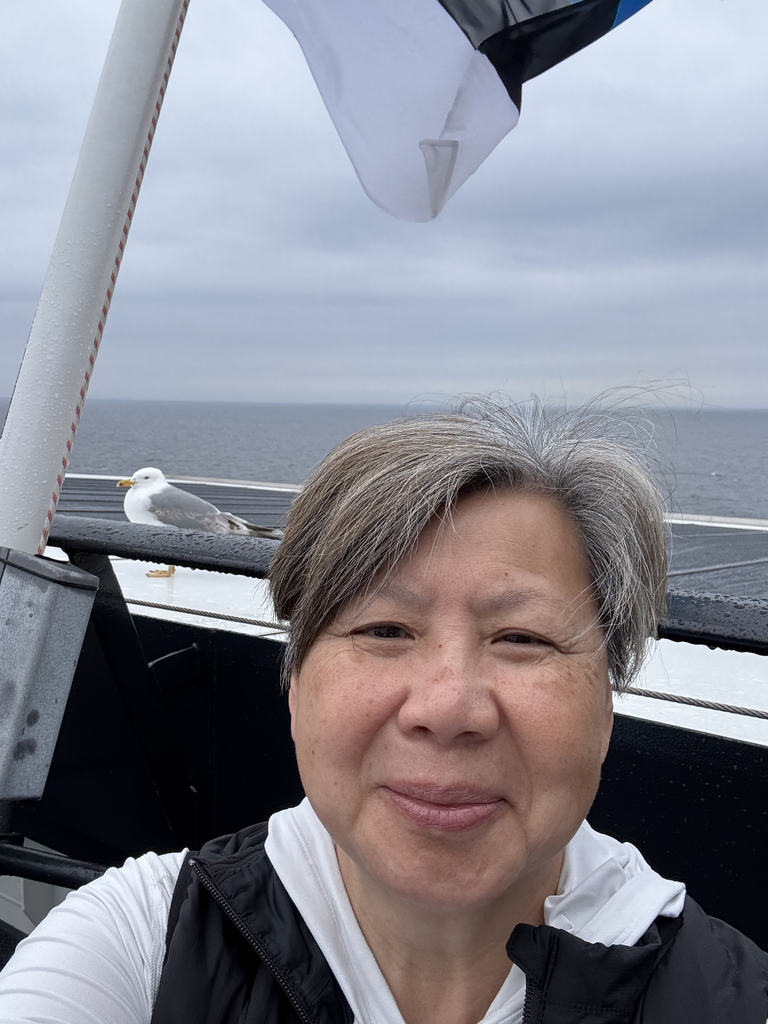
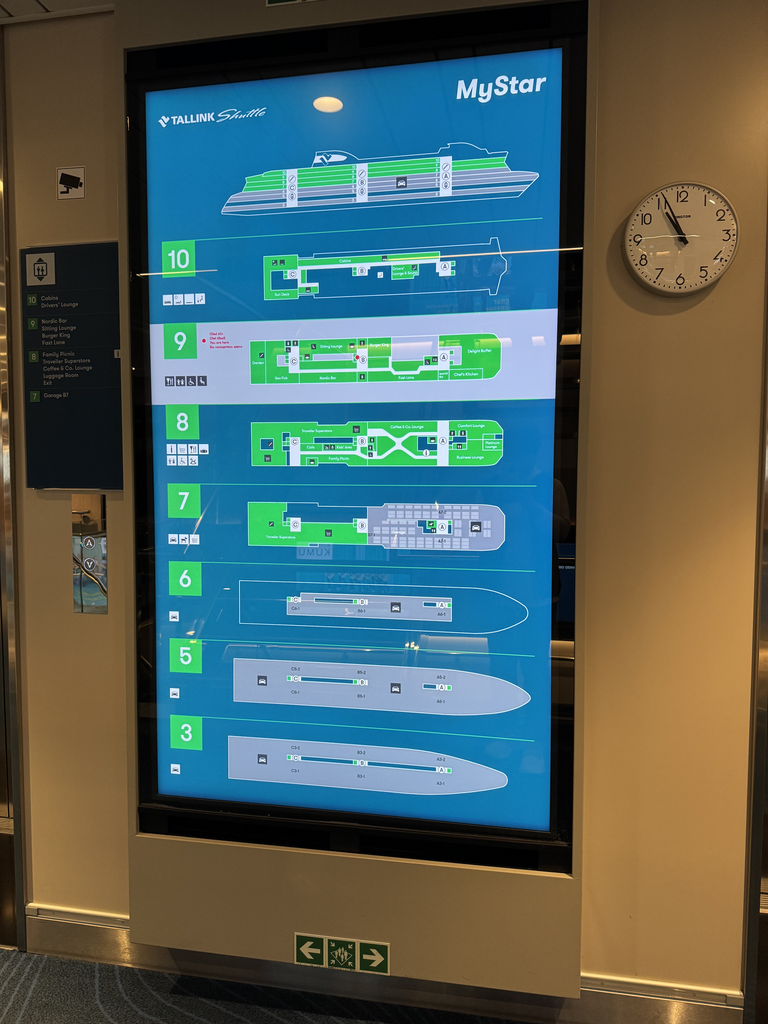
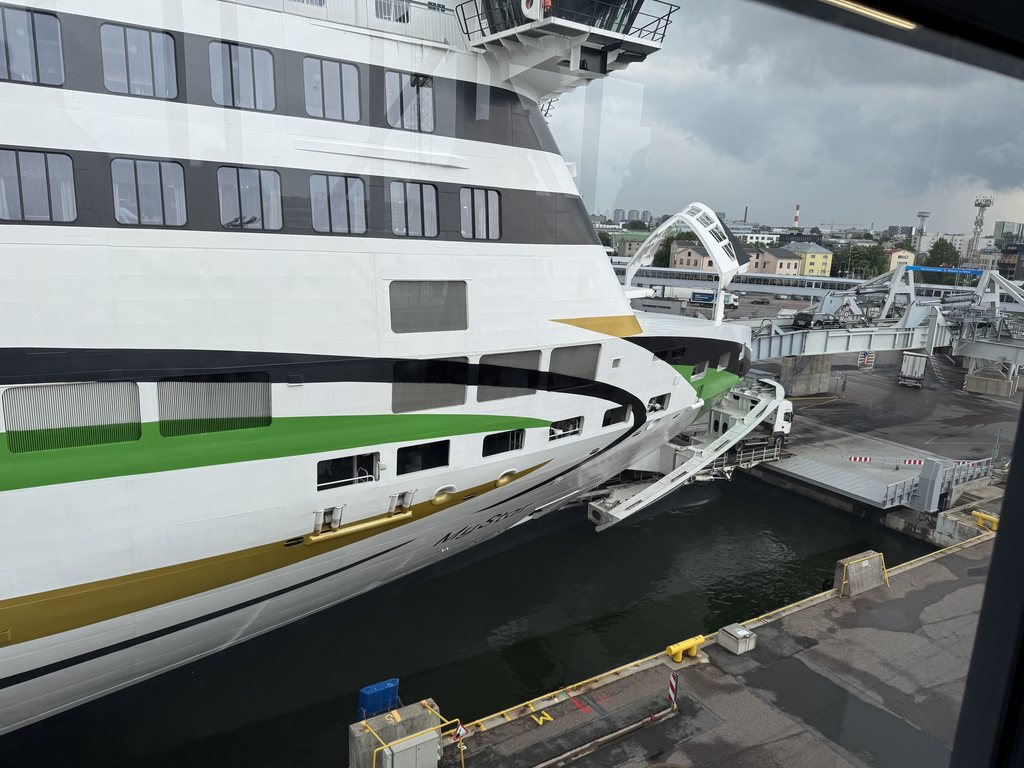
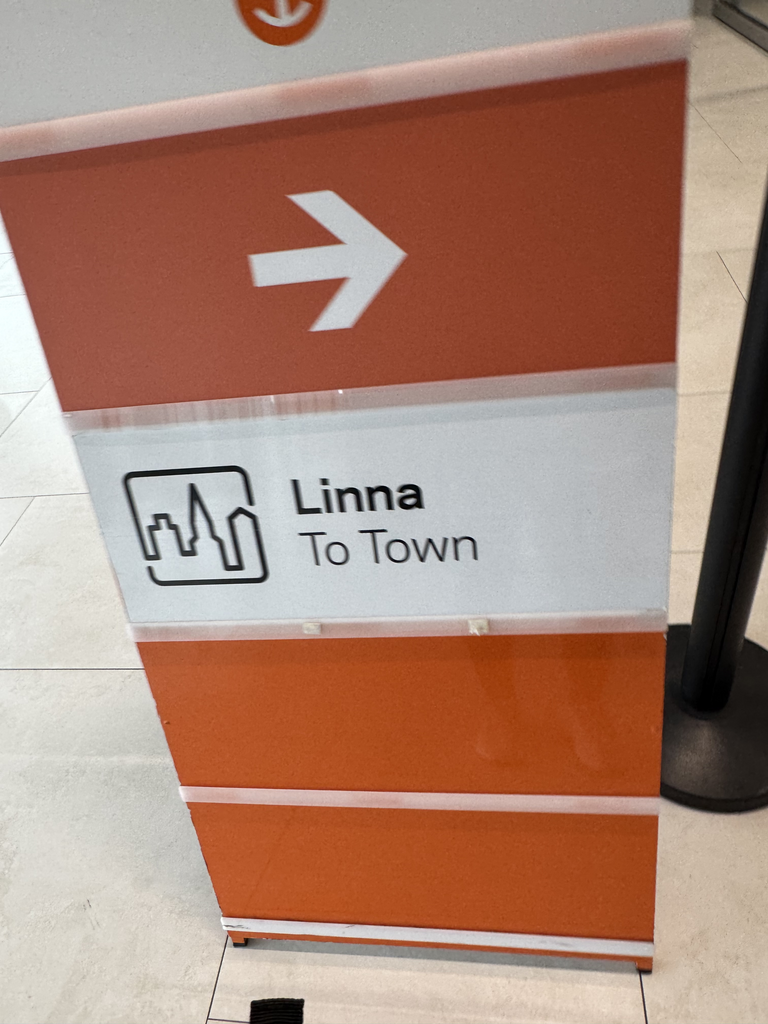
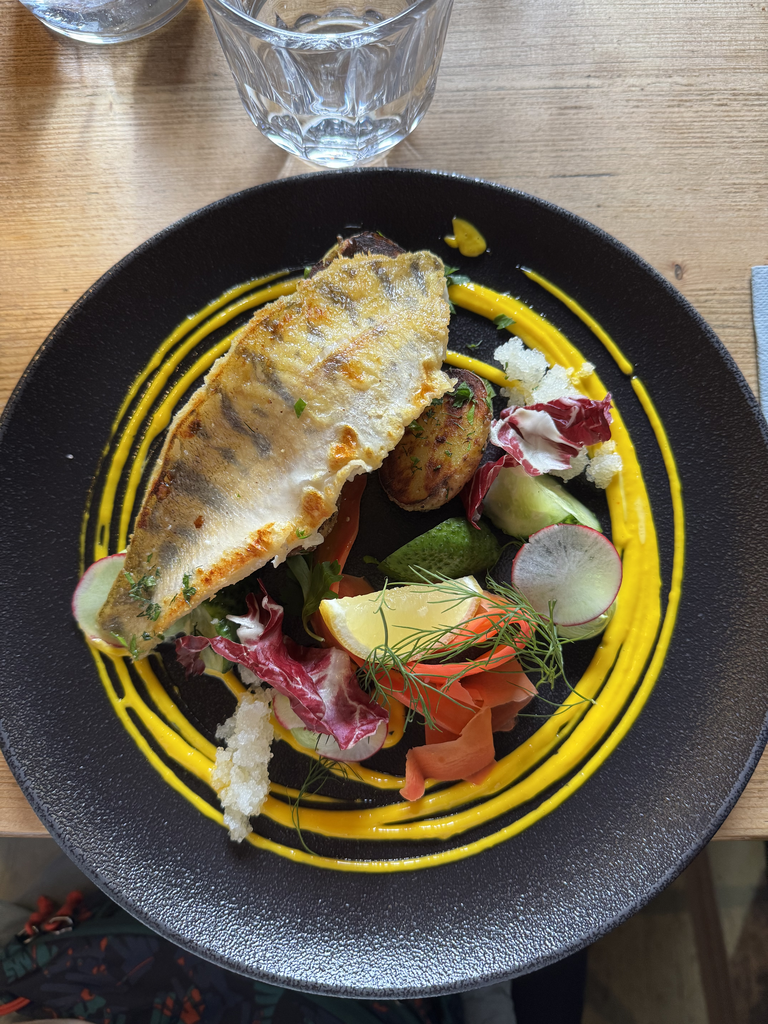
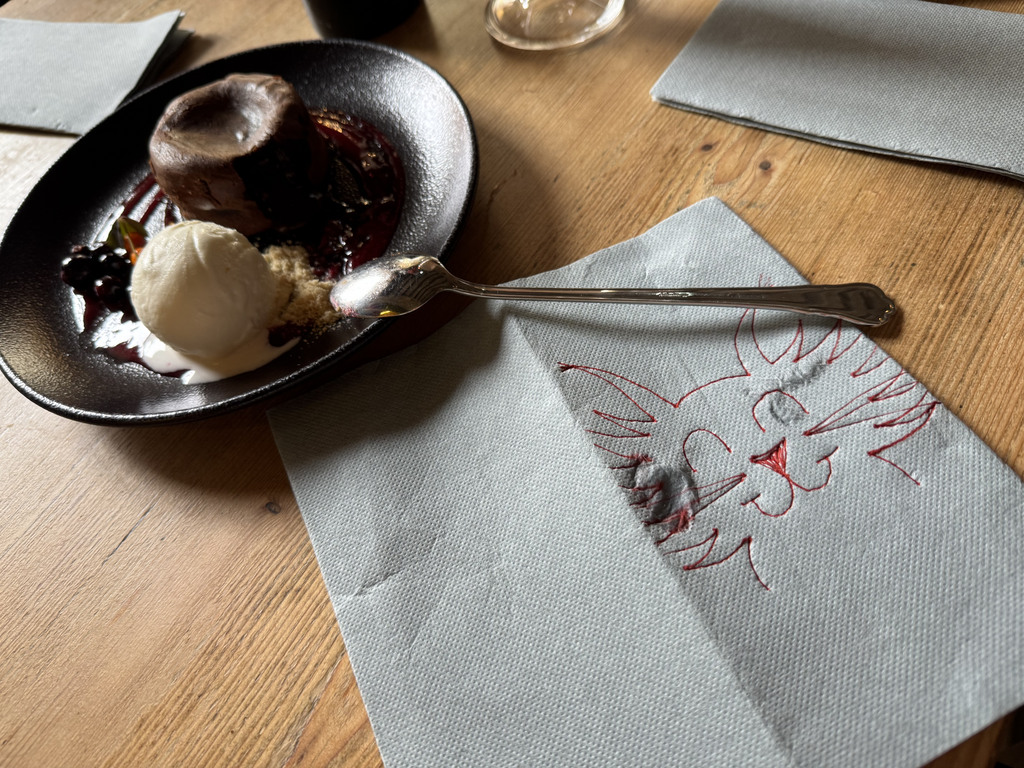
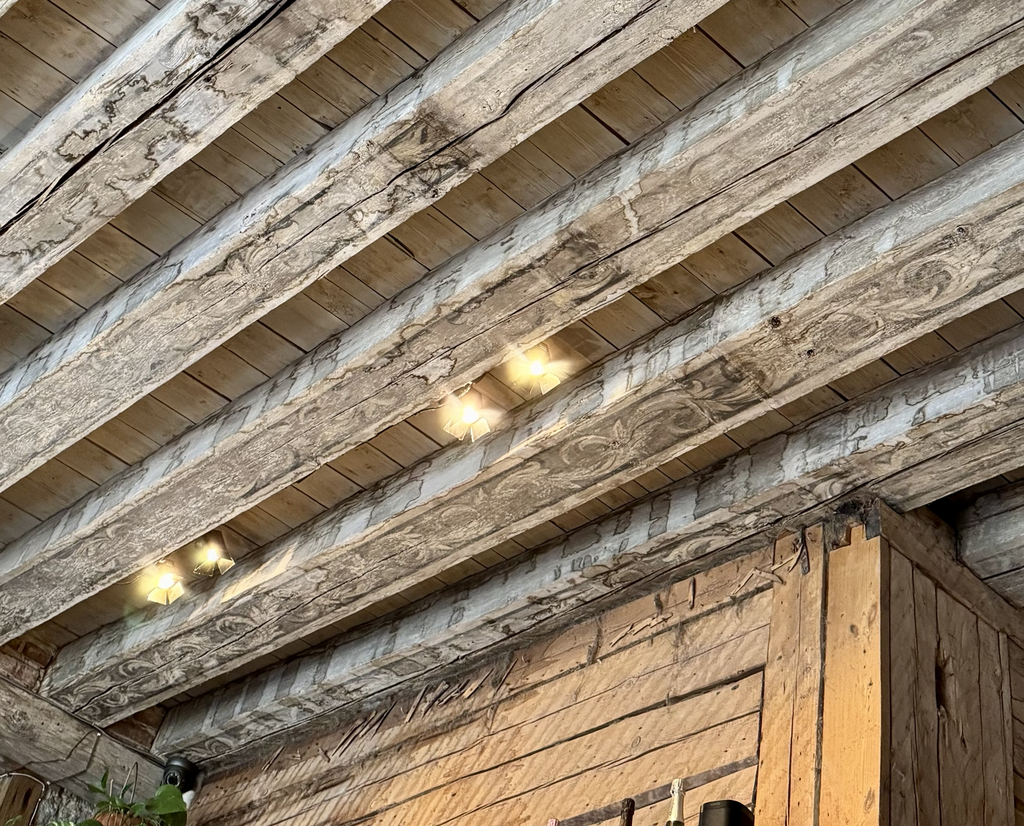
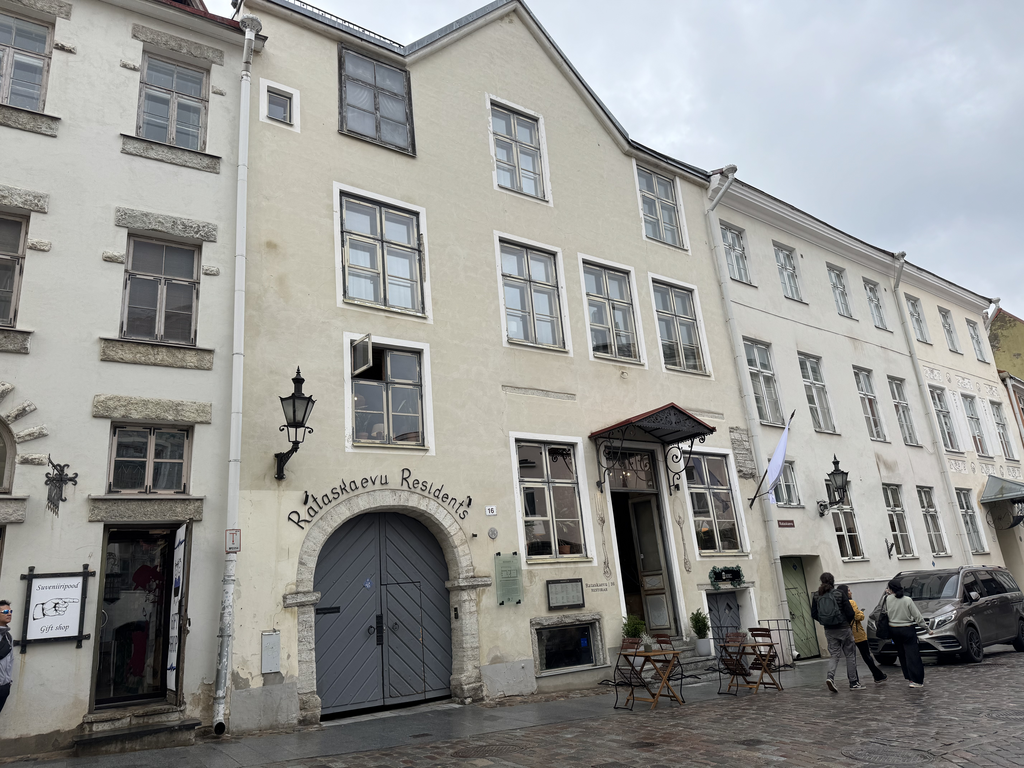
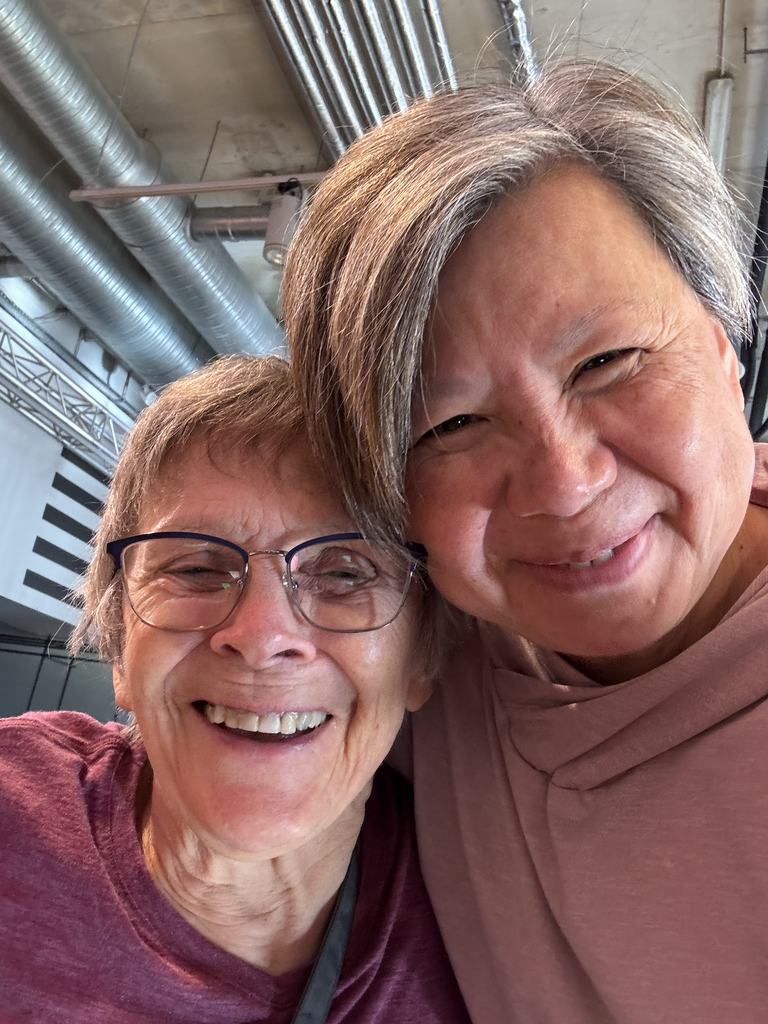
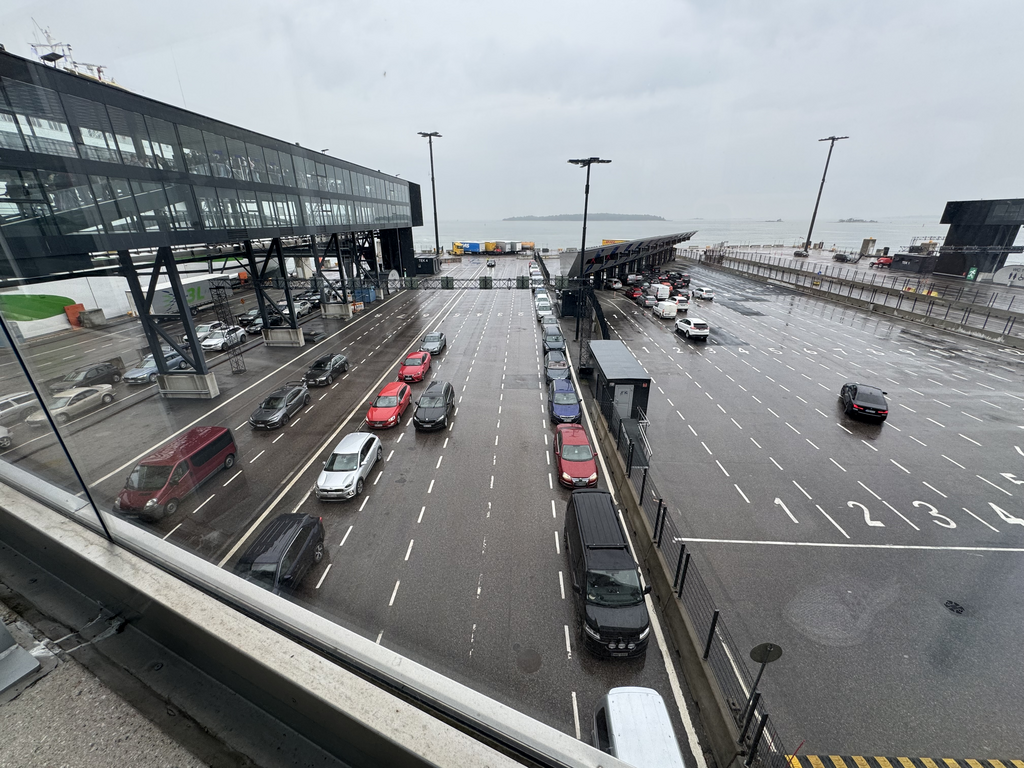
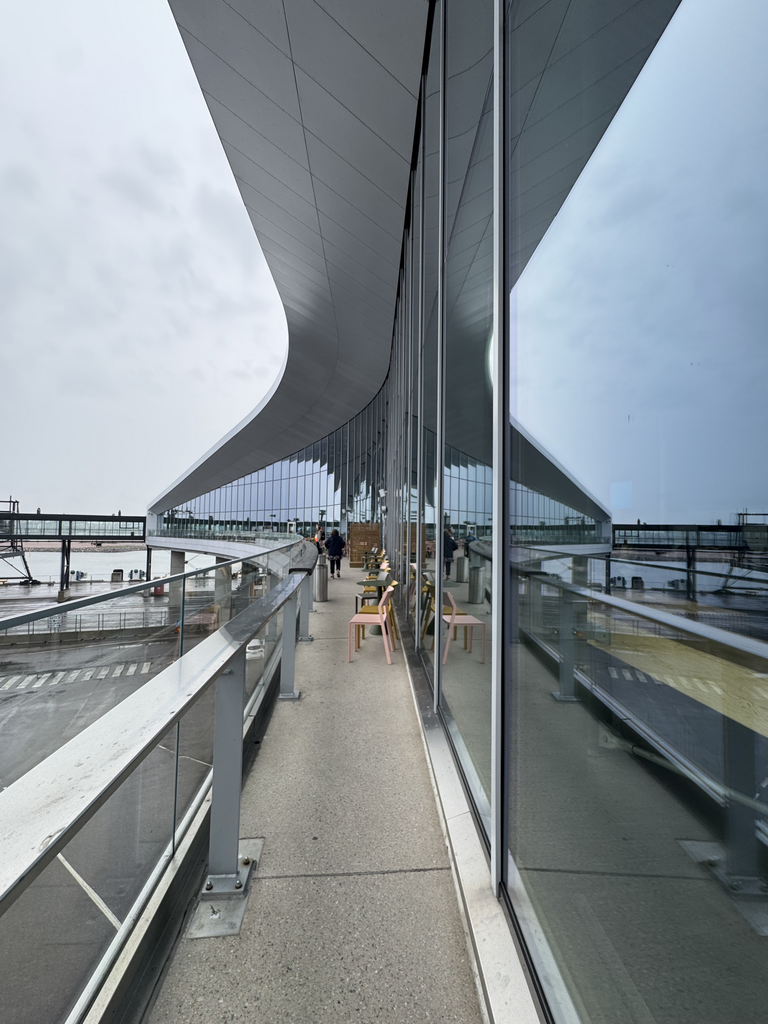
Helsinki AM We are up at 7:15 to get breakfast and catch the big ferry from West Terminal 2, SW of the city center. The Tallinn operated ferry will take two hours to cross the Gulf of Finland. The terminal is new and just completed in 2017. Arrivals and departures are strictly controlled, for both people and cars. Again, the design is super efficient. Pete, can we just move here? Gulf of Finland The ferry is huge. I've taken a picture of the wayfinding signage located everywhere on the ship. There are cabin levels as well for those who need privacy for those short two hours! It feels like we are in a huge airport terminal, with duty free shopping on board. The sky is gray, and the waters are slightly choppy and a deeper shade of gray. I stay to the center of the boat even though there is very little side to side motion. Burger King and Starbucks both have strong presence on the ship. Tallinn We arrive and disembark, the system is just as good on the Tallinn side, but maybe not so glitzy. Signage is simpler, though I wish the directions to the bus stop were clearer. We spent less that Two Euro to get to the railway station. Our hotel and meeting point for the tour begins here as well. It is 2 minutes from the bus stop. And here, Amy notices that a cup of espresso is indeed about a euro. Our Uber driver was correct! Mary is waiting at the hotel. She arrived yesterday at 3 PM on SAS from CPH and has been exploring the town. We start out for lunch just as it rains cats and dogs. We had planned to make it to the old town square and have lunch at the terrace cafes in the square (as suggested by no other than ChapGPT), but didn't make it past Rataskaevu16, a merchants house built between the 14th and 15th centuries. The owners of the building have removed the false ceilings and floors and exposed original painted wood beams, and glassed over a hole in the WC. It is rather unnerving to be looking into the void as one sits on the toilet. The meal is mostly vegetarian, but wonderful. Lisa arrives in Tallinn towards the end of the meal and joins us for coffee. Our group is now complete. We walk, shop, get rained on, and wait for 7 PM to meet our team leader Andrei, and the 3 others who make up the rest of the tour group. It turns out we misheard, there were at least 13 other people when Amy joined the meeting downstairs. Andrei is tall with blond hair that stand on end, middling age. We go through some tour information and lets us know we will be meeting at 9 AM every day. We have quite a few Canadians with us, but introductions are not happening until the bus tomorrow. Meeting concludes with some folks going to an Estonian Pub with Andrei (who is Lithuanian), but we scrounge in the nearby supermarket and stay dry in the hotel dining room. I am including just a quick compilation of pictures from today.


Tallinn Old Town and Lahemaa National Park

Day 4: 2025-06-12 1716


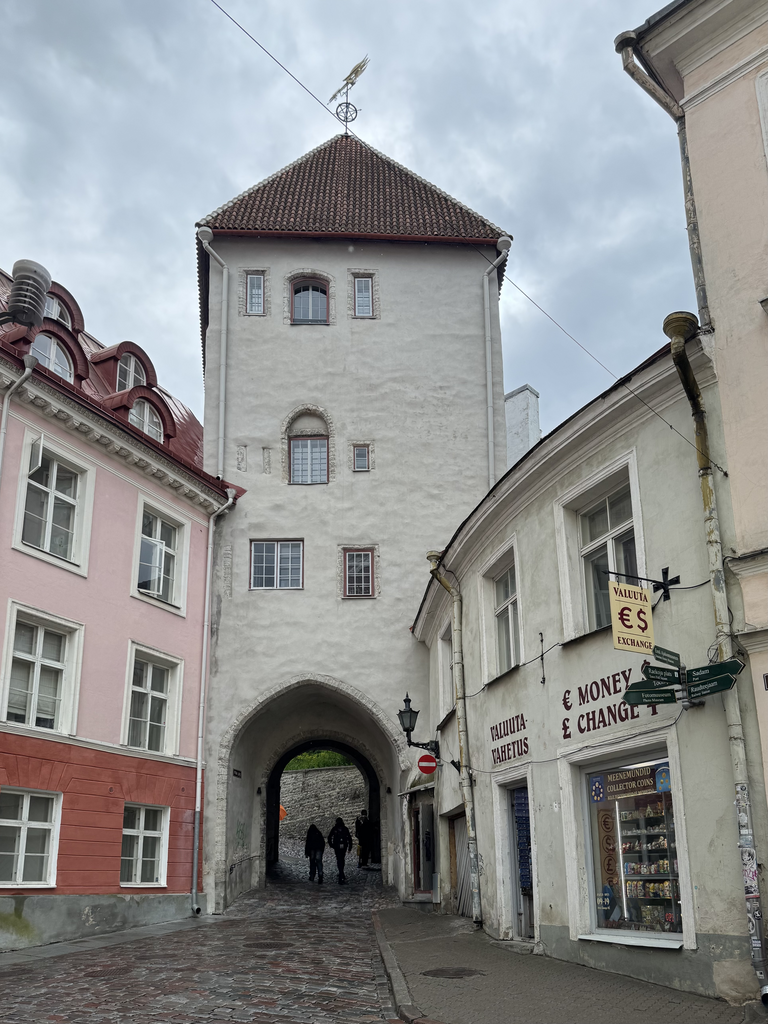
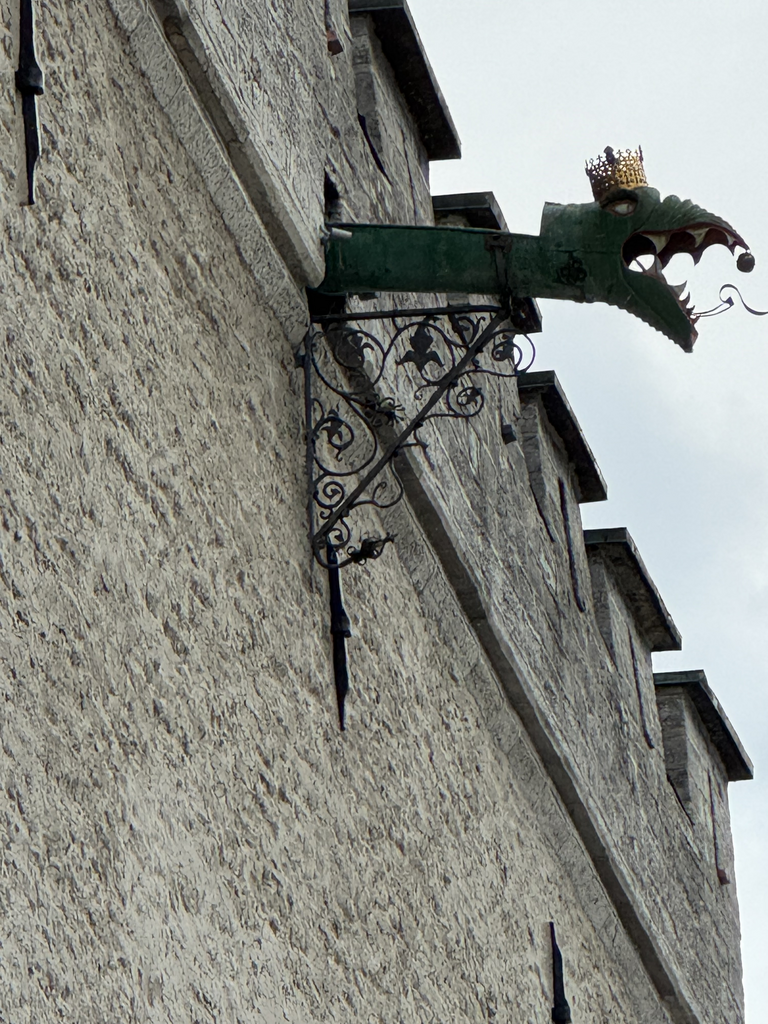
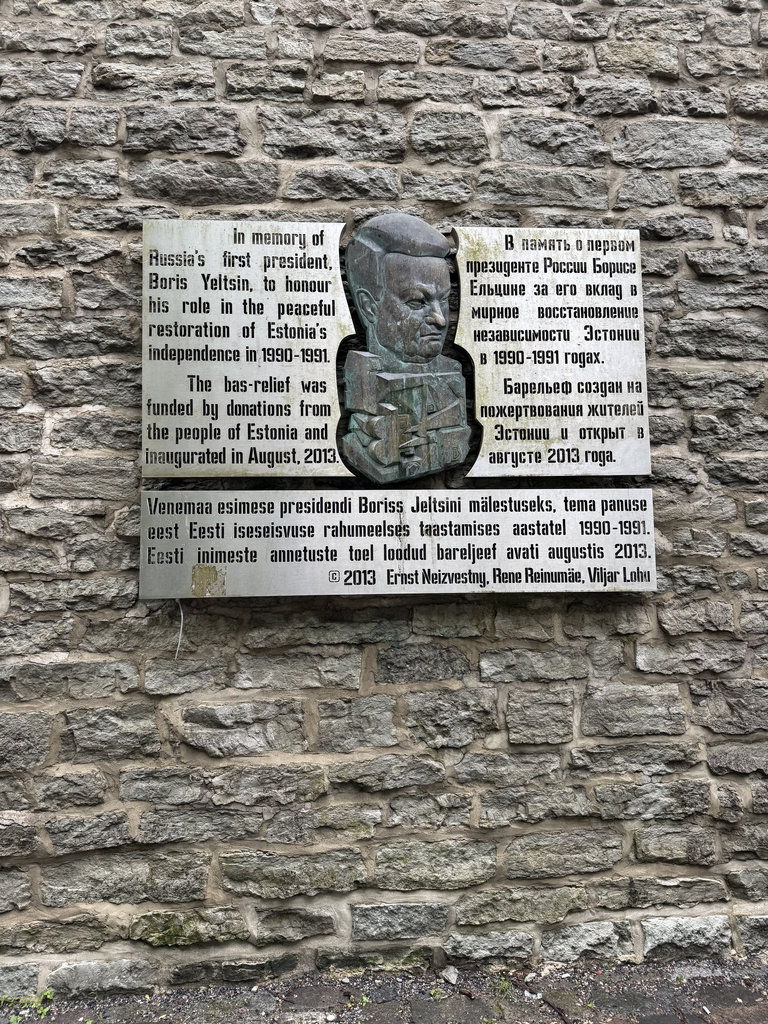
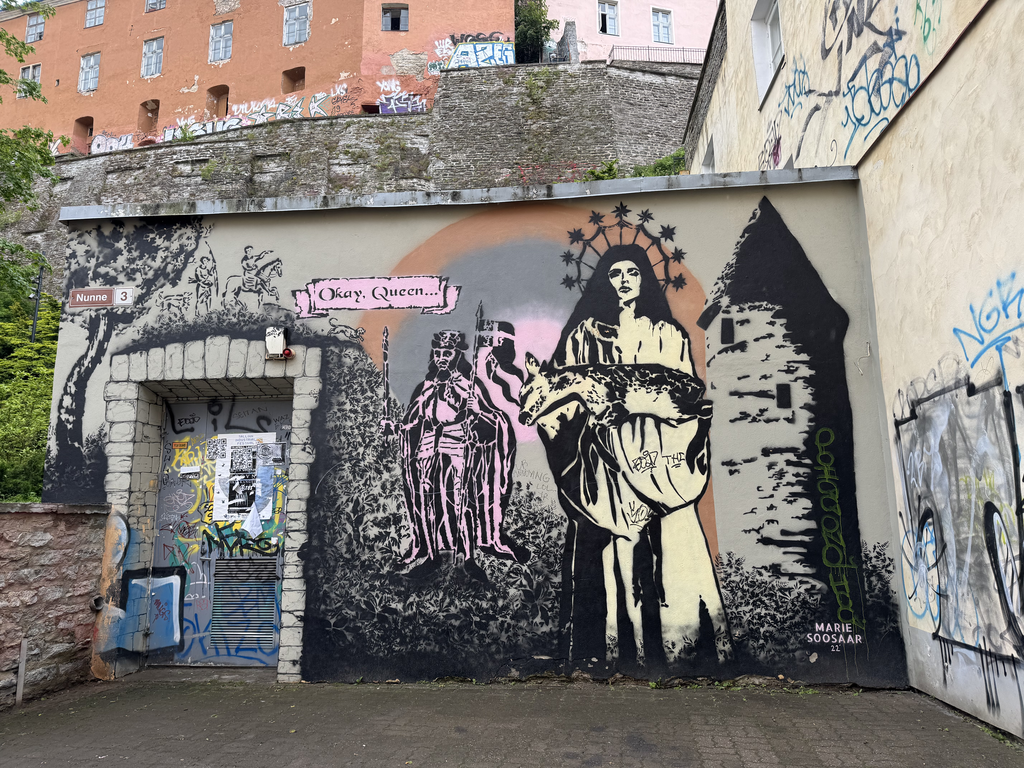
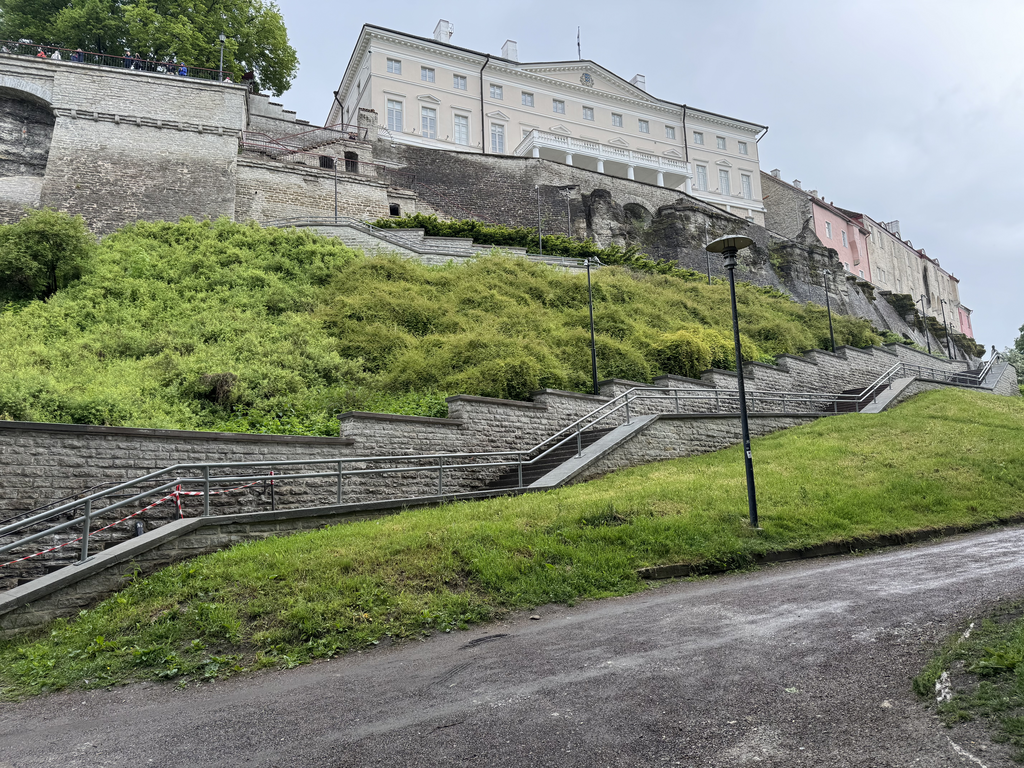
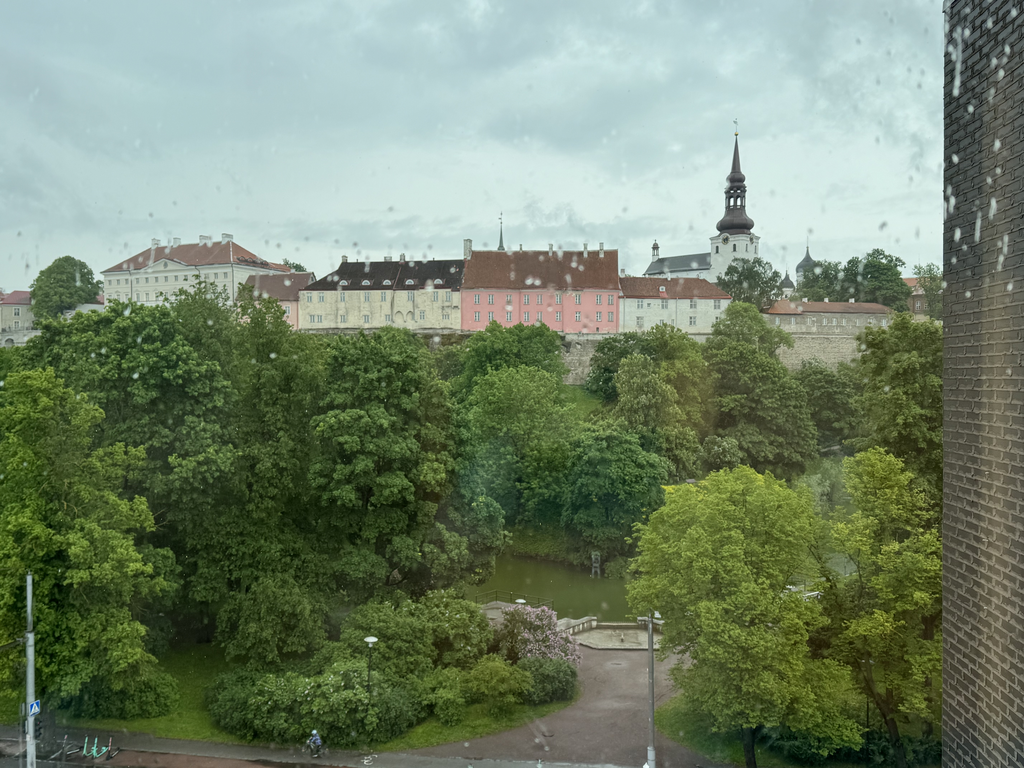
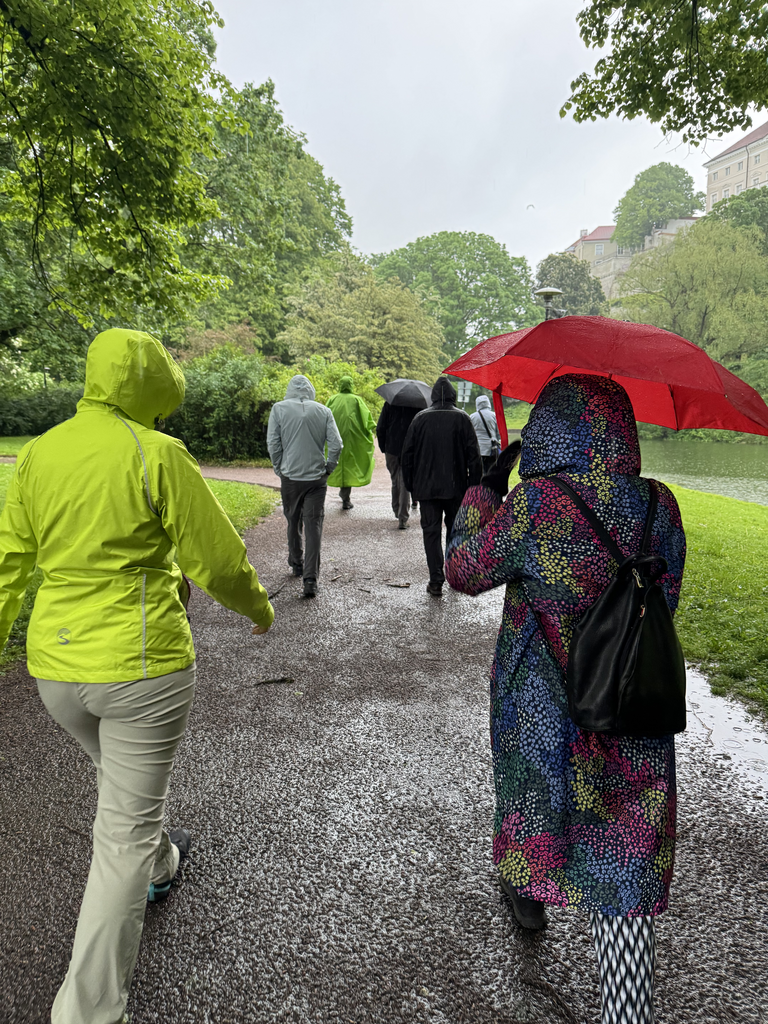
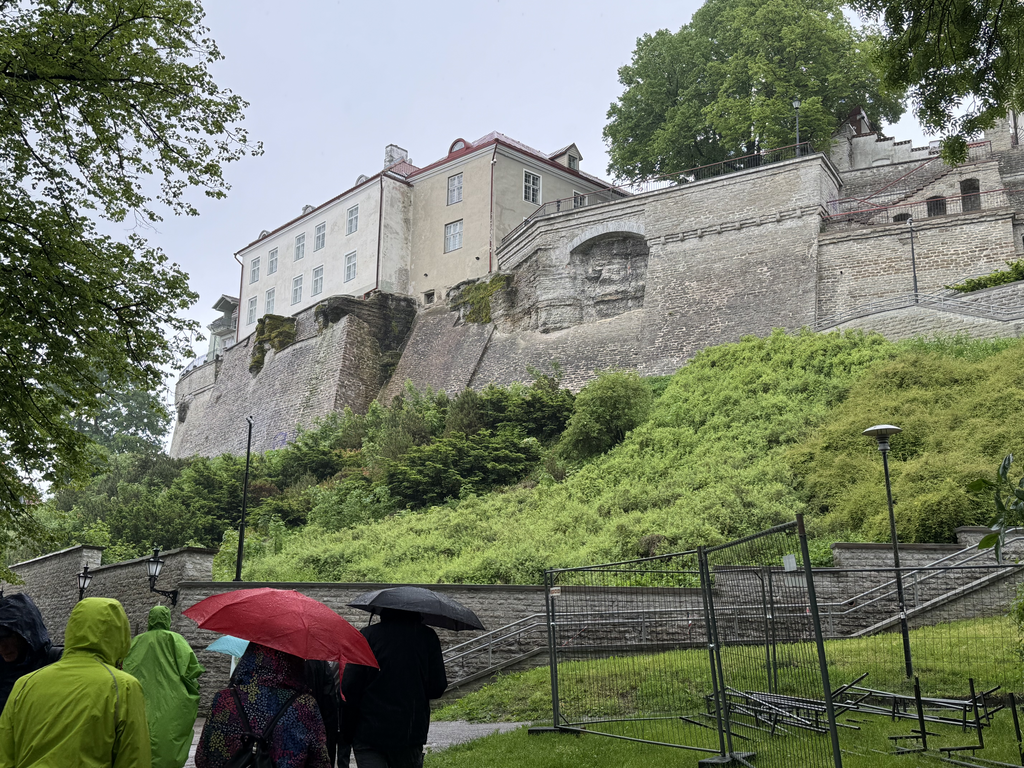
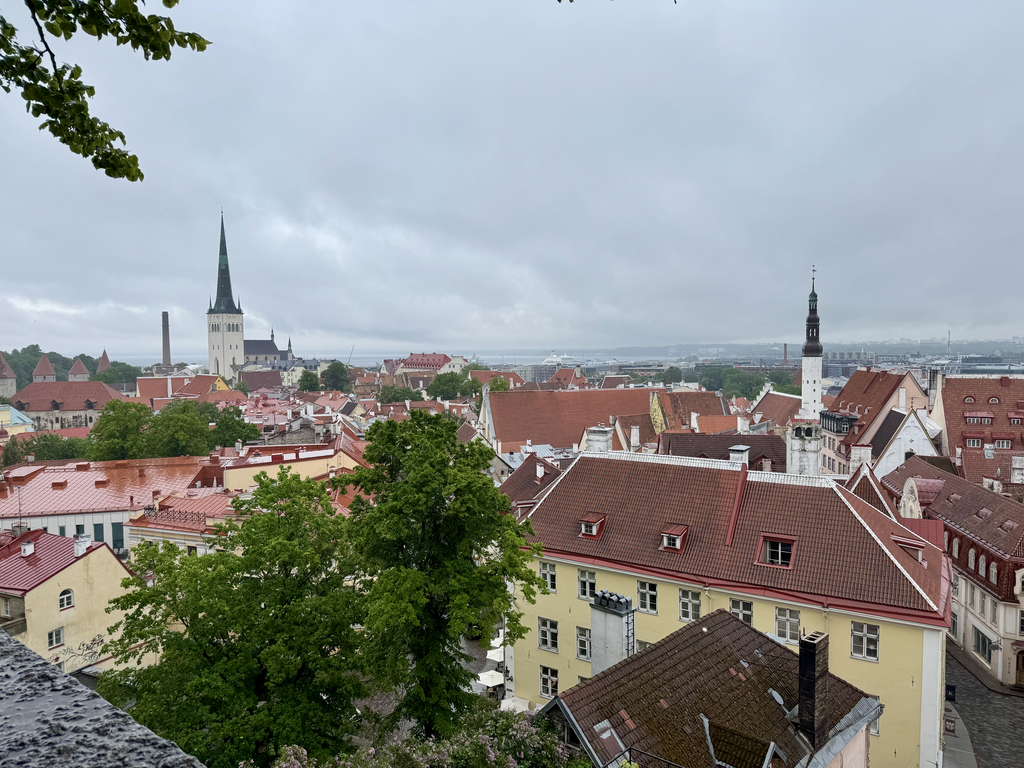
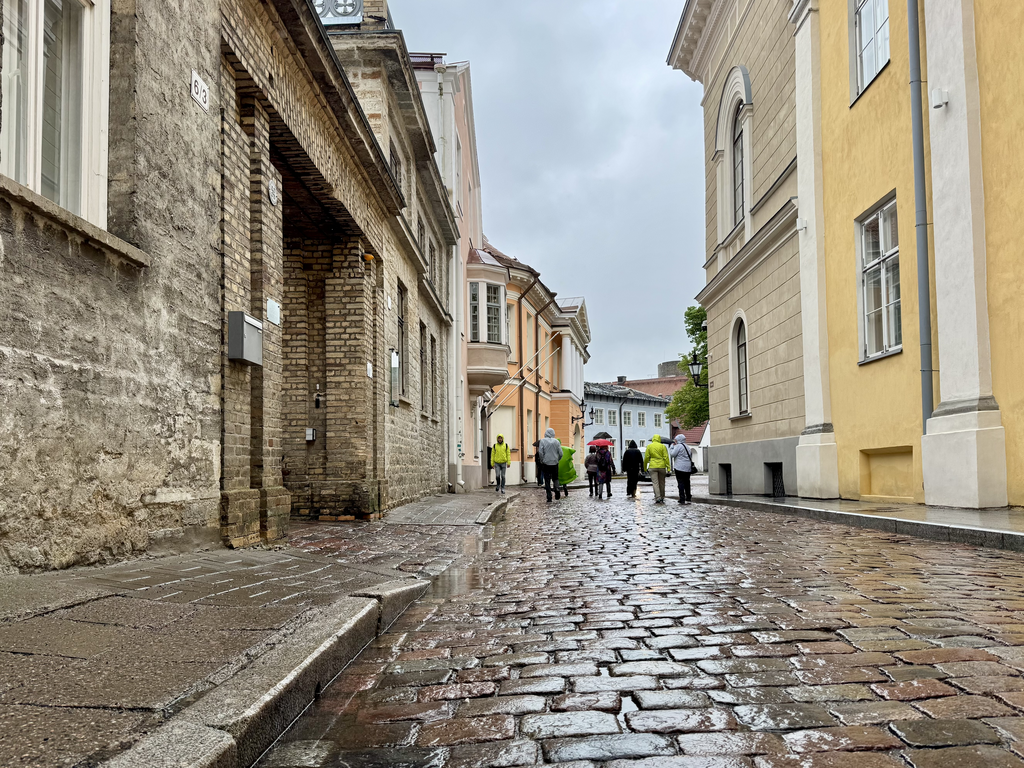
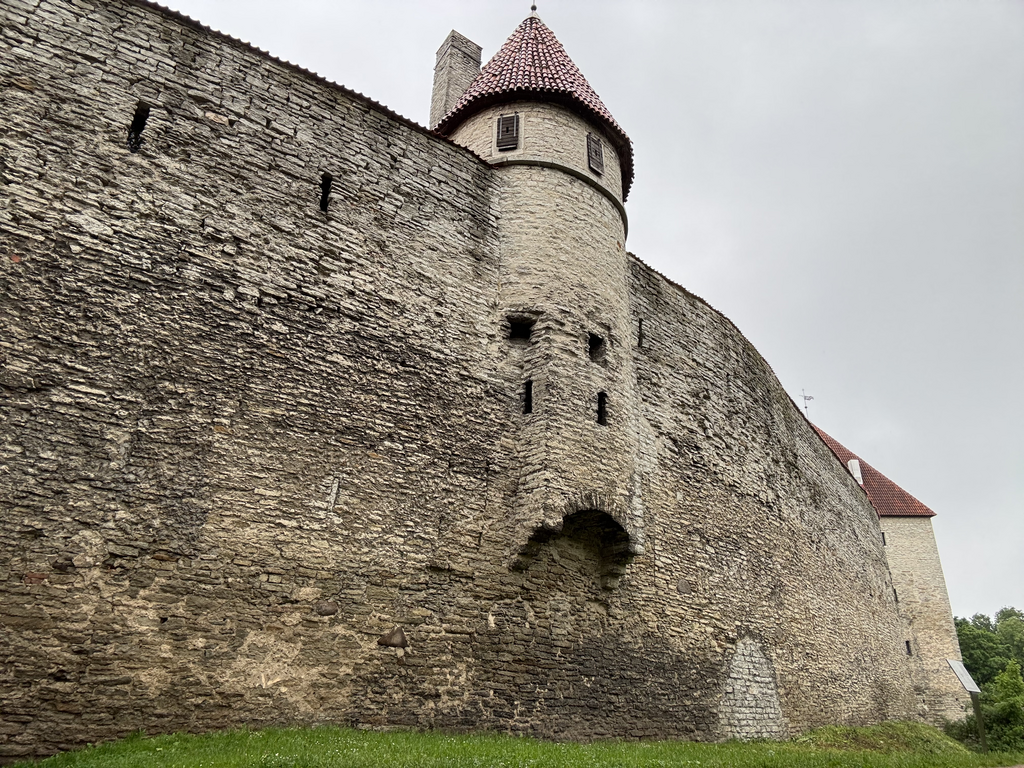
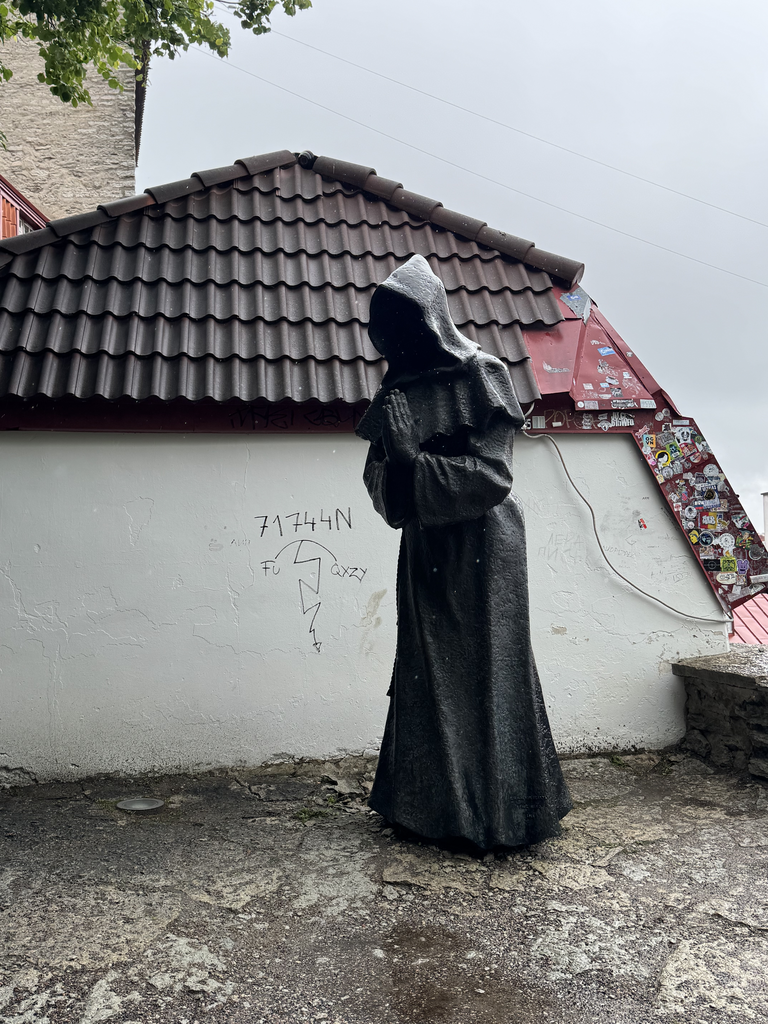
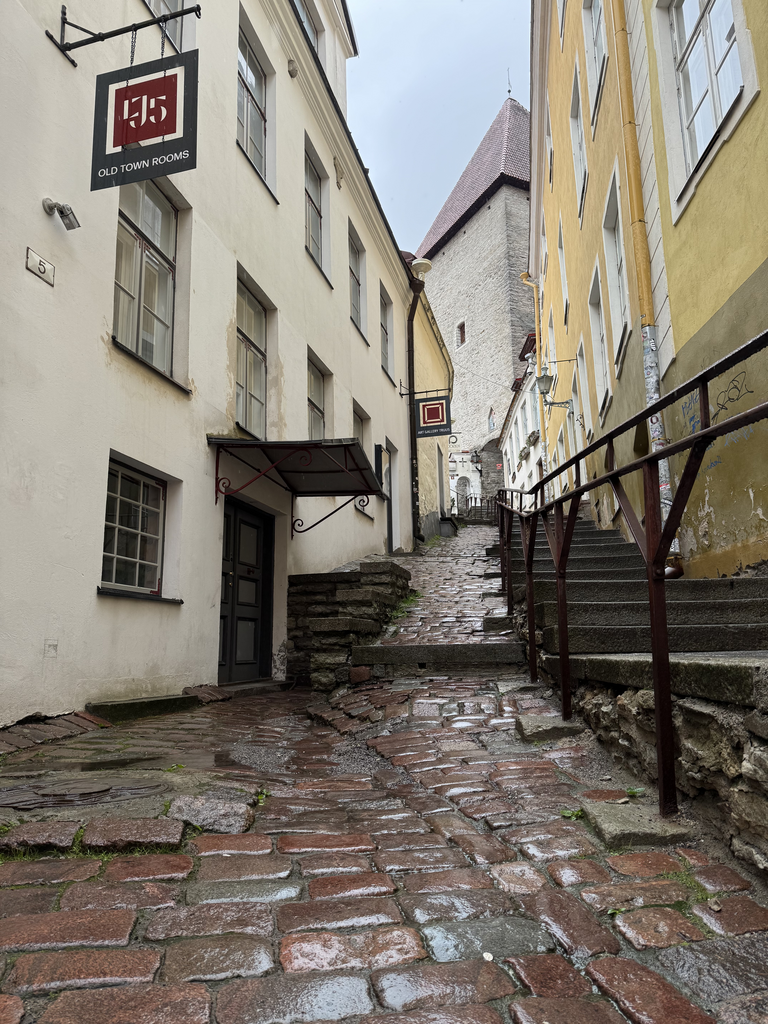
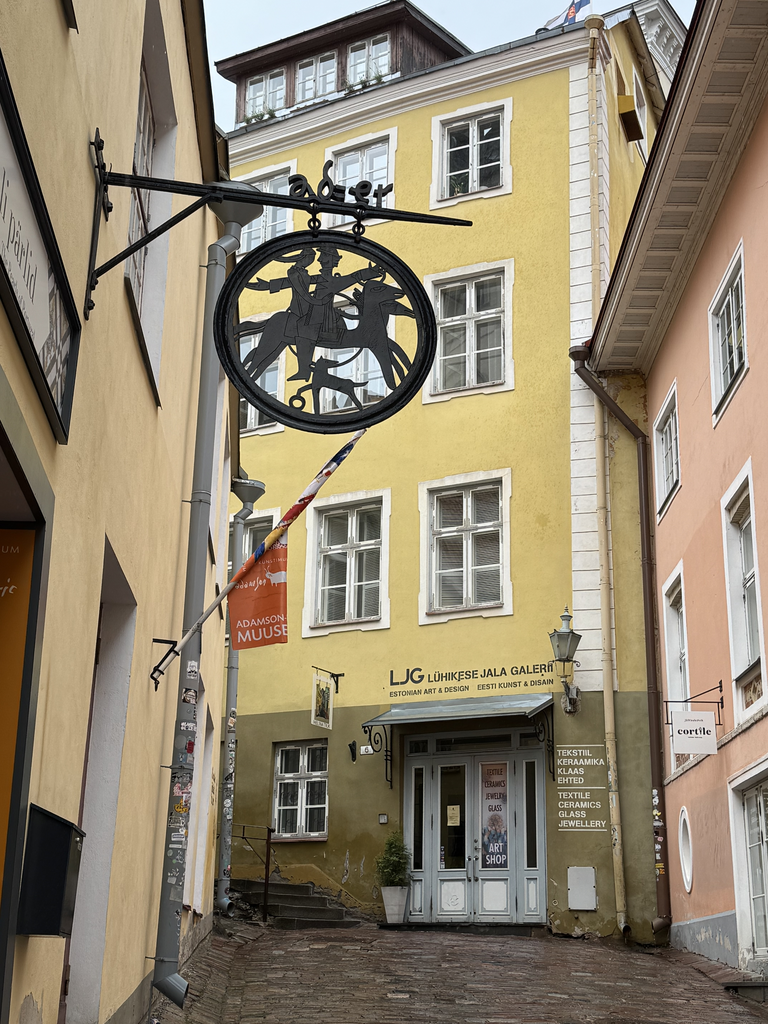
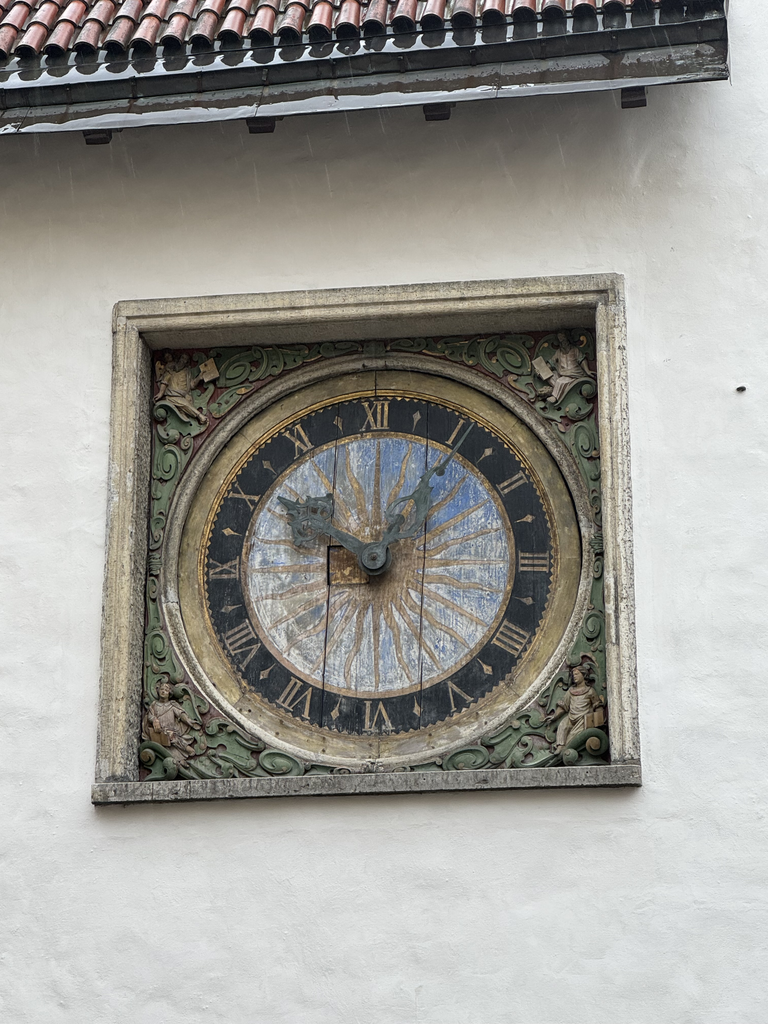
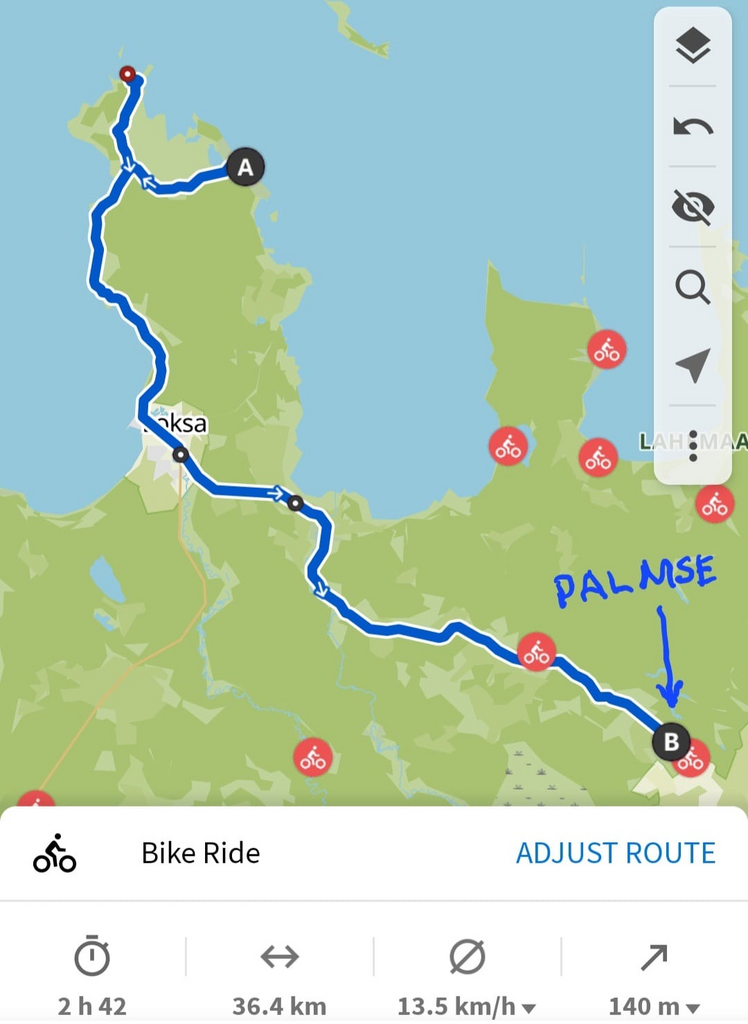
Wednesday Tallinn was beautiful in the rain, drizzle, and gray. I didn't notice the beauty of the old walled town at first because I was looking down, trying to avoid water and the occasional large cobblestone. Our leader Andreius lead the few non-water-phobics on a tour of the UNESCO city of Tallinn (Tall for the Danes and linn for town in Estonian). Estonia is amazing for surviving the occupations of the Danes, Swedes, Germans (Hanseatic League), Russia, Germans again, Russia (again) before independence in 1991. We started in the upper Town and winded down. When cruise ships dock, 5-6 at times, the place is wall-to-wall tourists. So, our delight to find no tourists in the rain! I am including pictures but not much description because I am short on time and we started riding in 40 minutes. Andreius has a very dry sense of humor and I enjoyed his tour and comments. Suffice to say that I will devote another blog to his sayings. We drive out of the city and get our bikes in Lahemaa National Park right on the shores of the Gulf of Finland. We dipped our hand in the not too cold waters and rode in the rain which after lunch changed to sun. Good 34.6km ride.


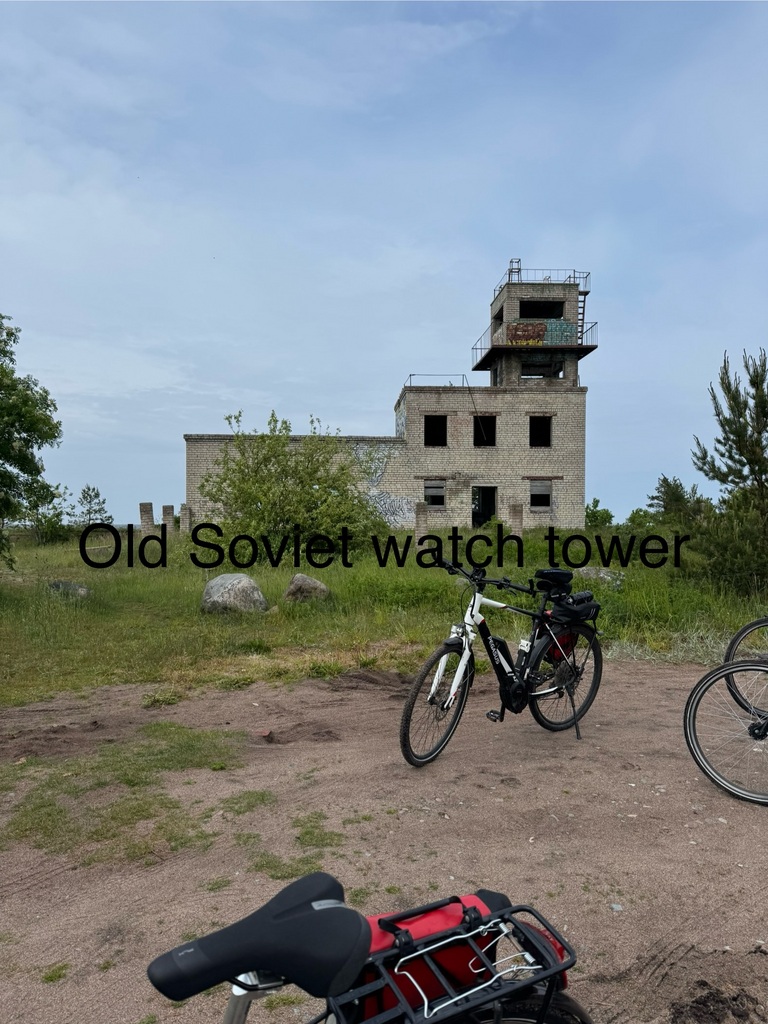
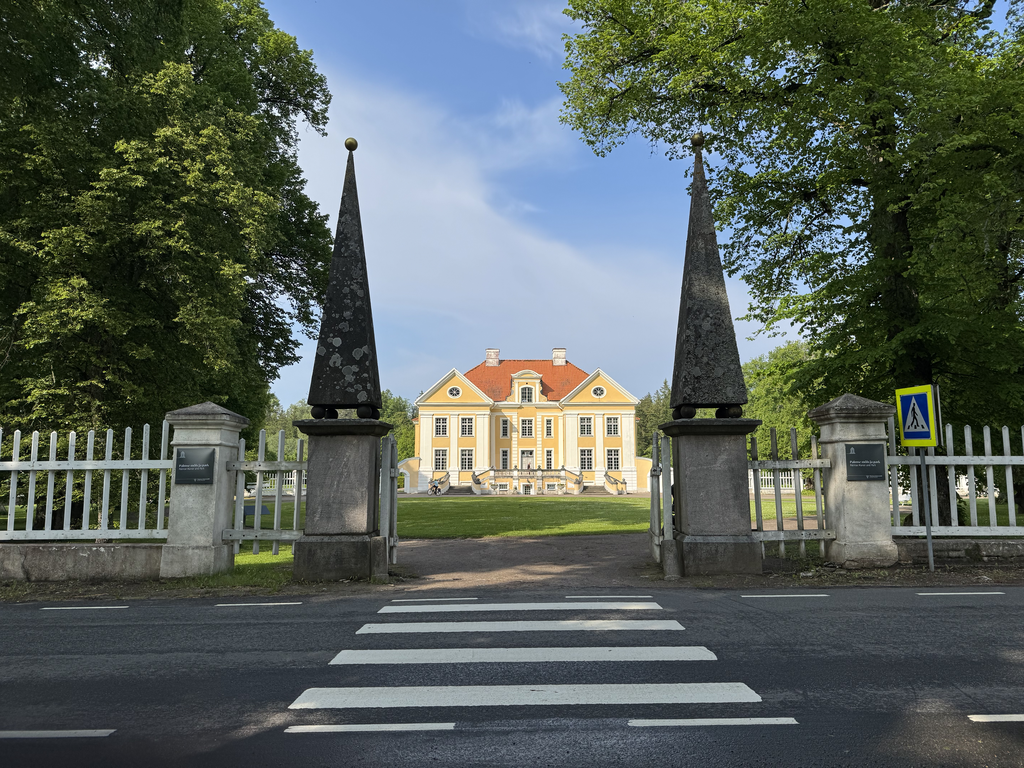
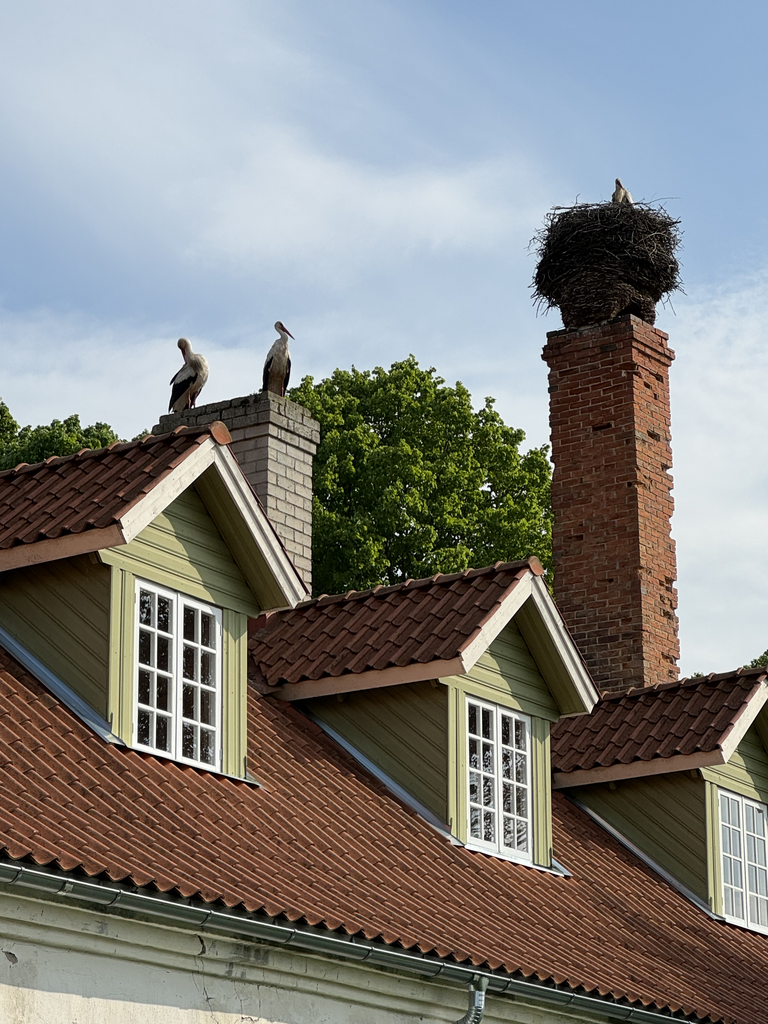
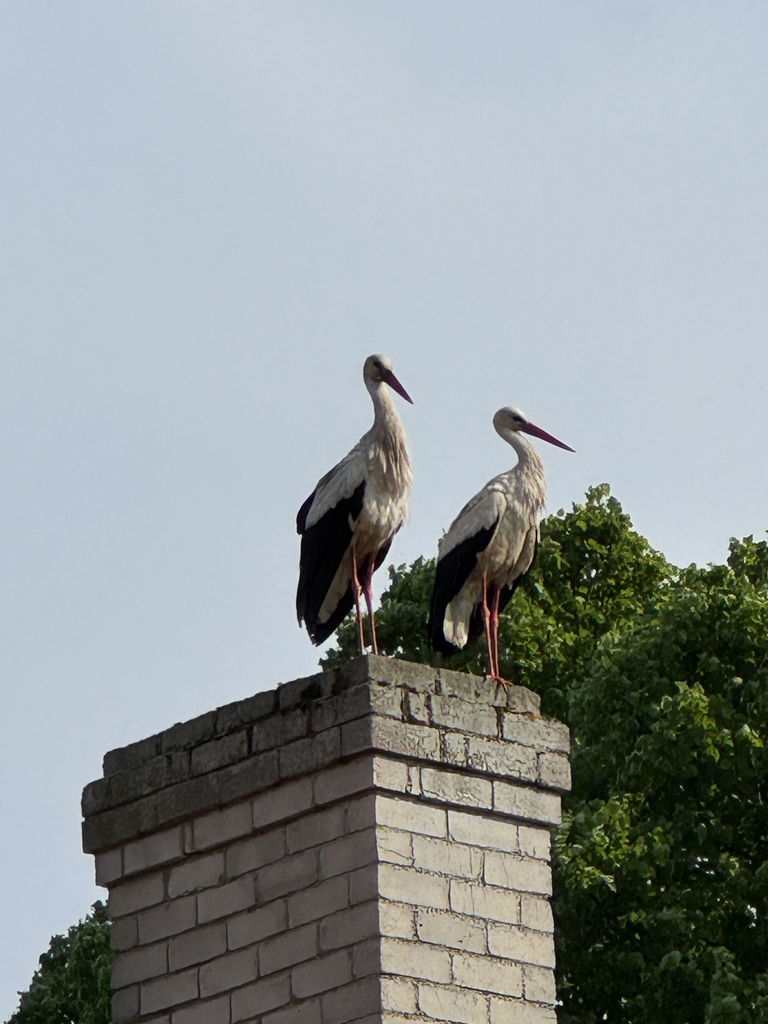
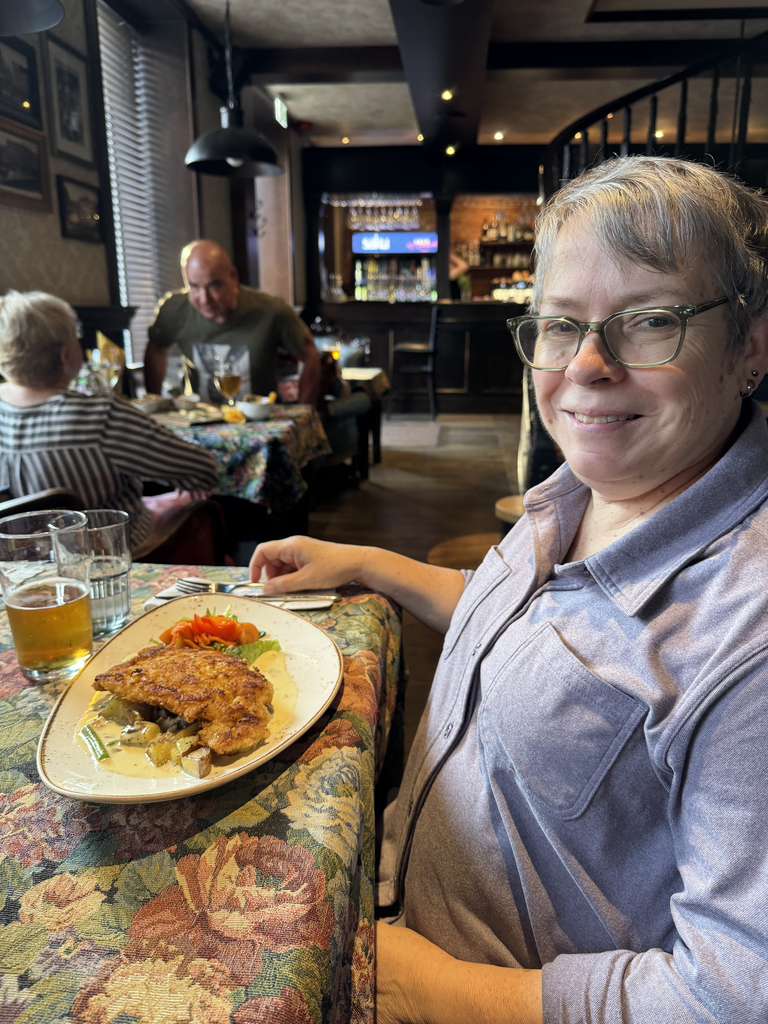
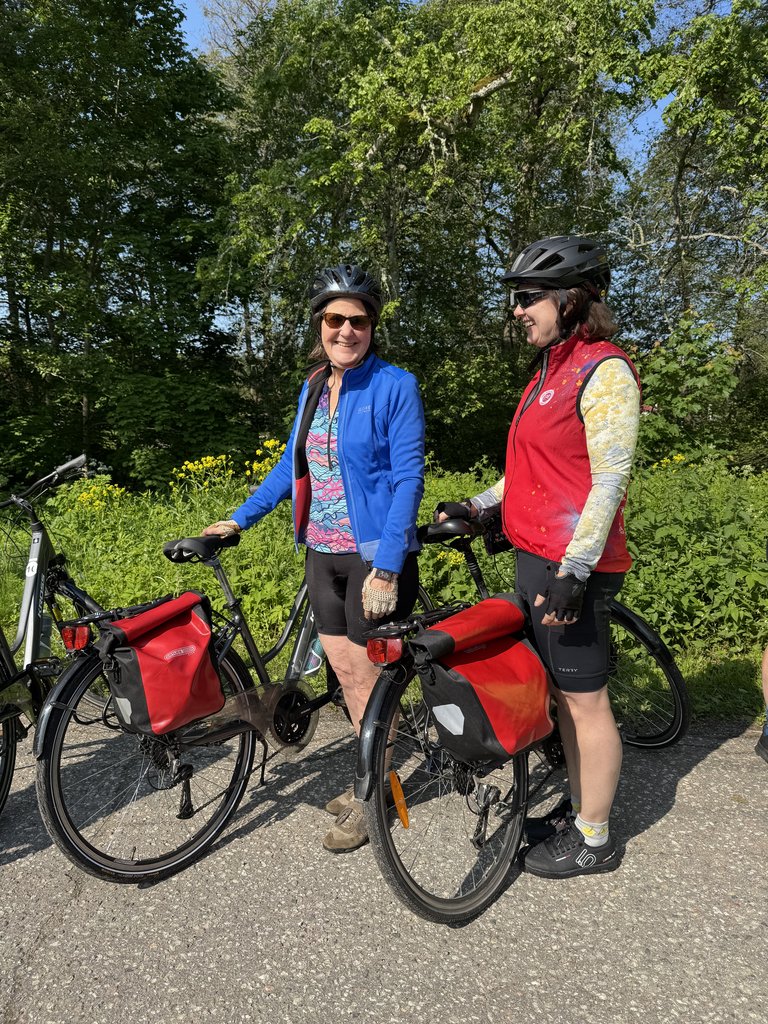
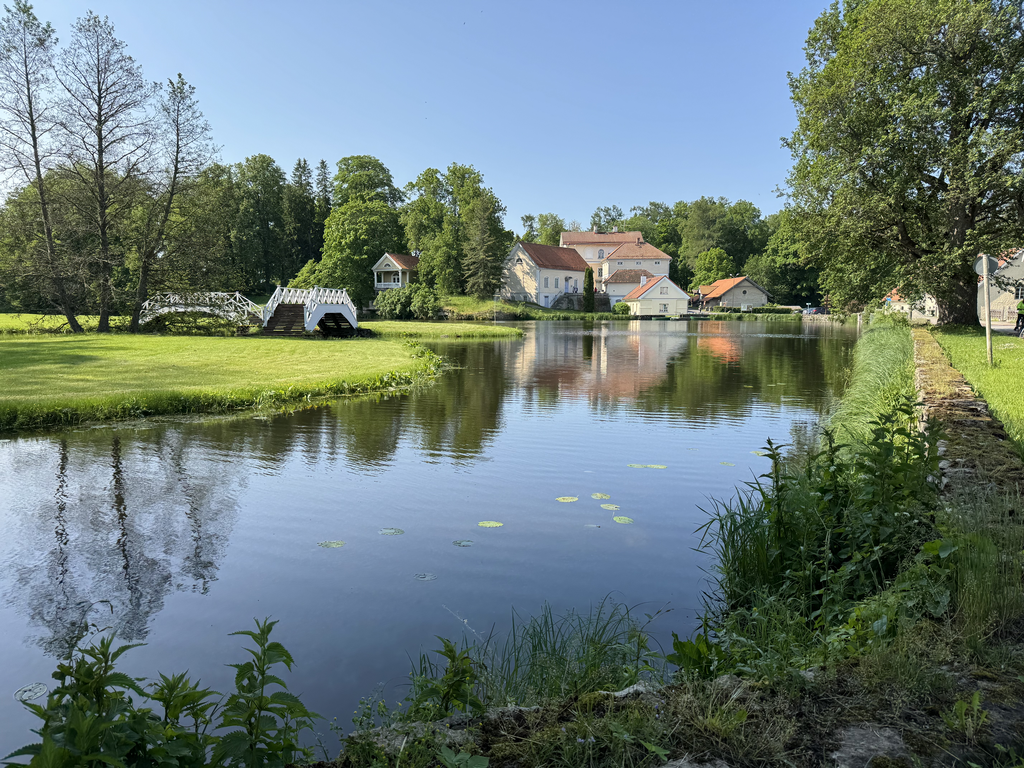
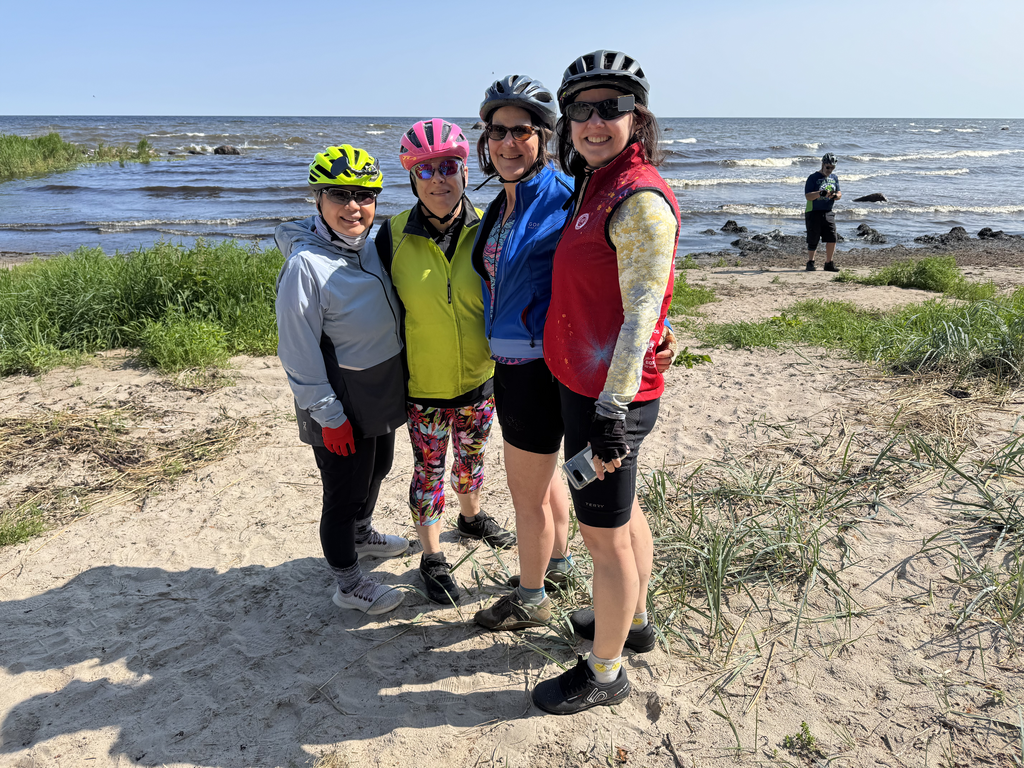
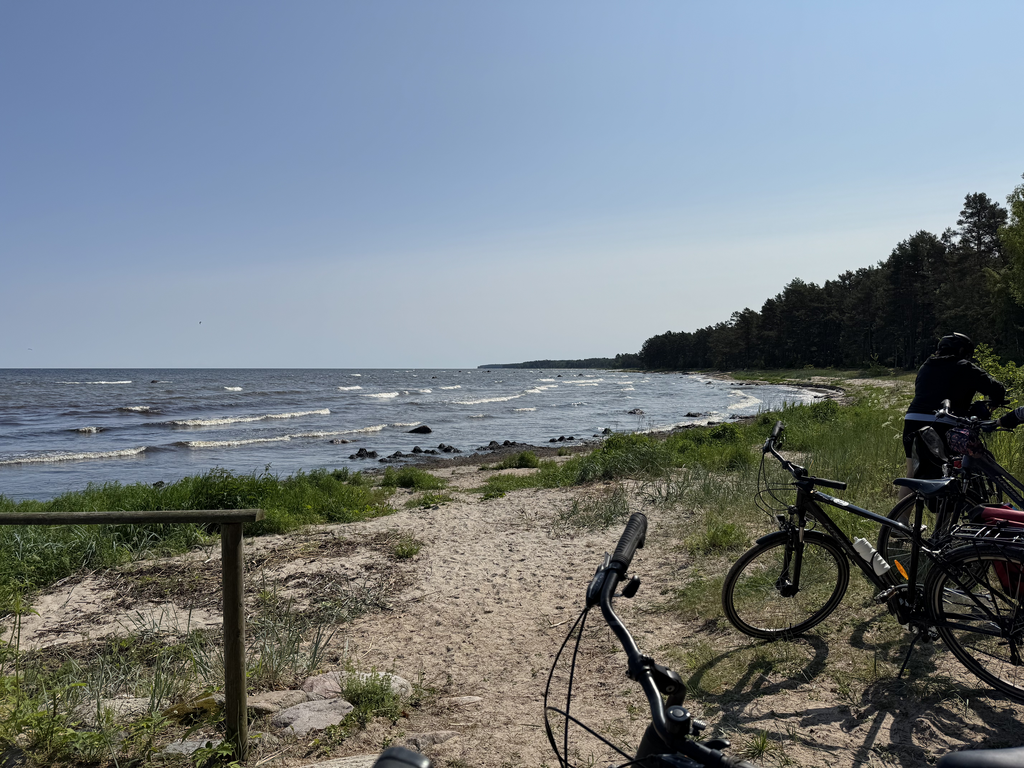
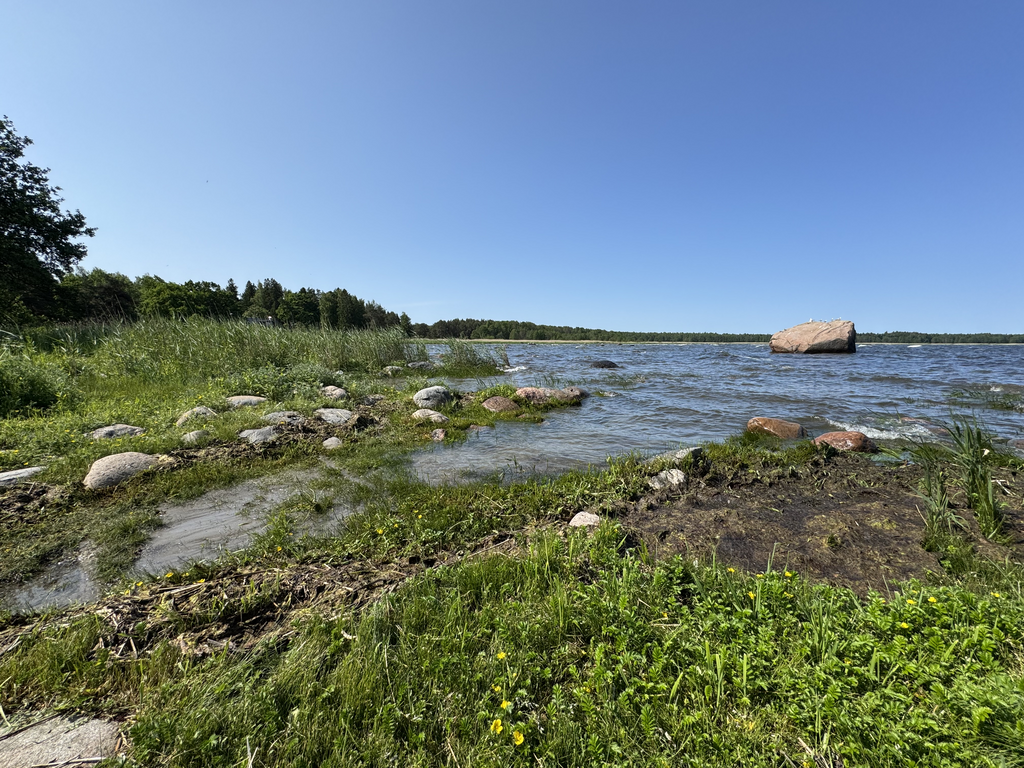
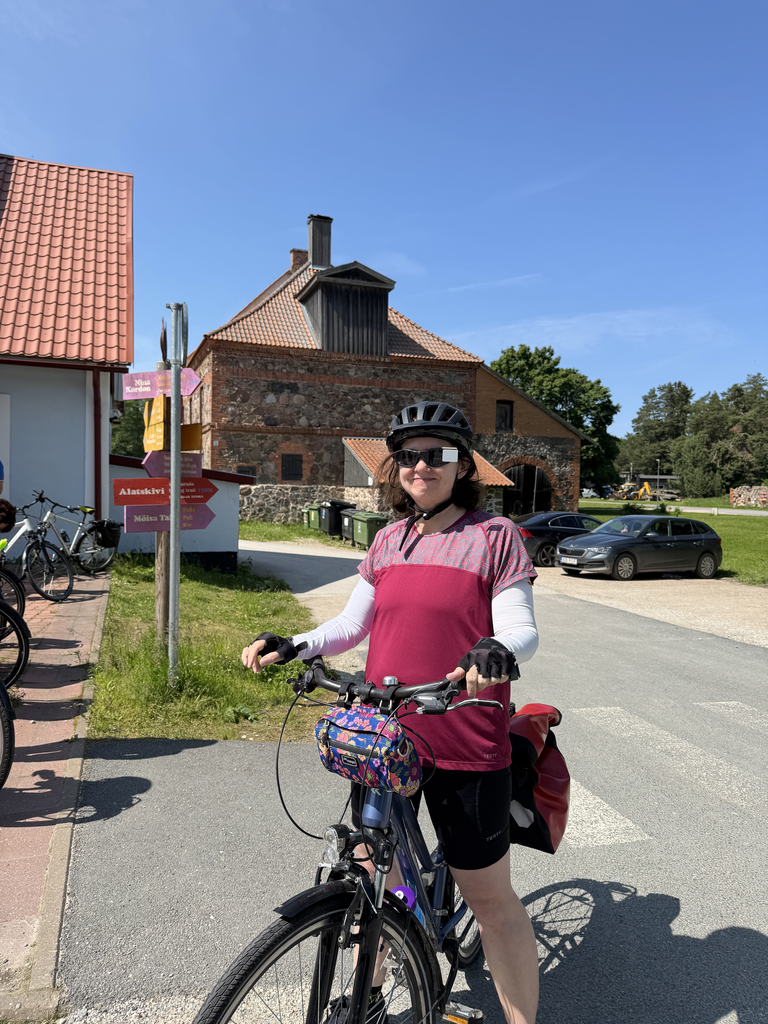
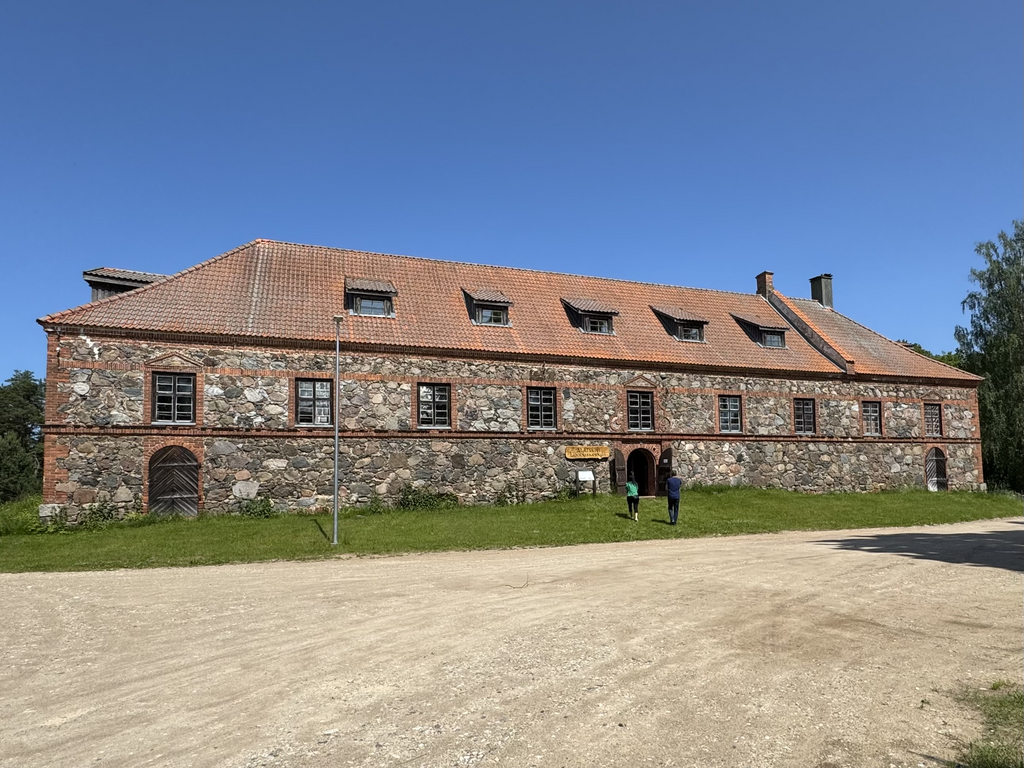
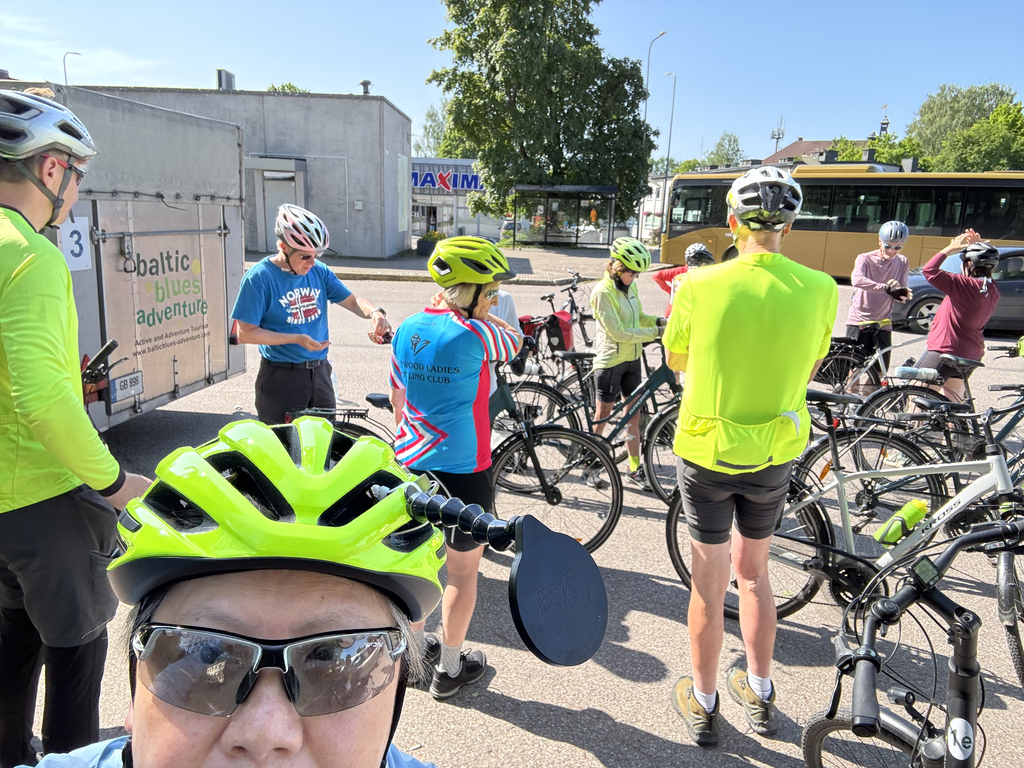
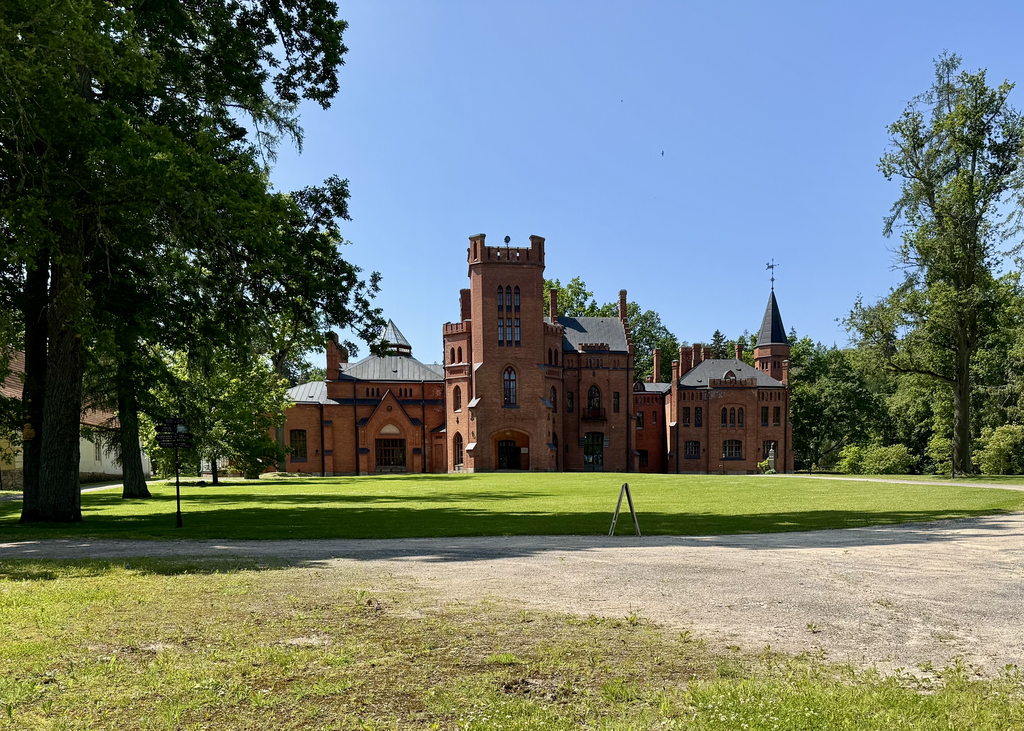
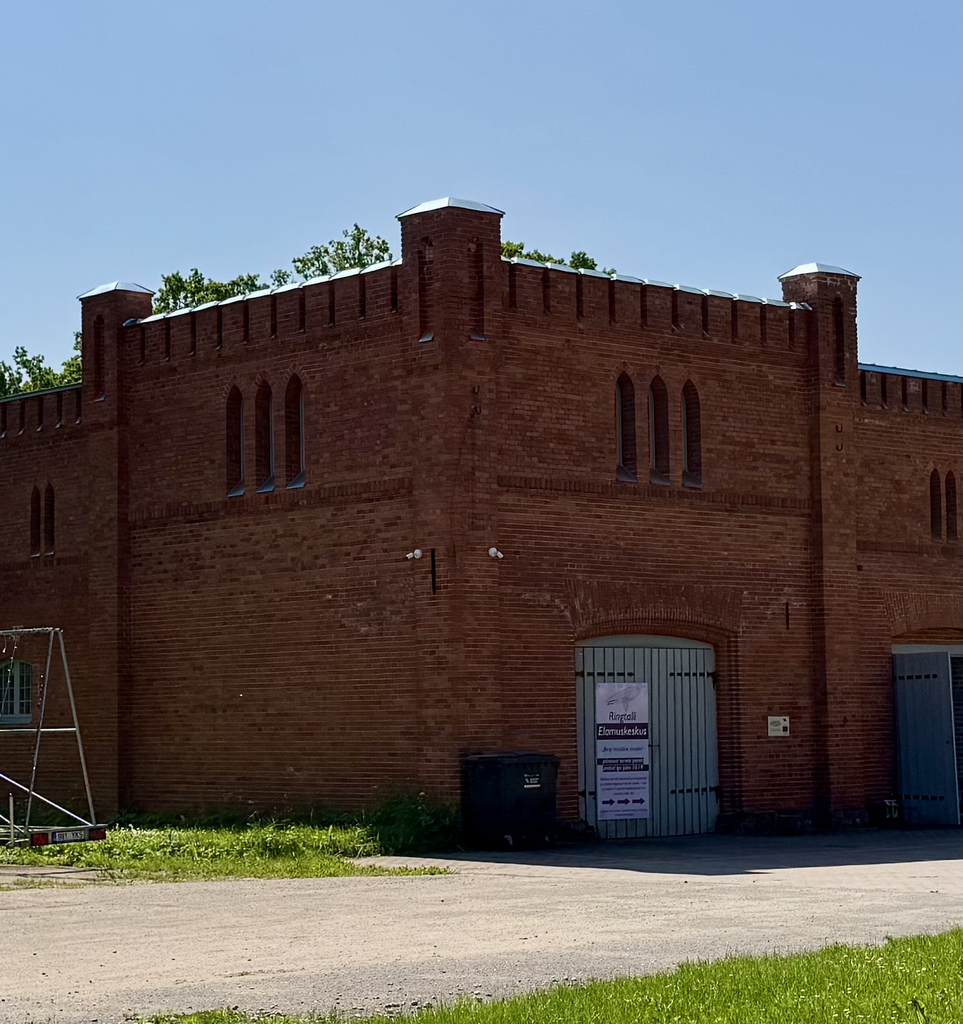
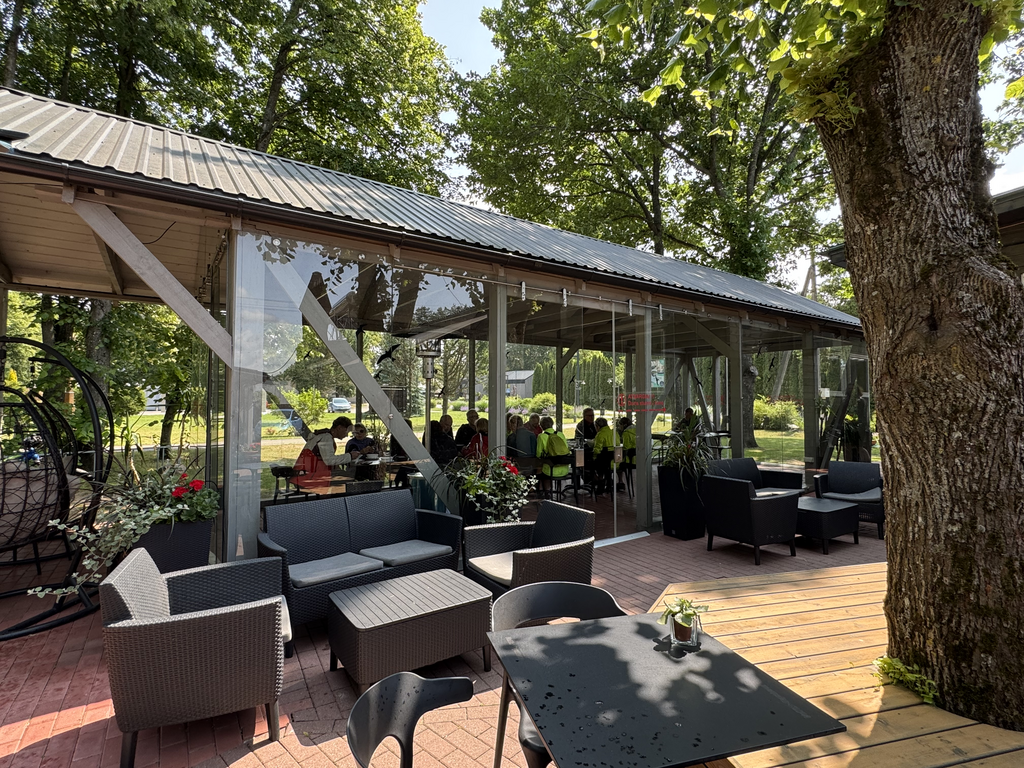
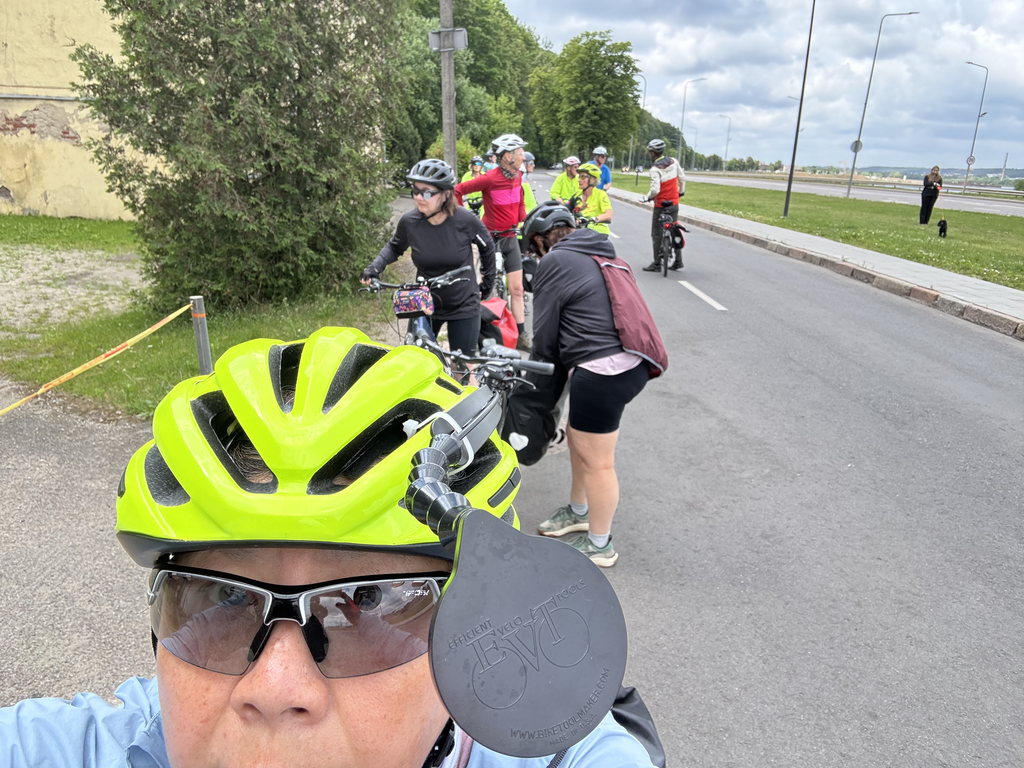
Afternoon Ride We left Tallinn and drove about an hour to a point in Lahemaa NP to get our bikes fitted. We were all provided with waterproof panniers, and walked through the M-method check. Imagine the rear spokes as the lower right part of the M, move to check the seat, down to the pedals, up to the brakes. To keep track of the bikes, we were all given our bike numbers, 1E for me, 2E for Lisa, 8 and 9 for Amy and Mary. Andrius said that we can stay in the bus if the weather is cold, rainy, and windy. He lied. We pulled on raincoats and packed our lunches to eat outdoors in Viinistu. We shivered under the shed, then all went into the restaurant for hot tea and coffee. There is a modern art museum next door, but had no time to visit. The rain let up a bit and we could see bits of sun straining. The ride got warmer and we all started to enjoy the next 16 miles of beach along the Gulf of Finland, woods and meadows. We passed remnants of old Soviet watchtowers. The Russians would close all beaches at night and rake the sands so they can tell if anyone tried to escape by boat. They also kept their eyes open for any contraband books that western nations would drop overboard for the Estonians. Think bibles. These days, you can't build new structures, but can only fix them within the boundaries of the park. We ended the ride in front of Palmse Manor in Palmse. It looked like something plucked down from Austria! It was the former home of Baltic German Barons who kept the czars supplied with vodka, and paid the serfs partly in vodka. It was a good omen to see the storks and sun at the end of the day. We are spending tonight and Friday night in Rakvere, a town that was at some point prominent. The hotel Wesenbergh has a very throw-back feel of a business hotel for men. There are no amenities but for a smoking room. Rooms are small and spare. Dinner is at the Berliner Tavern with decent schnitzel! Lisa is happy.


Lahemaa National Park: Giant Swings, Fish Soup, Fishermen's cottages and Erratic Boulders

Day 5: 2025-06-13 1718


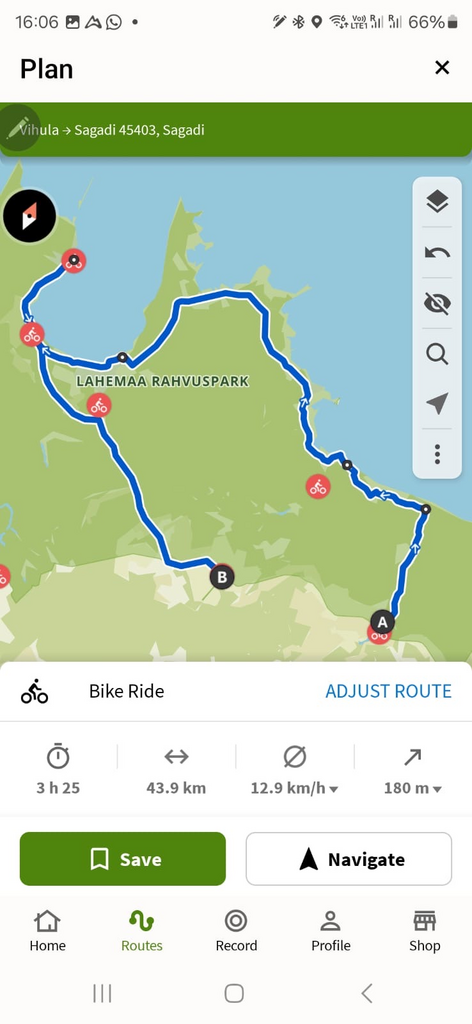
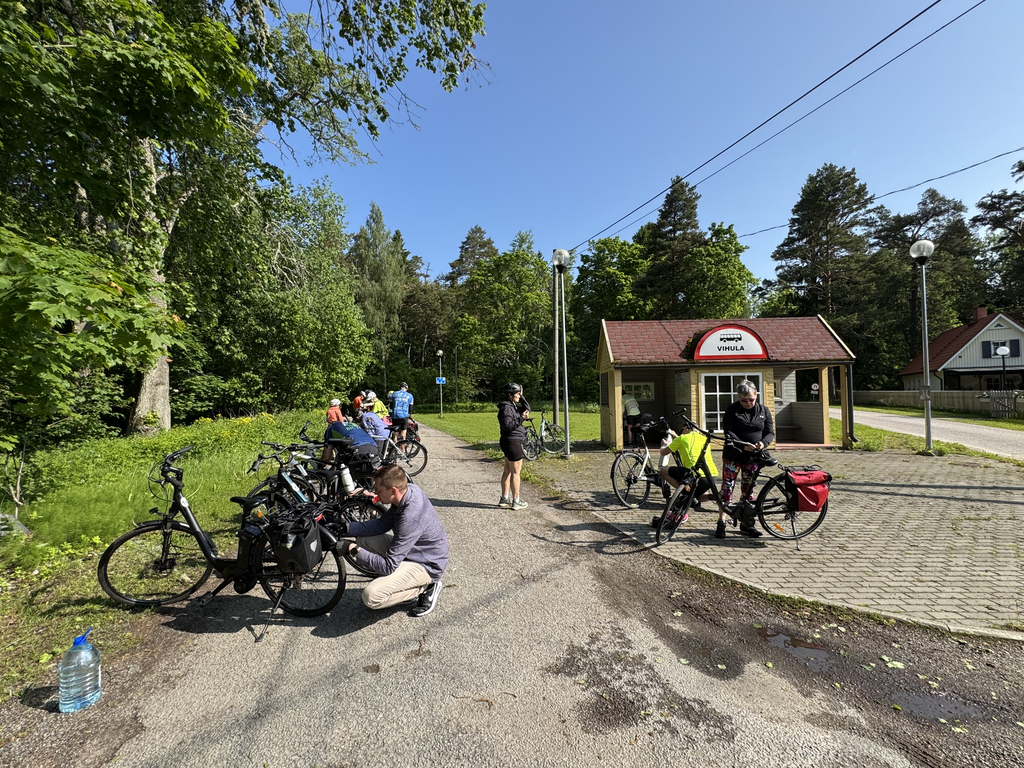
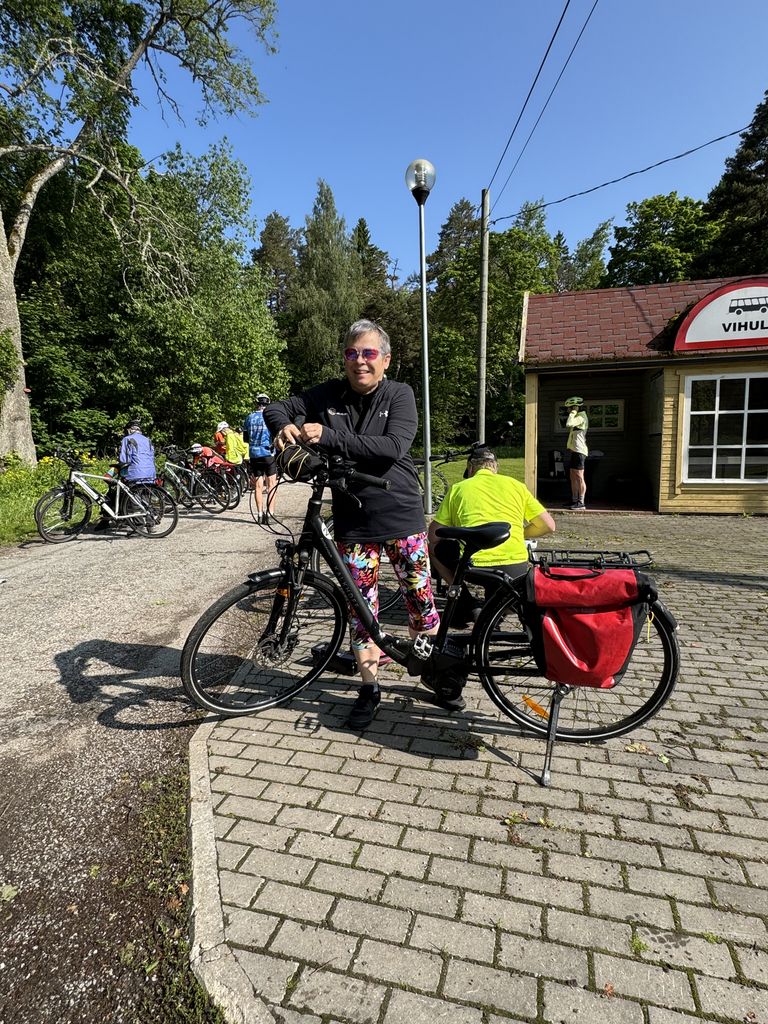
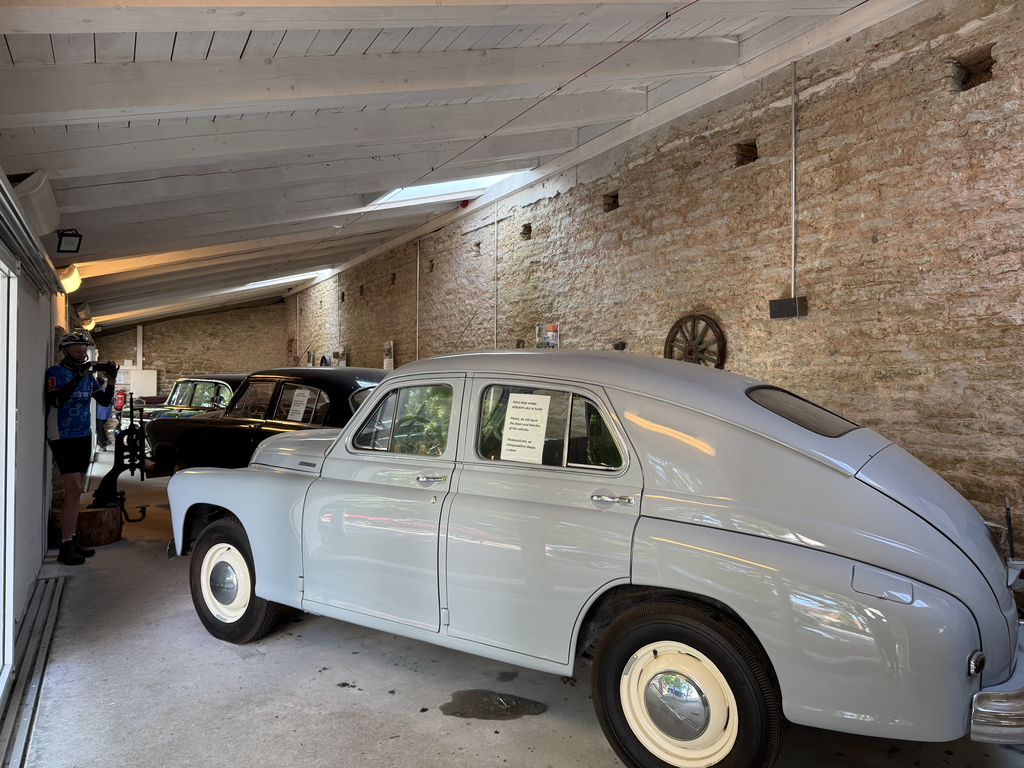
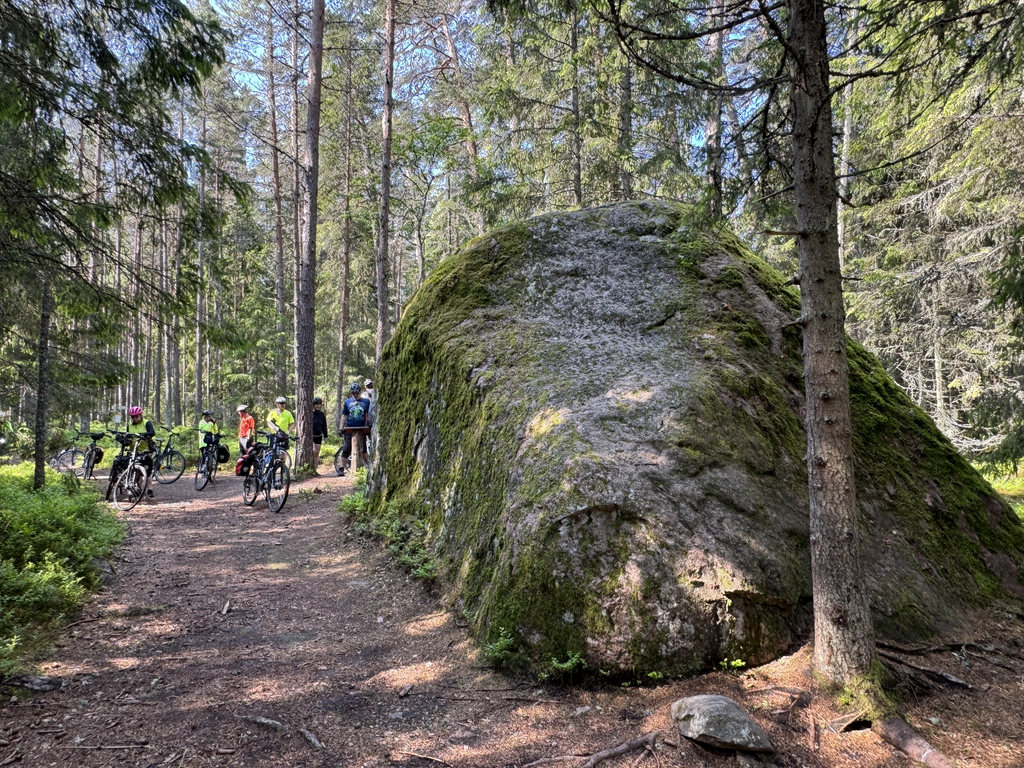
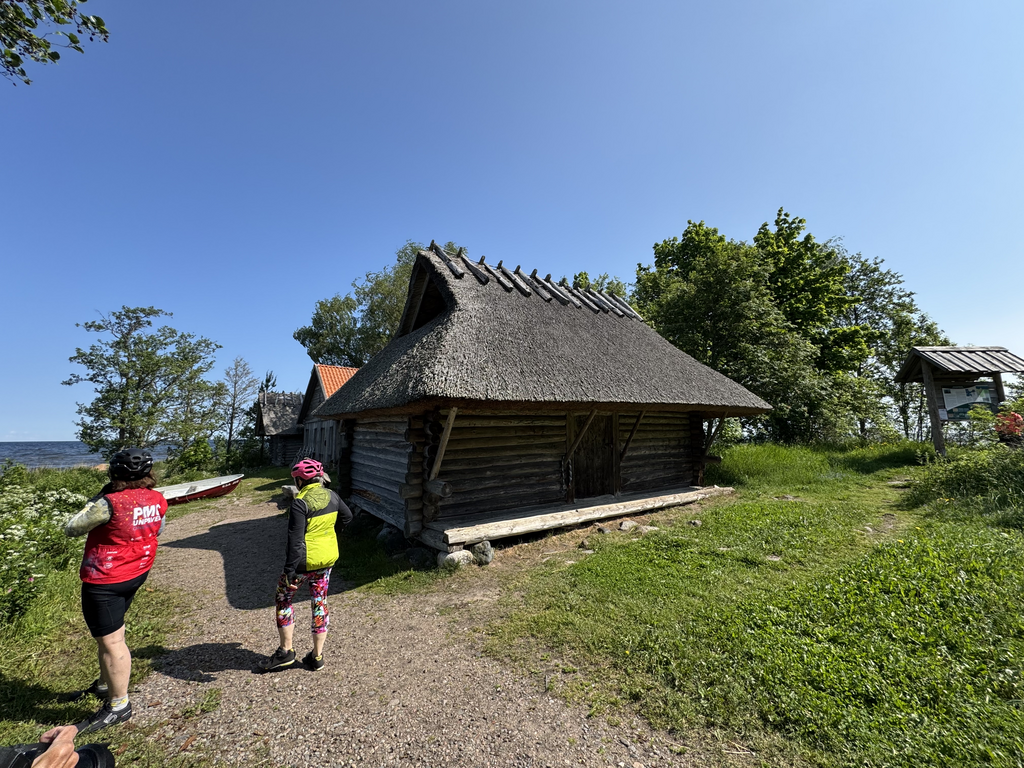
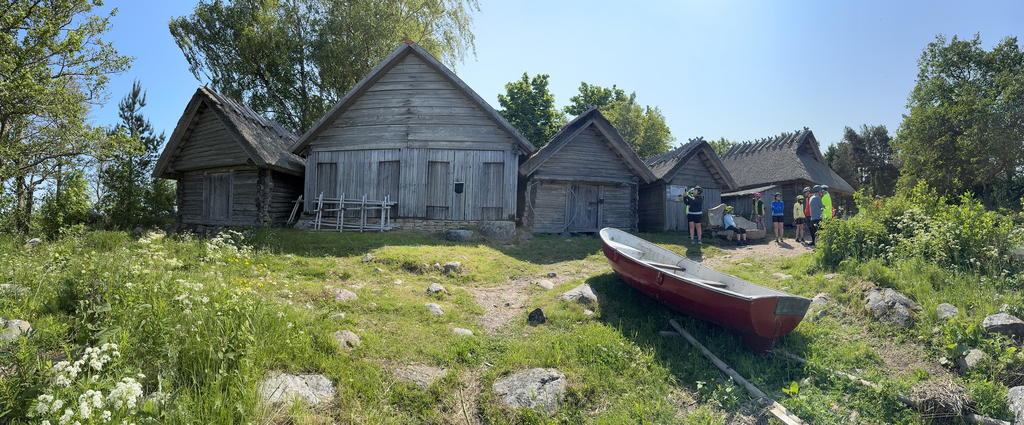
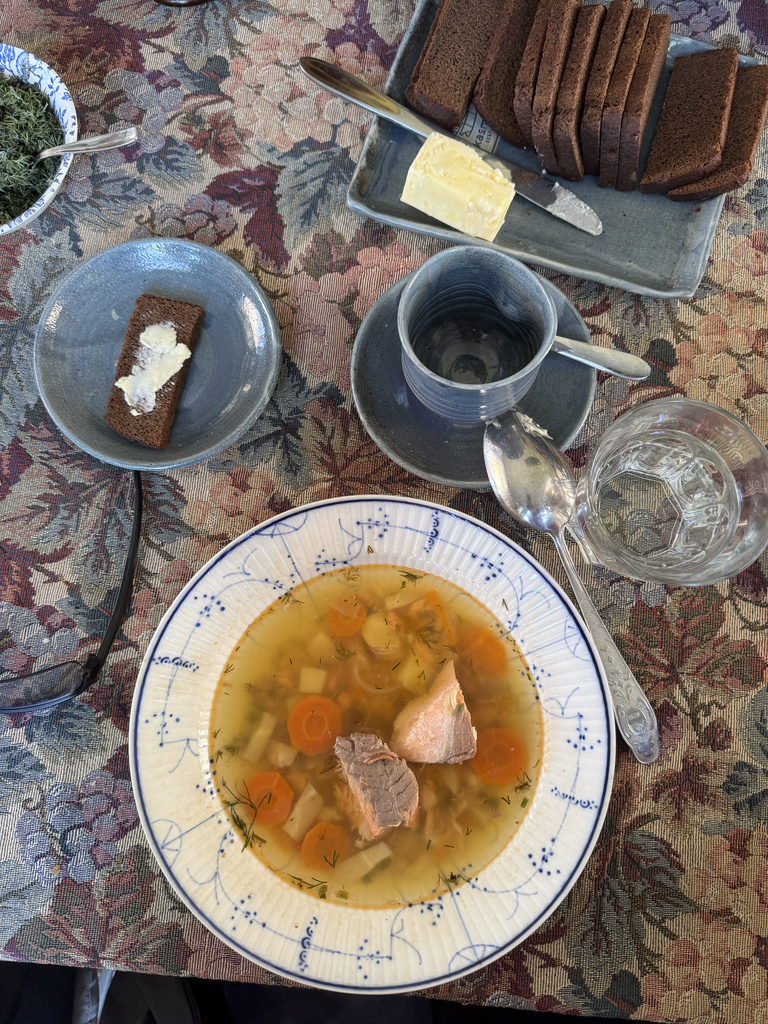
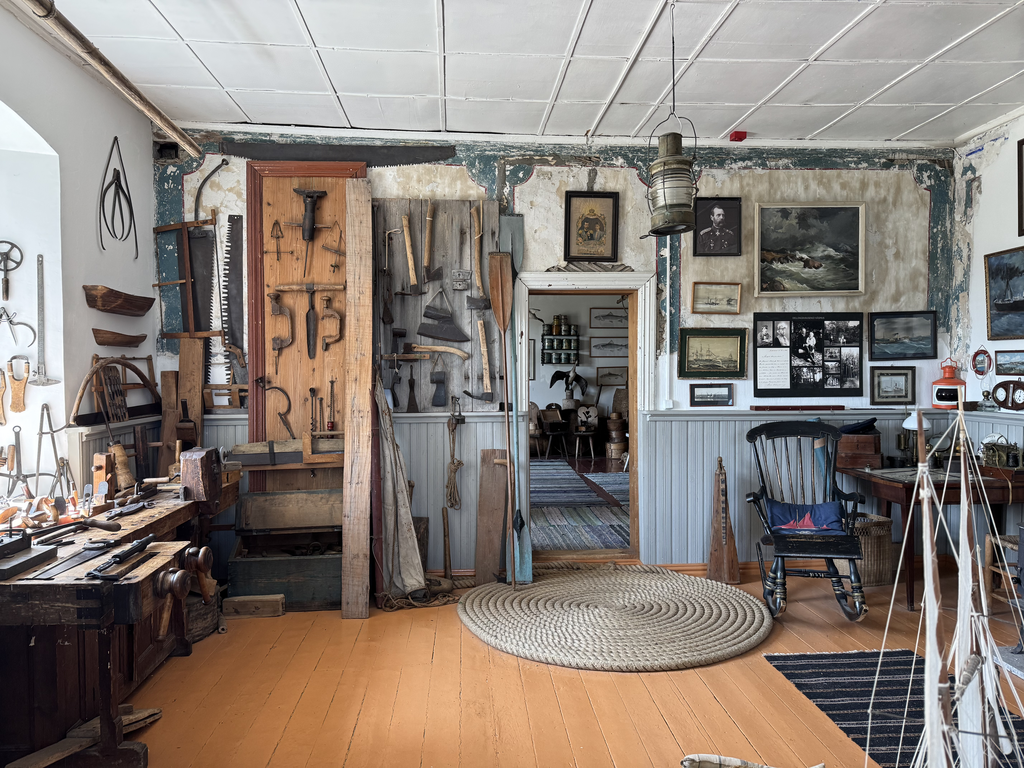
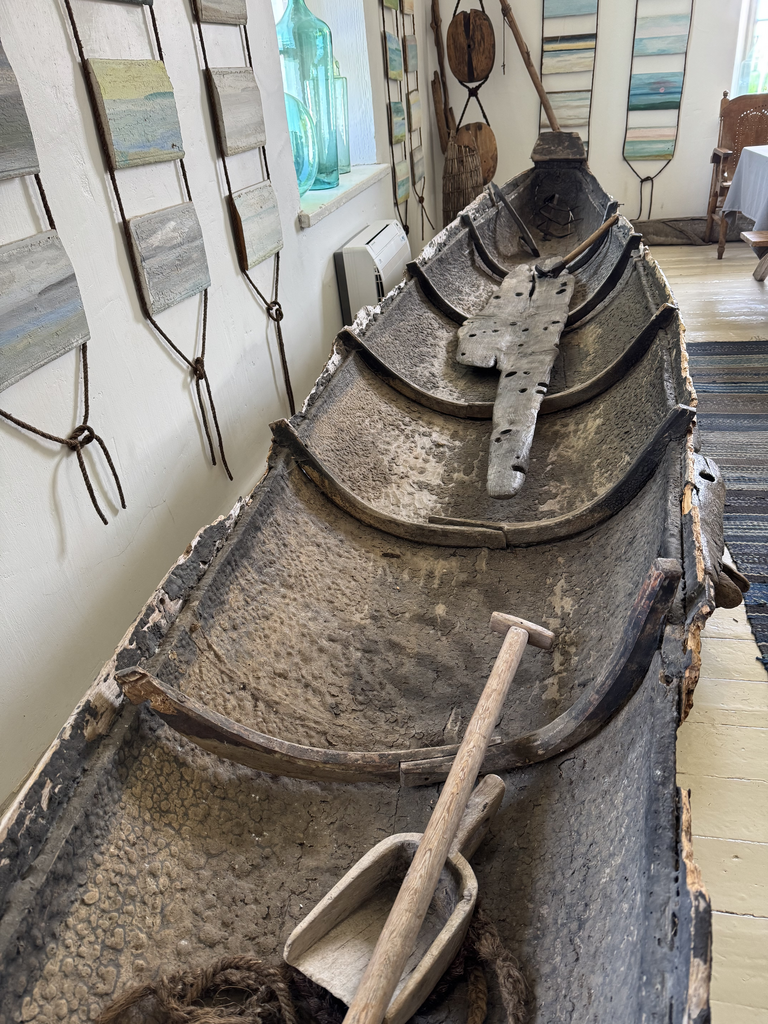
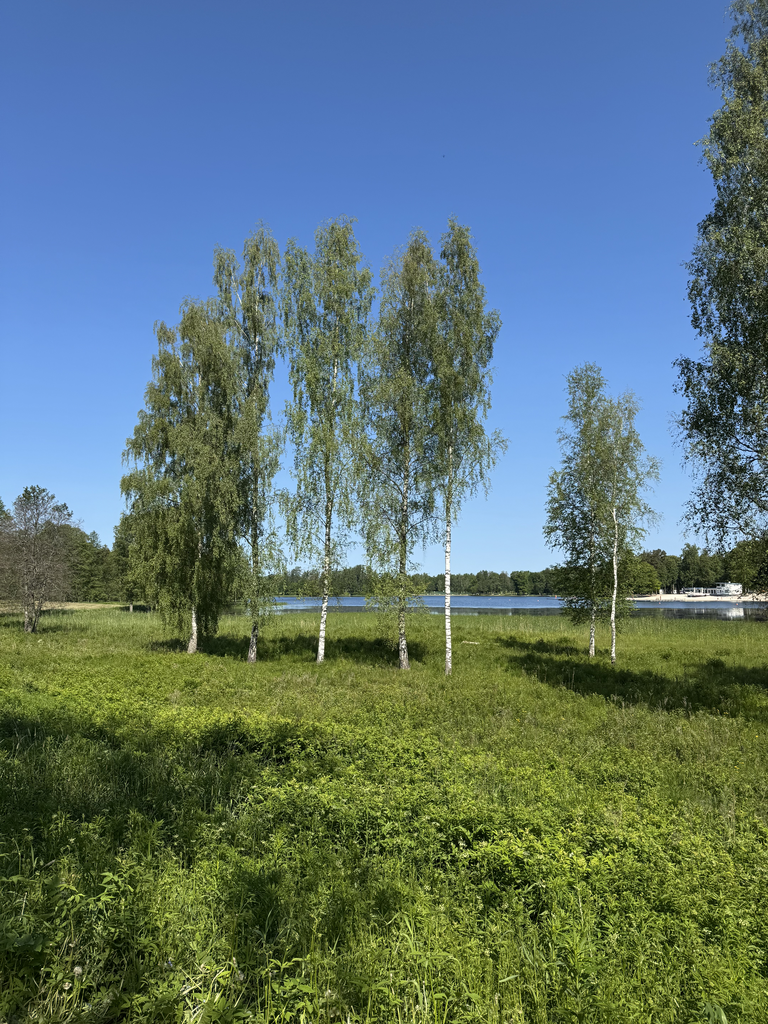
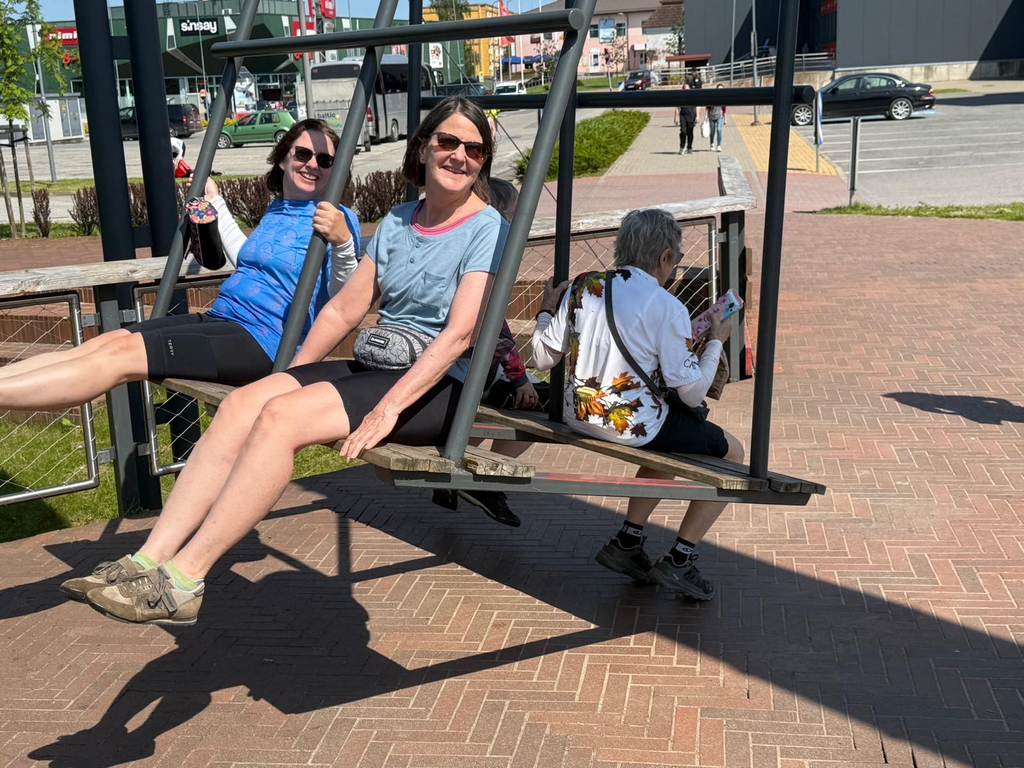
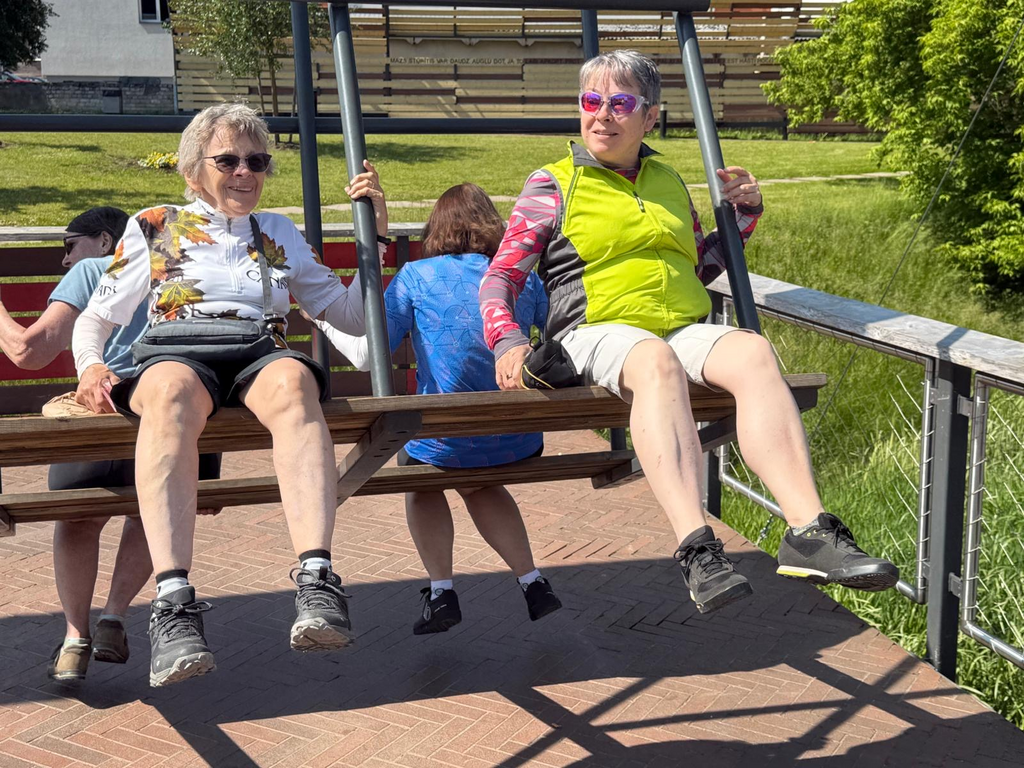
Friday Sun! This was a full riding day through other parts of Lahemaa. We bus to Vihula manor, then to the old fisherman's village of Altus (400 years old, with thatched huts), then onto a narrow Forrest trail with roots to view the erratic (not erotic - which is what we all heard) boulders left when the ice retreated. On towards the beachside town of Altaja where I am sure will be the site of the midsummer festivities next week. Six of us jump onto the traditional Estonian Wooden Swings, and we are up in the air before I realize how high three people on each side can push. Glorious riding through the woods where in places, we were parting underbrush of ferns! We were all infected with good humor that comes with good riding. For lunch, our guide had arranged for us to eat in the sunny room of the Captain's museum in Kasmu where there was a marine captains' school. The current owner's family has been there for 300 years. The house and museum is a treasure trove of all that has been collected over time and never thrown away. Best part, we could touch everything! We also had an amazing fish soup there for lunch, all I wanted was a nap afterwards. But we had 9 miles to go after lunch to Sagadi to meet the bus. From there, a quick trip back to Rakvere where the ruins of an old Danish stronghold from the 13th century lord over the town. We end with prosecco and strawberries in the hotel dining room where we had formal introductions (more in that later). It was a very good day.


Musttee and Peipsi Lake to Tartu

Day 6: 2025-06-14 1719


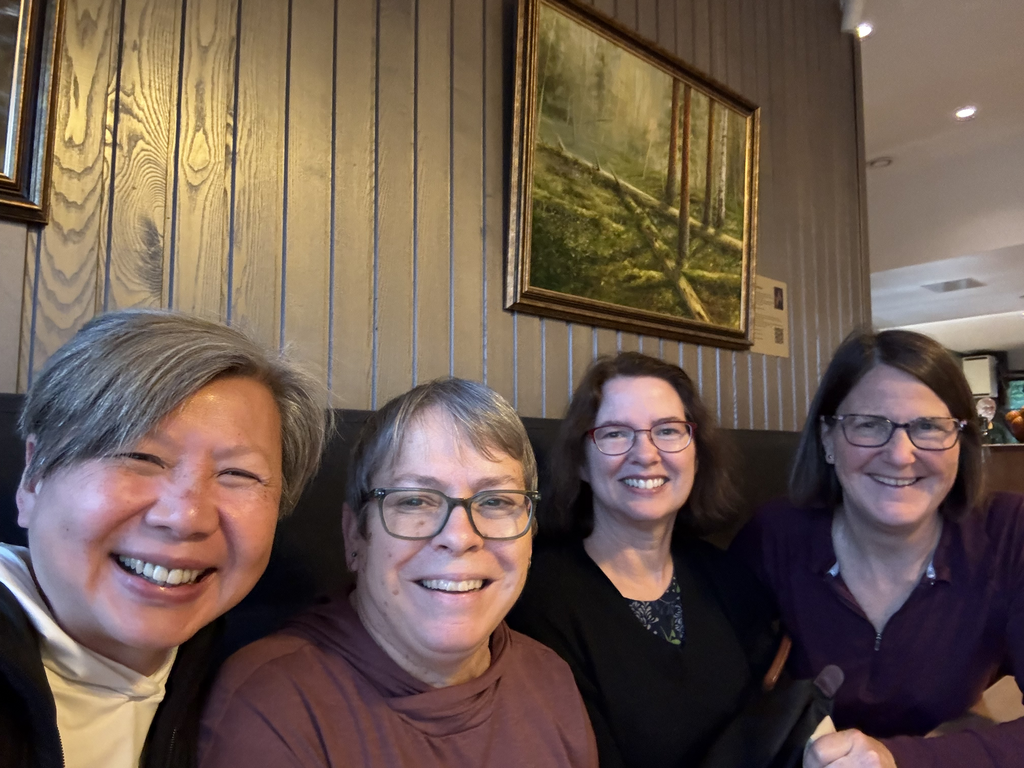
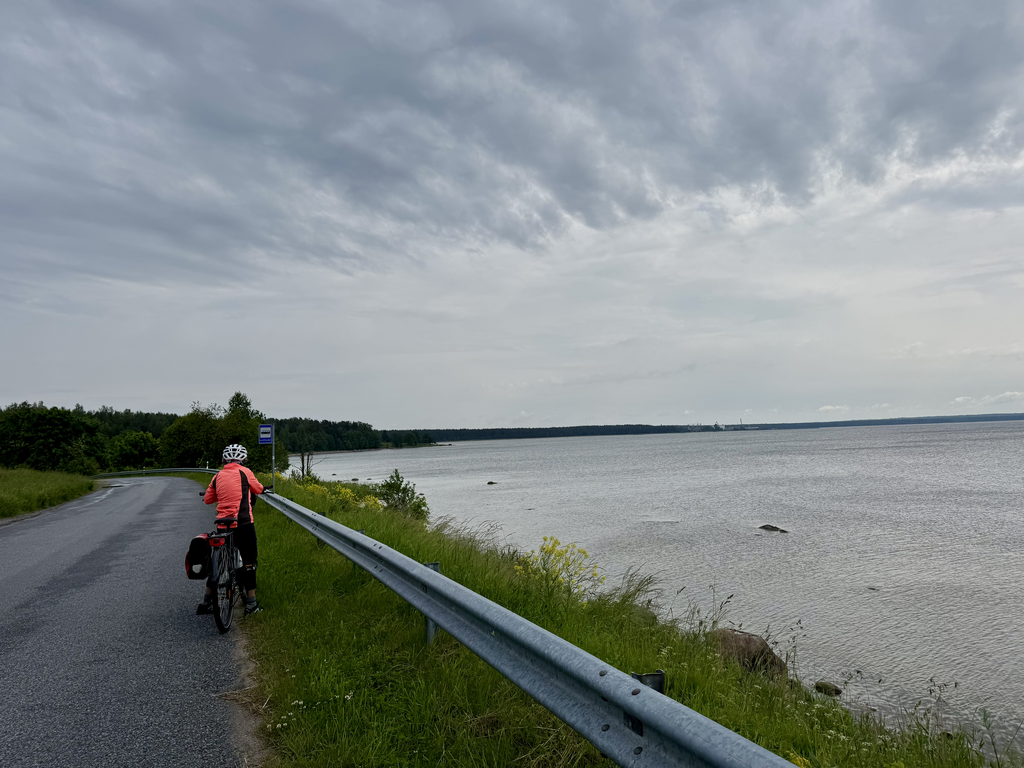
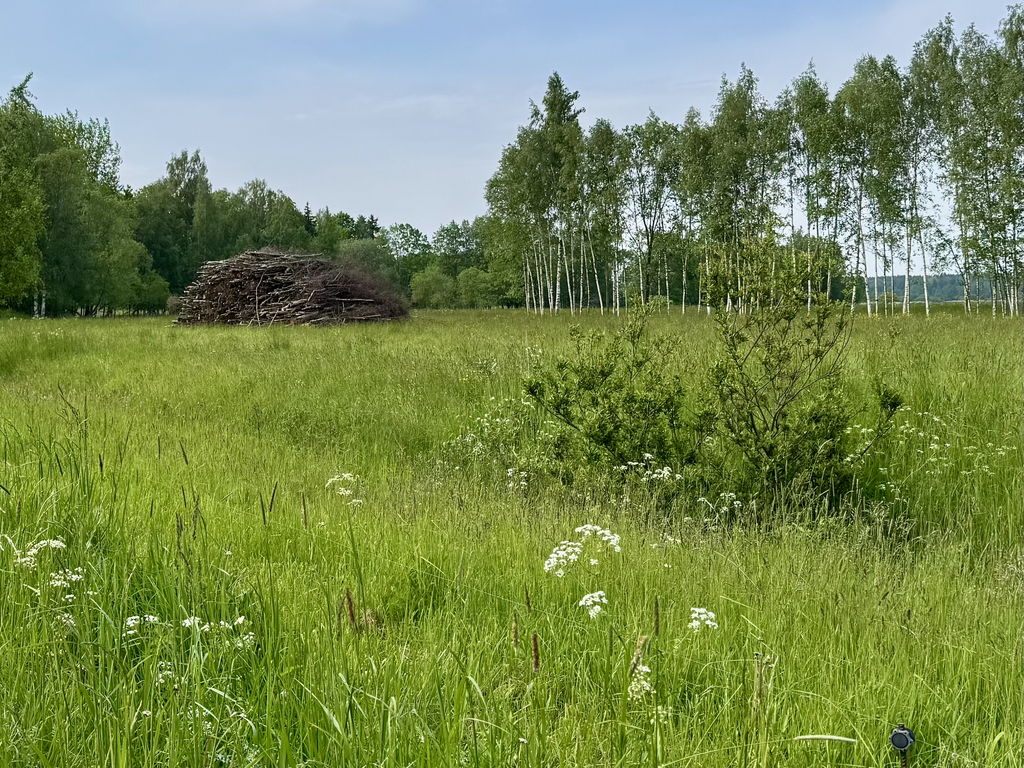
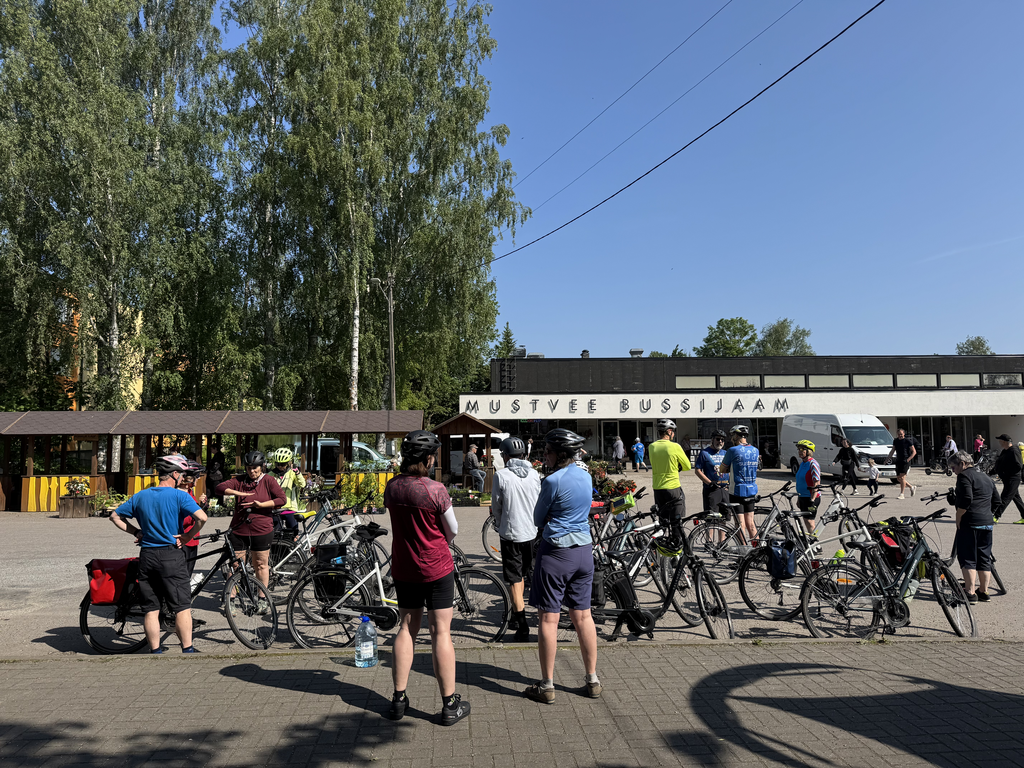
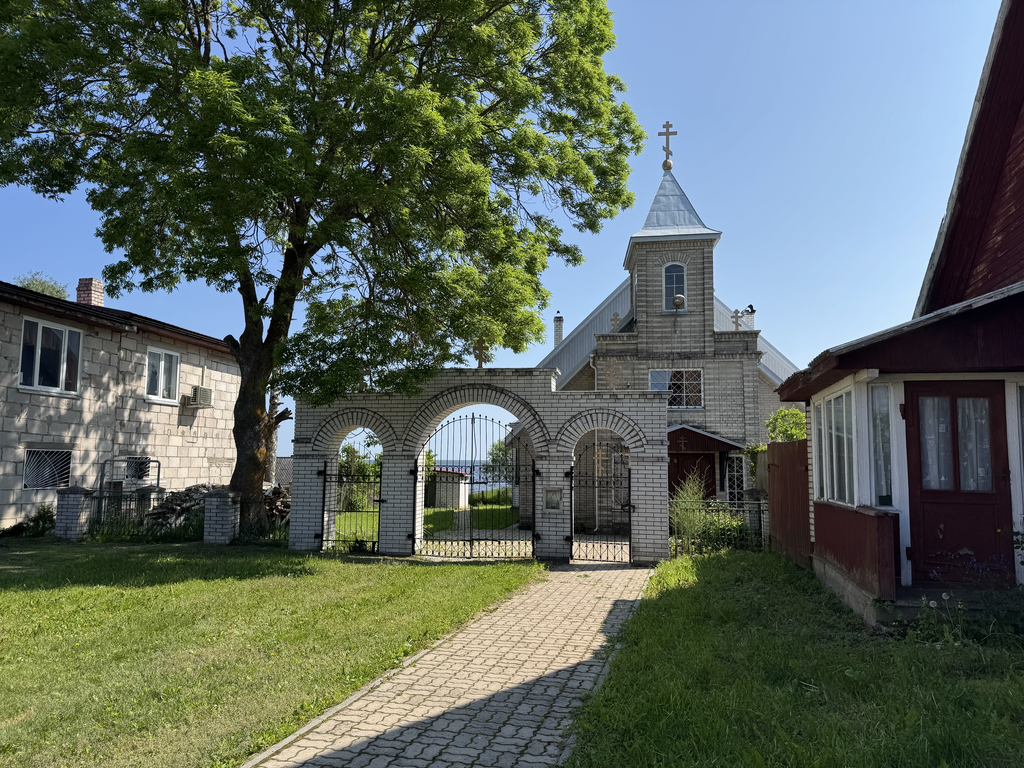
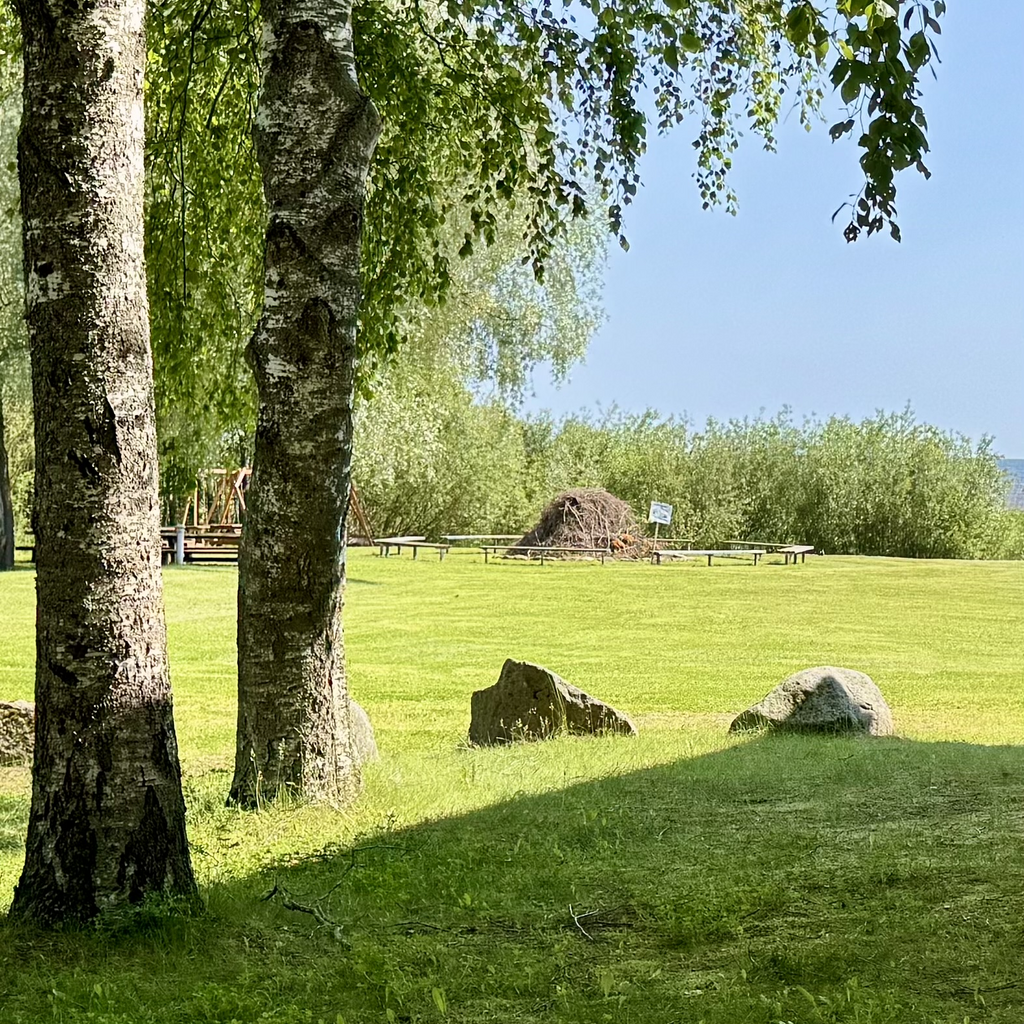
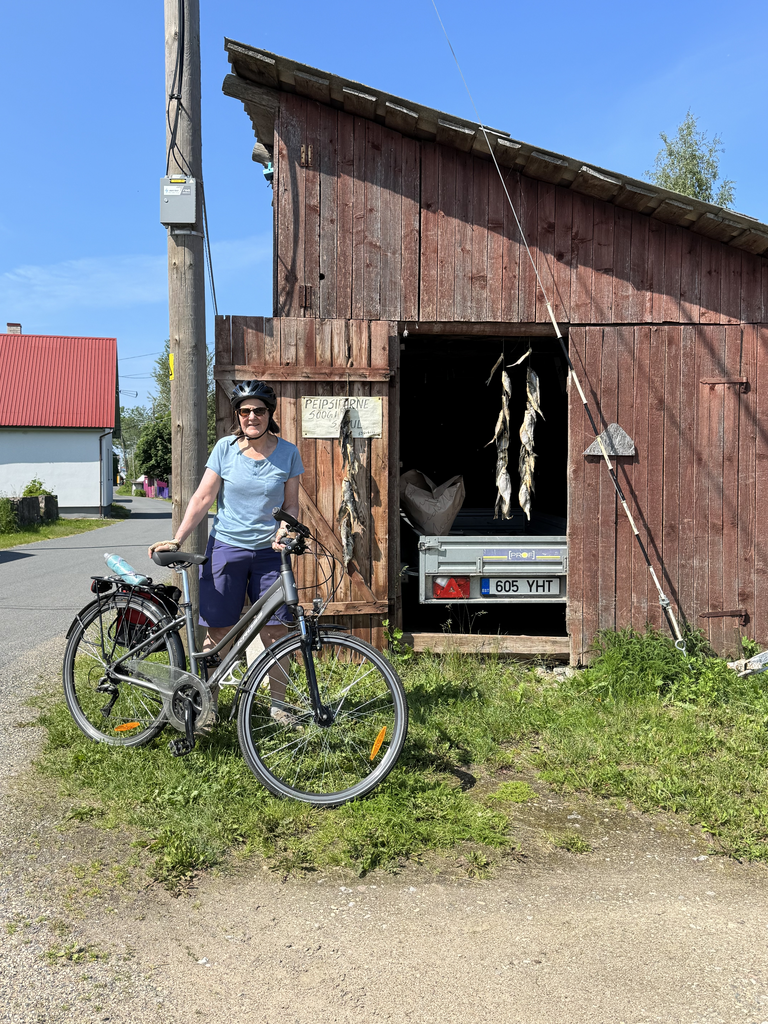
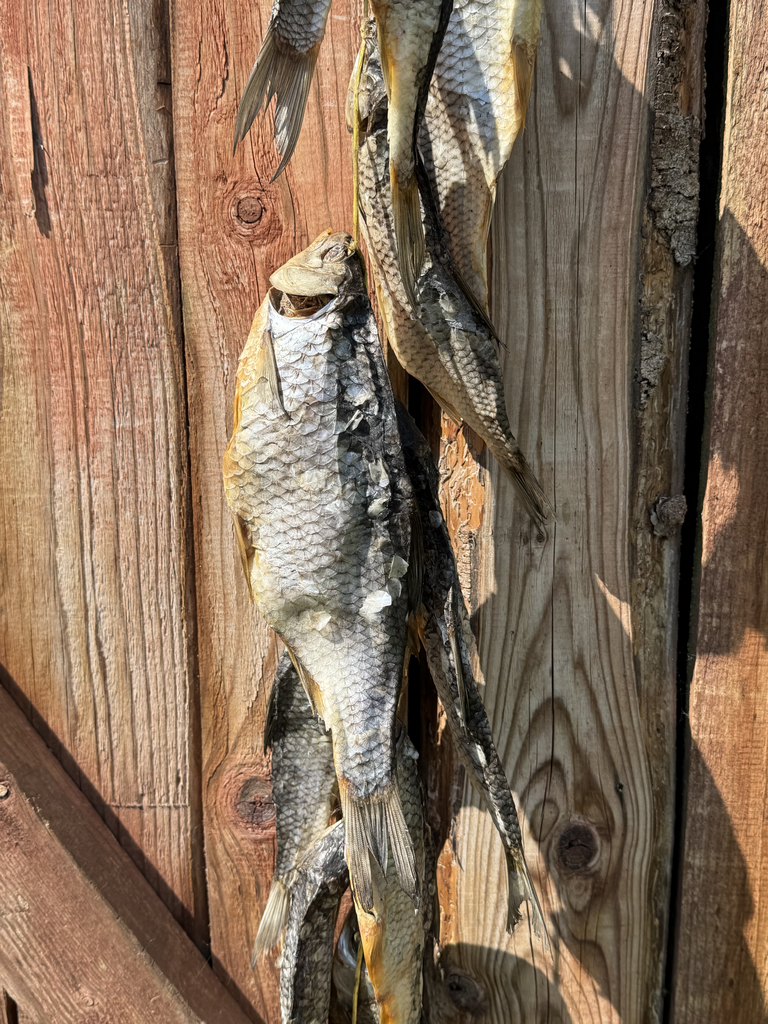
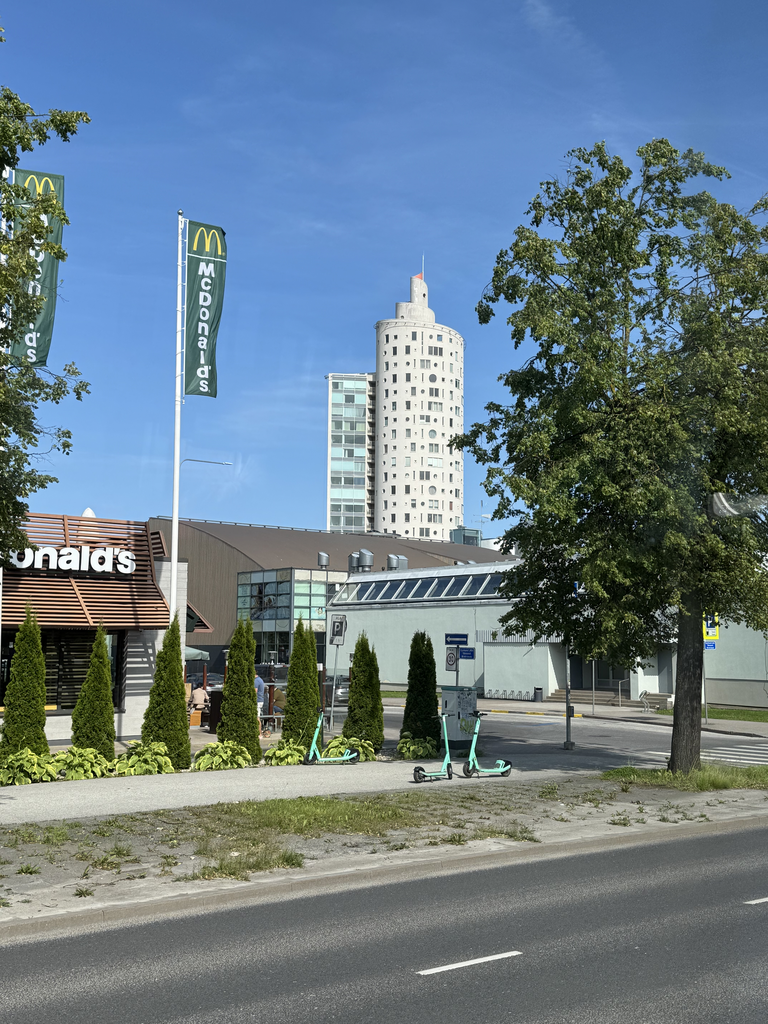
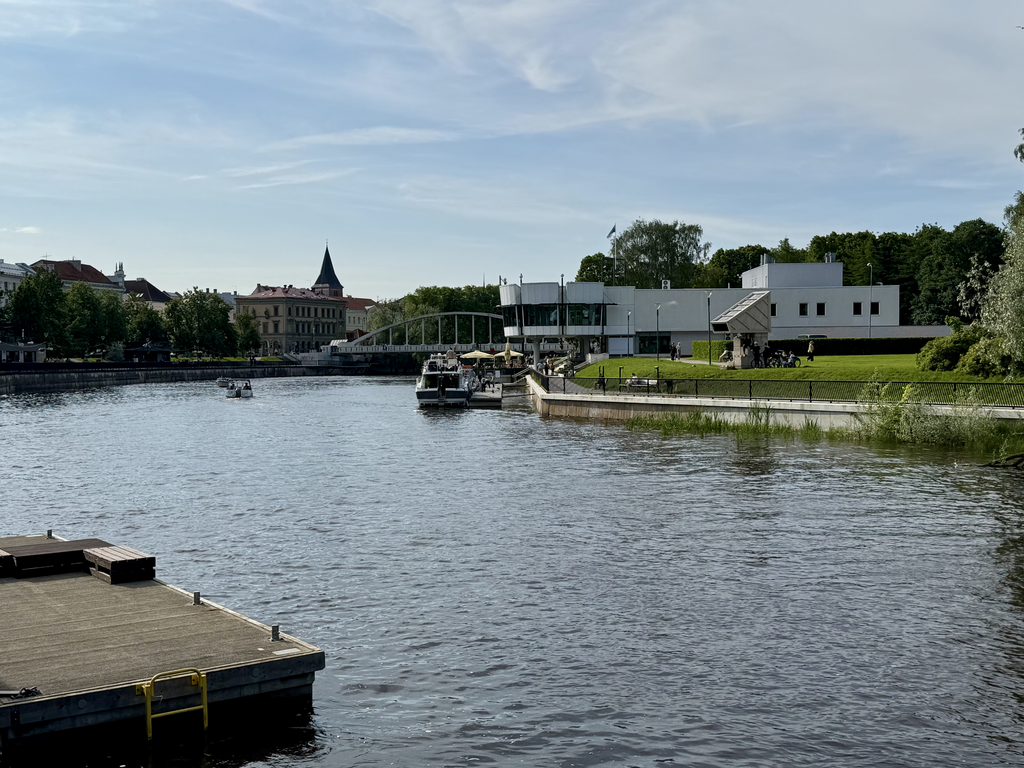
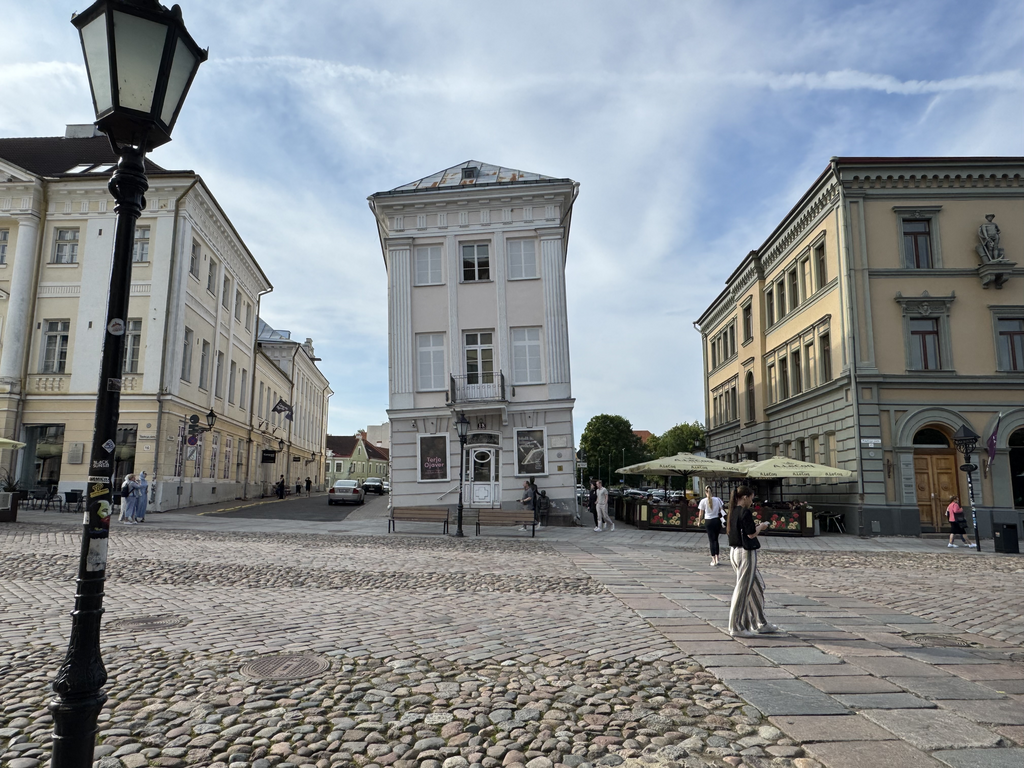
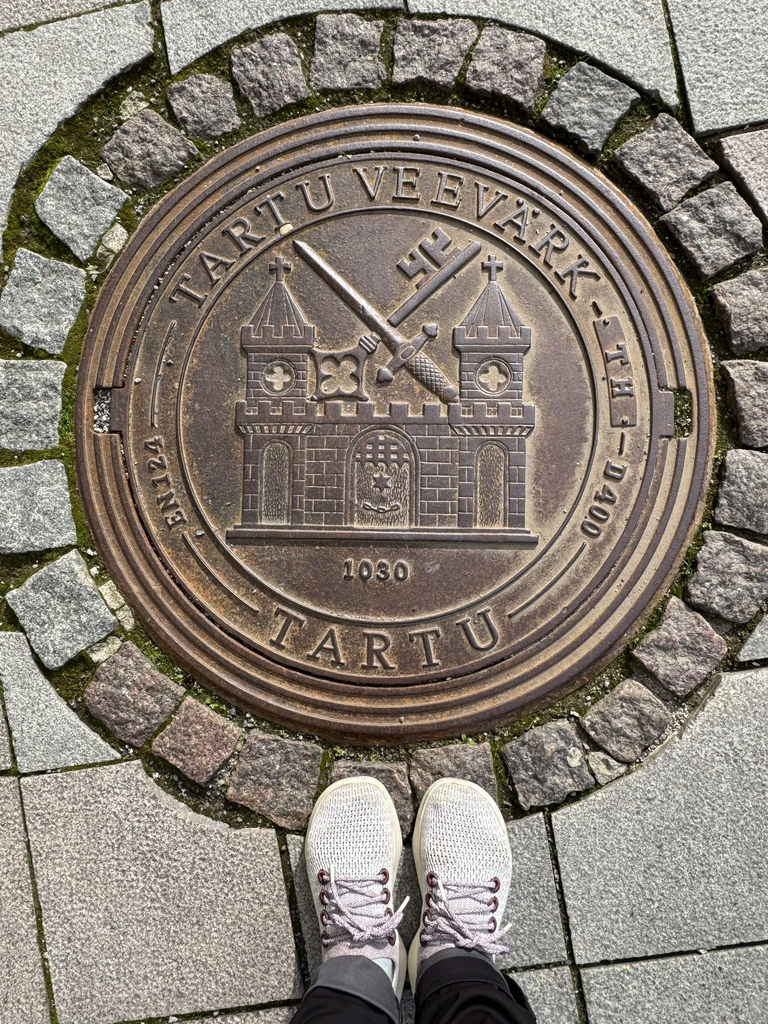
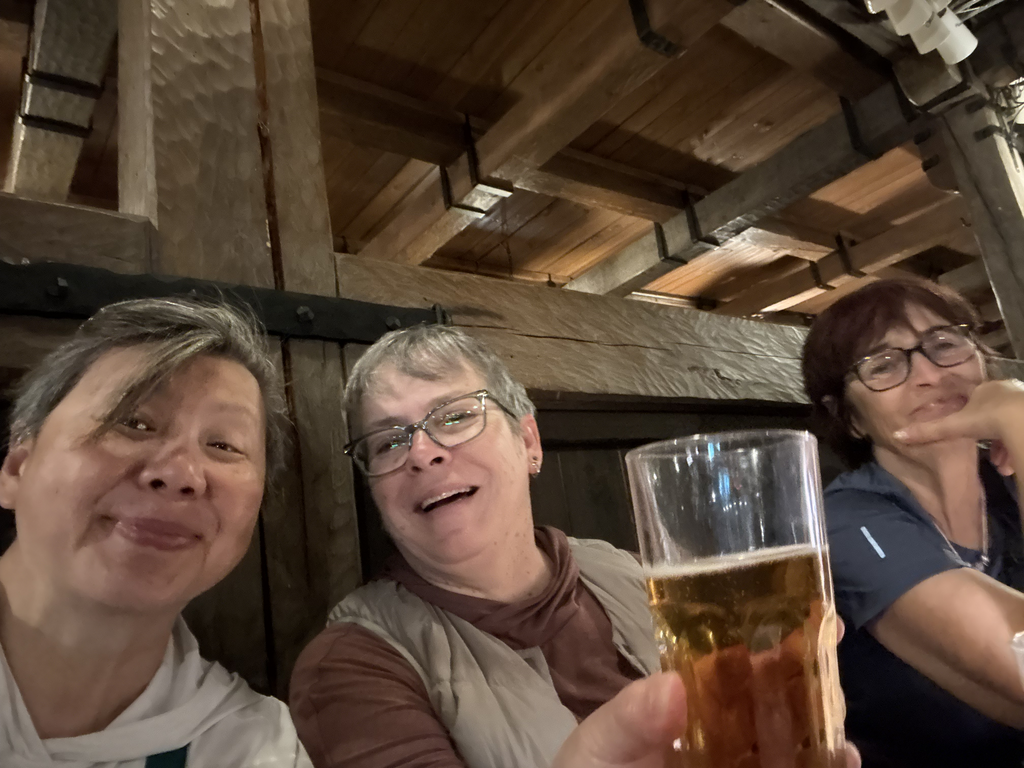
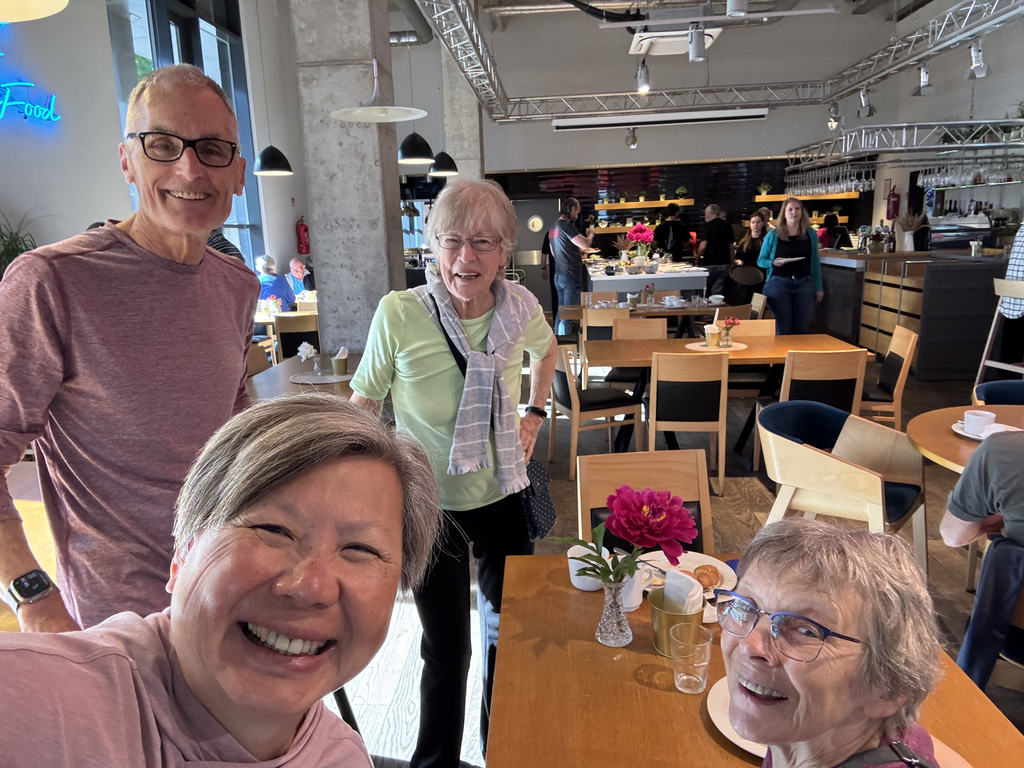
It's flag day in the US and our communities are gathering for No Kings National Day of Defiance. We are on our way to Mustee to begin our ride along the shore of Peipsi Lake, just kilometers away from the Russian border Maybe a bit worried about being so close to Russia. We are going to be following the western shore of Peipsi Lake, where many refugees from a persecuted sect of the Russian Orthodox Church had settled years ago. They strung their houses on either side of this one road like pearls. They are known as the Old Believers. At one stop, Andries looks out at the 5th largest lake in Europe and pointed to the dark waters at the horizon and declared that over there exists Mordor. Me thinks no love lost there. The village houses are mostly wood, with brick churches at every other village. Cemetery crosses have the traditional cross with a shorter horizontal beam on top and a sloping beam at the bottom. The slant is to signify that to Christ's right, the thief Barnabas repented, but the other one did not. Slant depicts the direction of heaven and hell. We get glimpses of the lake through the houses. Many an open clearing have been prepped for the midsummer bonfires. We see mounds of wood, some with chairs around. A huge one even has permanent wooden benches. It is a wonderfully leisurely ride. The Old Believers area is known for dried fish and onions. The road is also known as the Onion Road. There was plenty of both around. For lunch I had fried perch on sauted potato wedges on a cream sauce base with a side salad, accompanied by a delicious glass of plum juice. We biked into a weird Scottish-like castle built by another Baltic German. Not impressed. The stables and garage are better designed. At the end of the day, the Bus is parked across from another storks nest. This time, Sandra captured the sight of the baby in the nest. Our hotel in Tartu is in a renovated soviet hotel with a sauna on the 5th floor. There is a walking tour of this old and charming university town, established in 1030, one of the oldest universities on the continent established by the Swedish King Gustav. A lovely place to stay for the night. Amy and I both slept well, courtesy of the AC. After the last two nights, having good WiFi in the rooms is a luxury. We are getting to know our fellow travelers. This tour has 7 Canadians out of 16, 5 Americans, and 4 Brits (the two couples). But I do enjoy spending time just the four of us, sitting in an alcove in the hotel, eating Lisa's complimentary Lufthansa chocolates, and just chatting. Great to have friends who understood why I had to get a MickeyD's Filet-o-Fish.


Estonian Switzerland - Otepaa-Volga-Riga

Day 7: 2025-06-15 1720


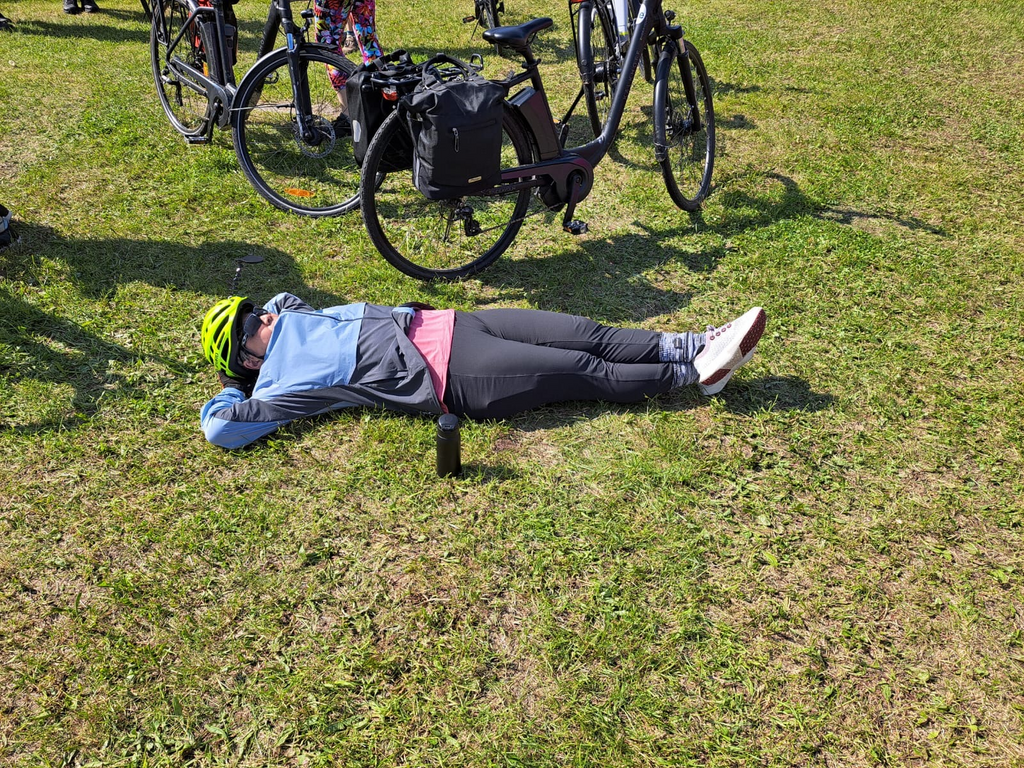
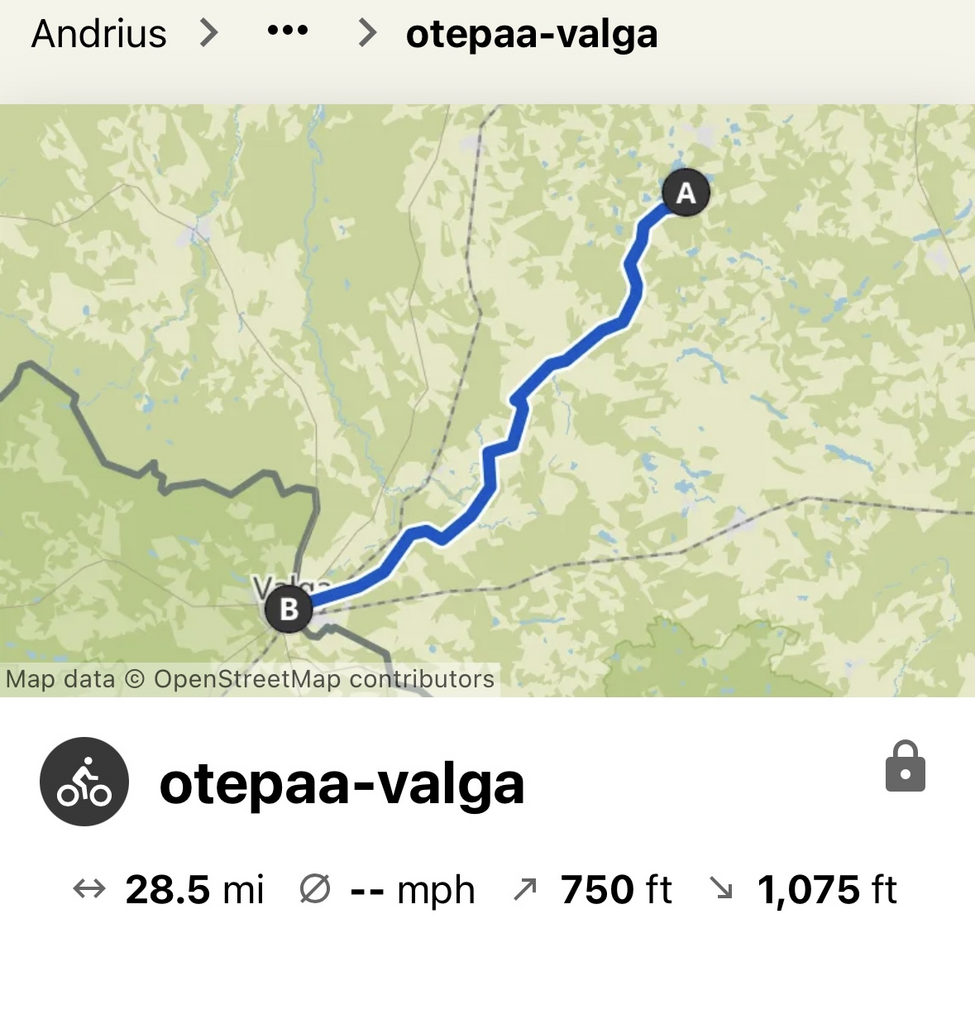
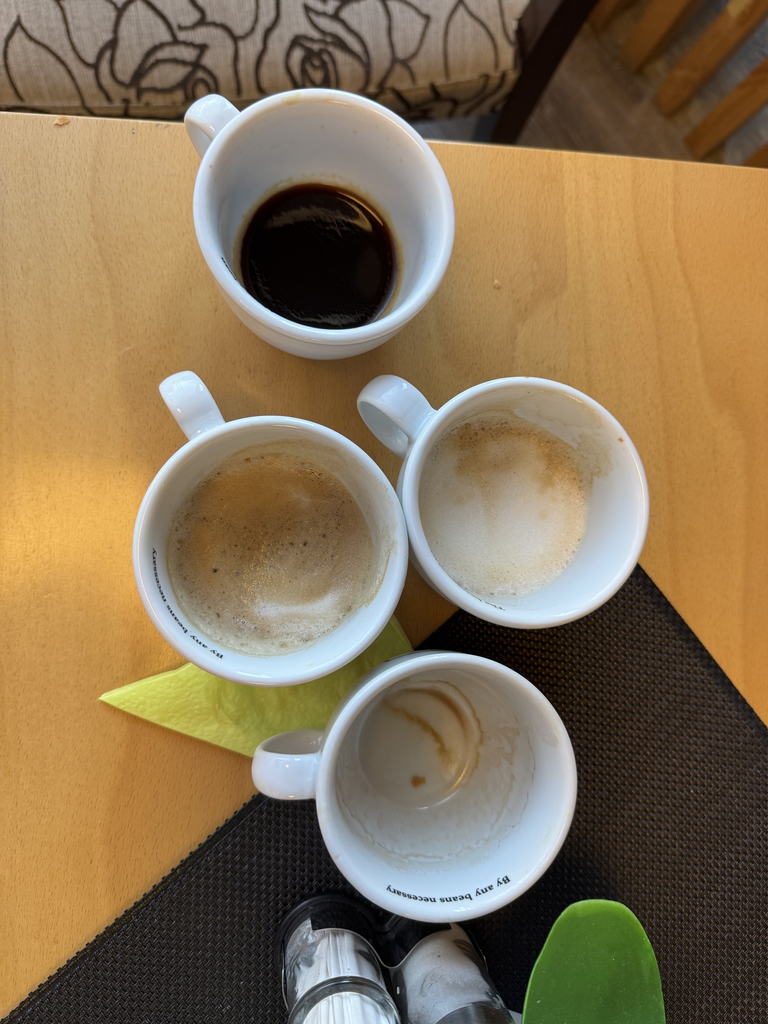
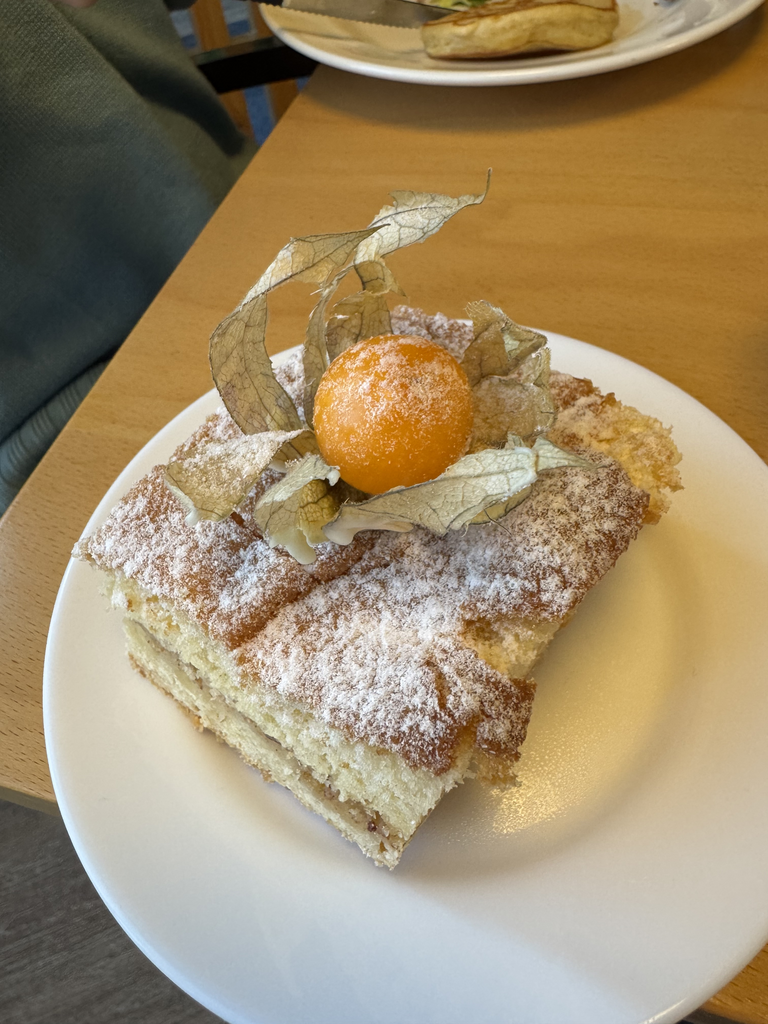
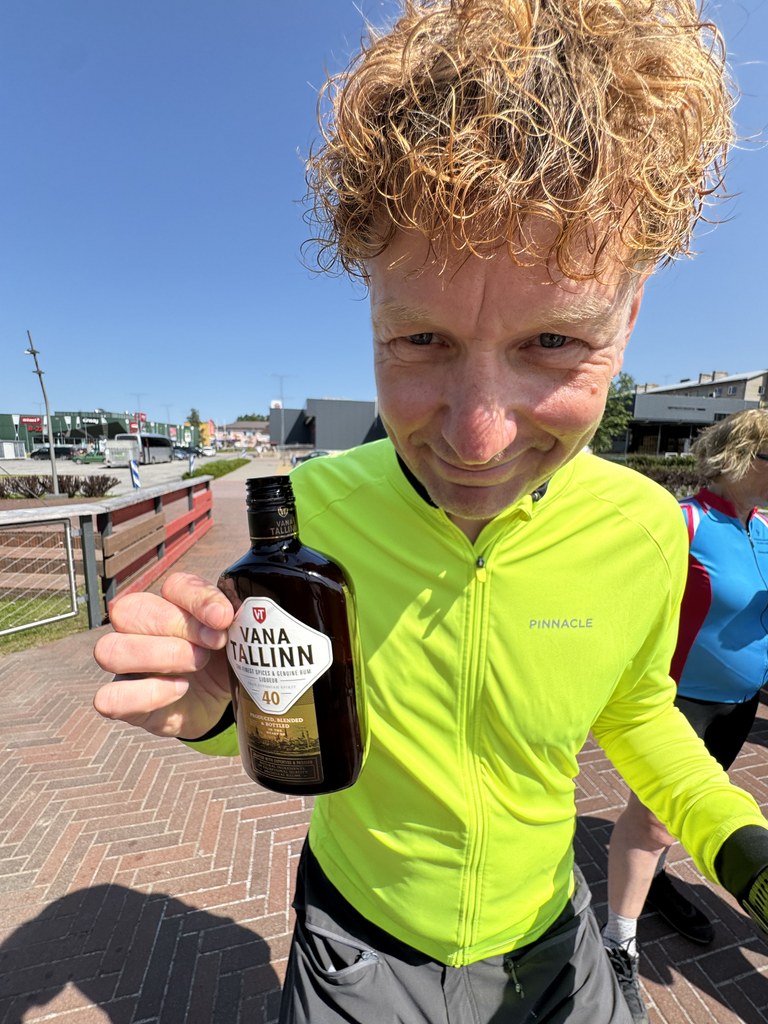
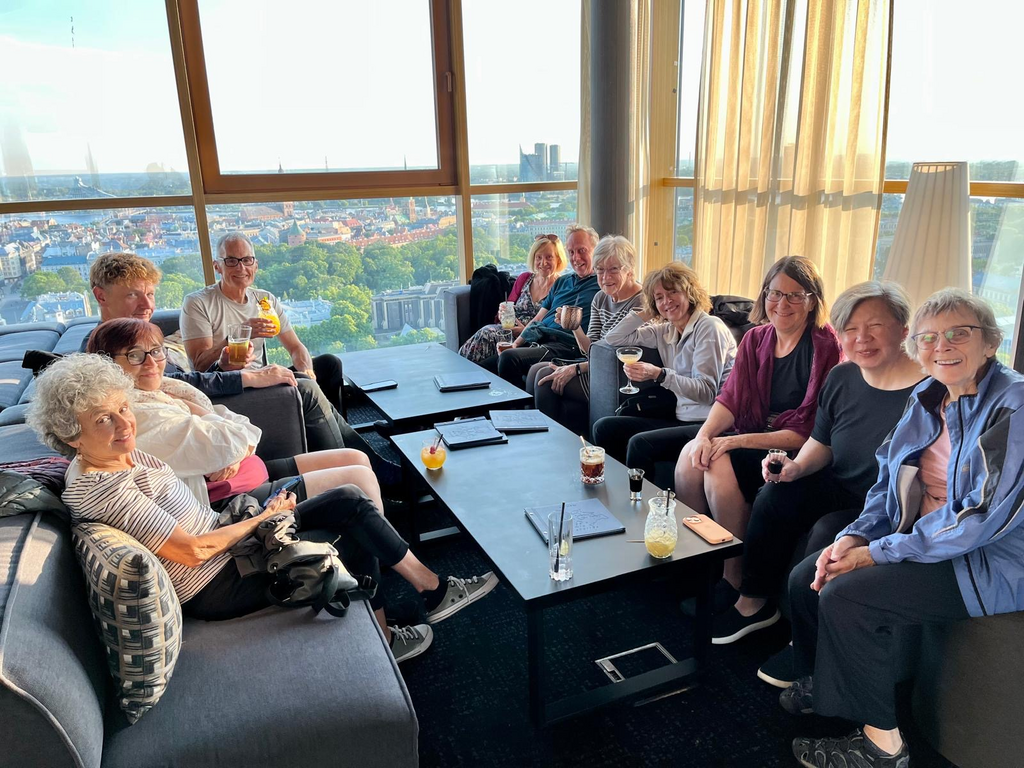
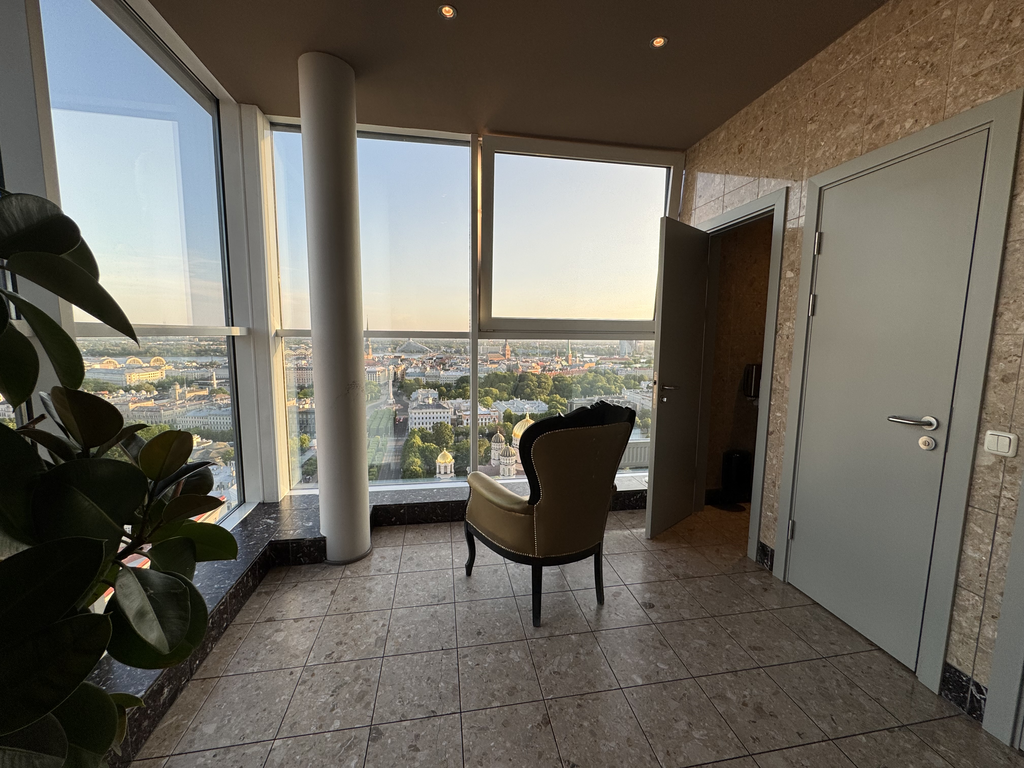
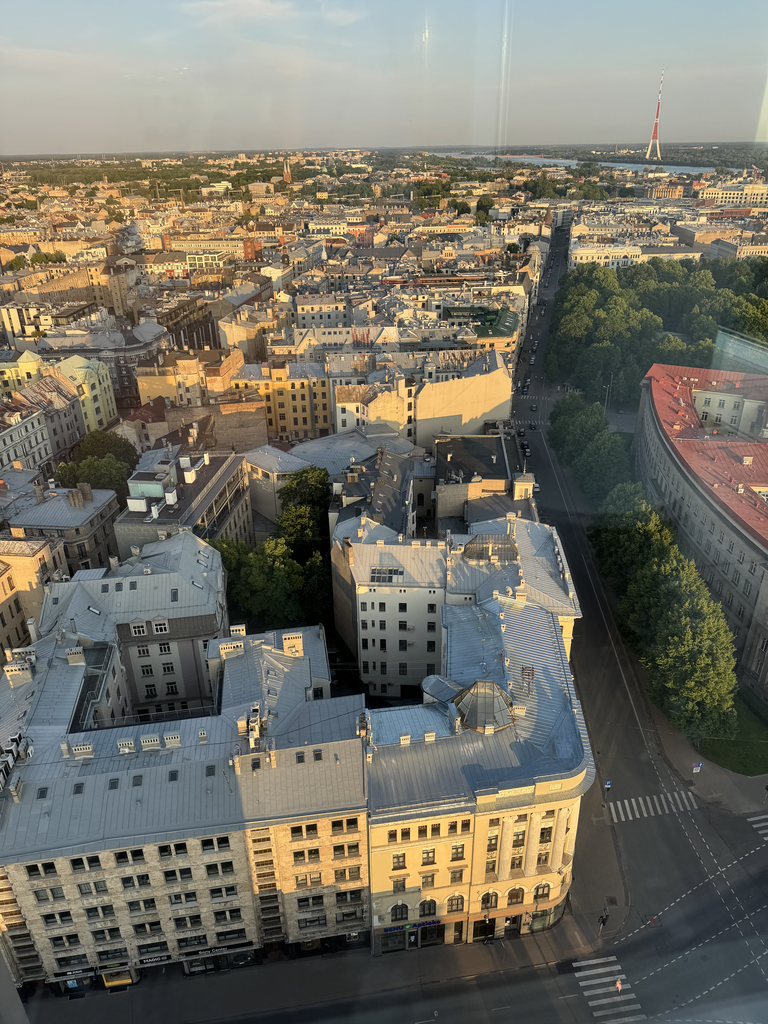
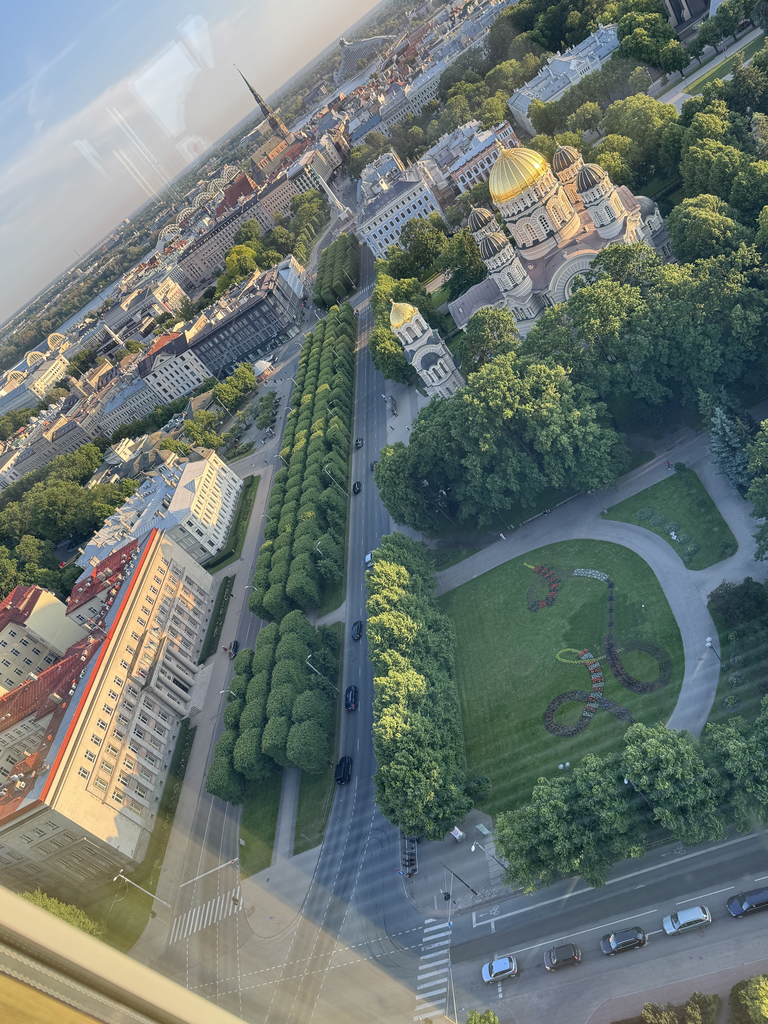
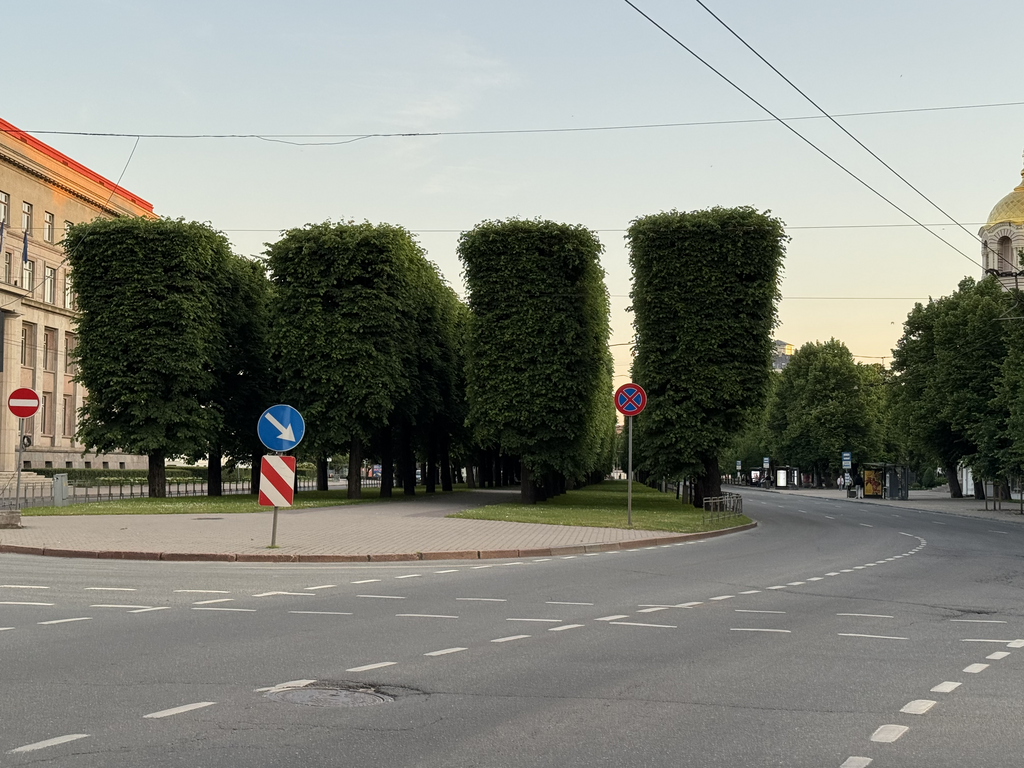
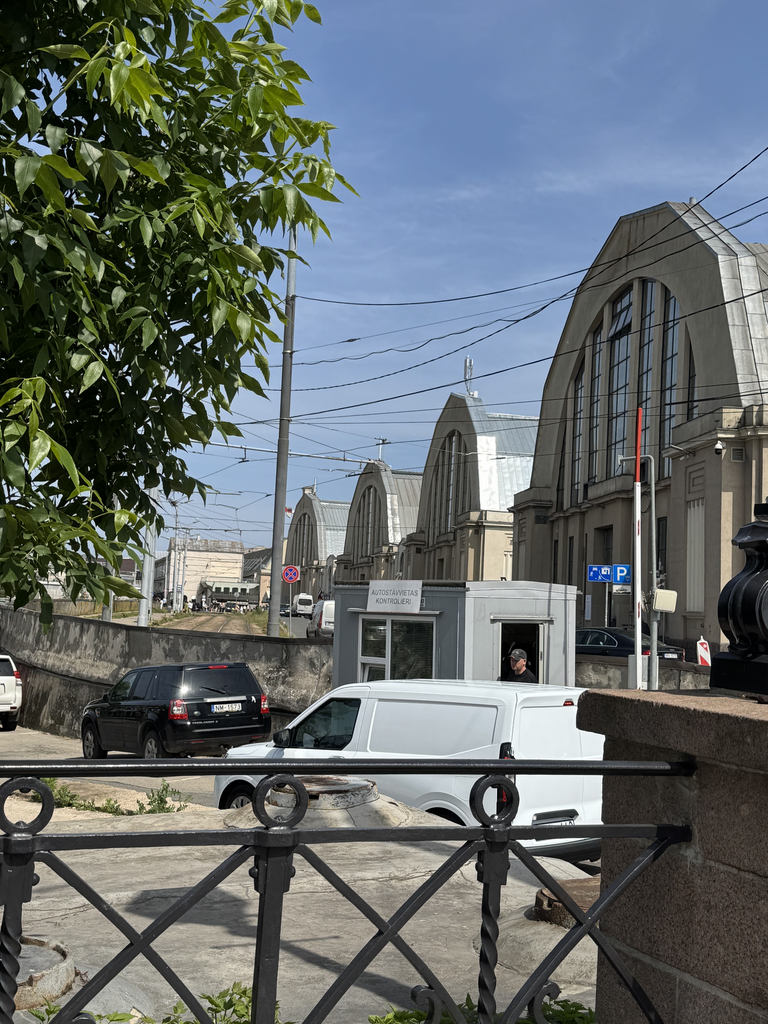
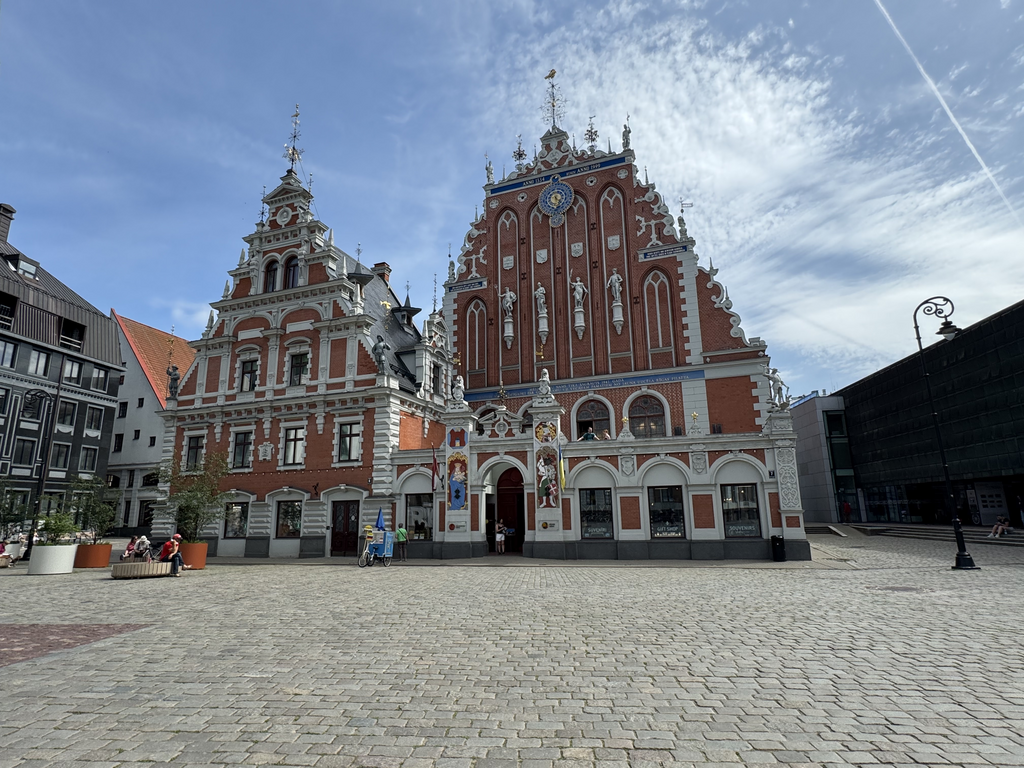
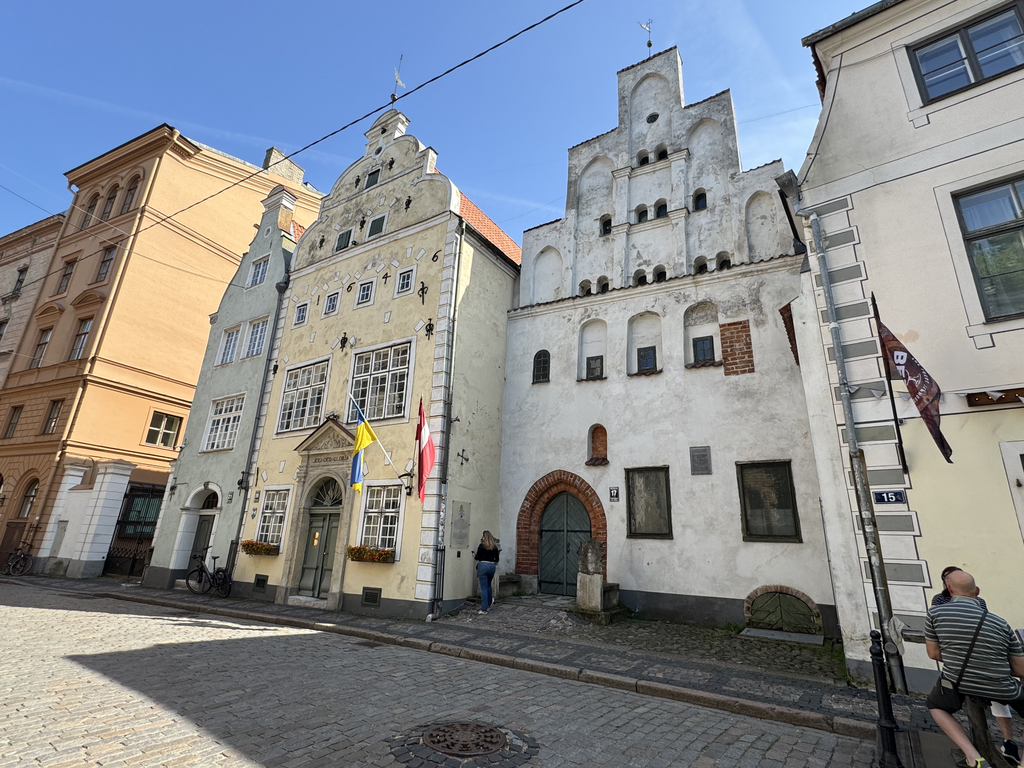
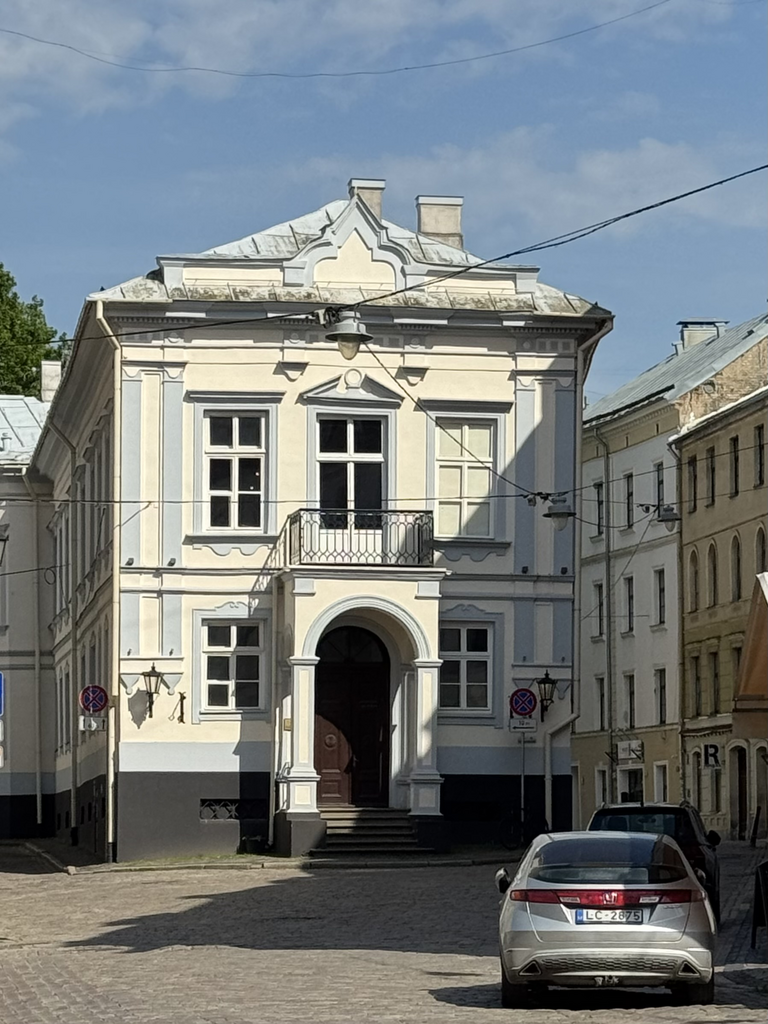
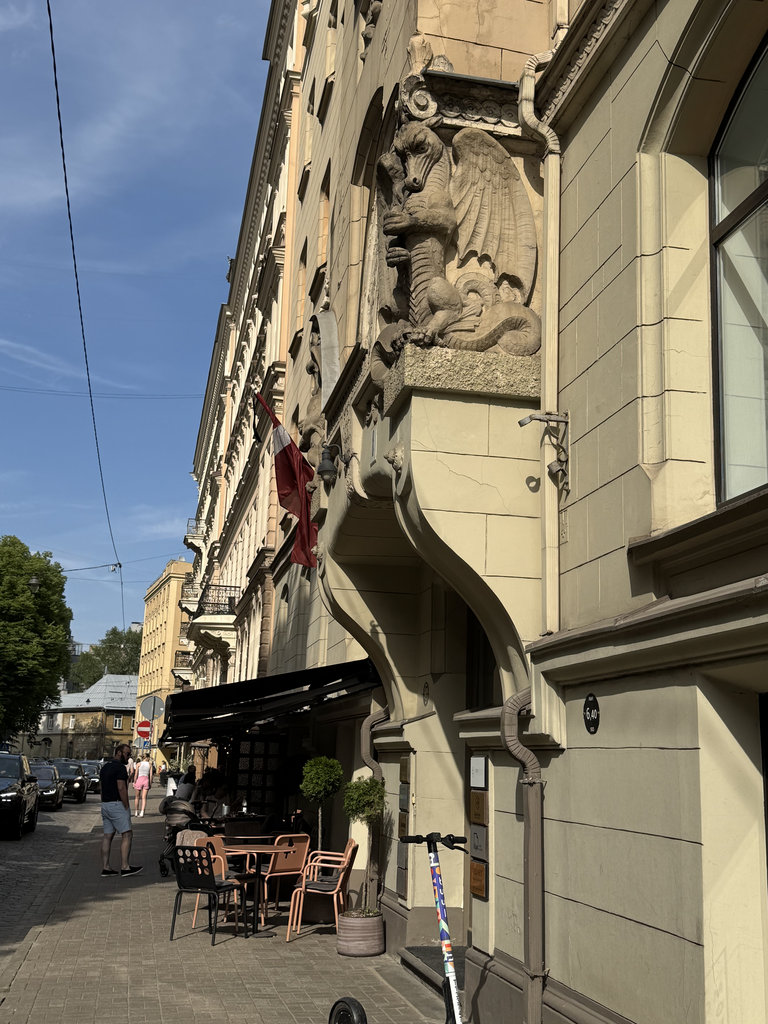
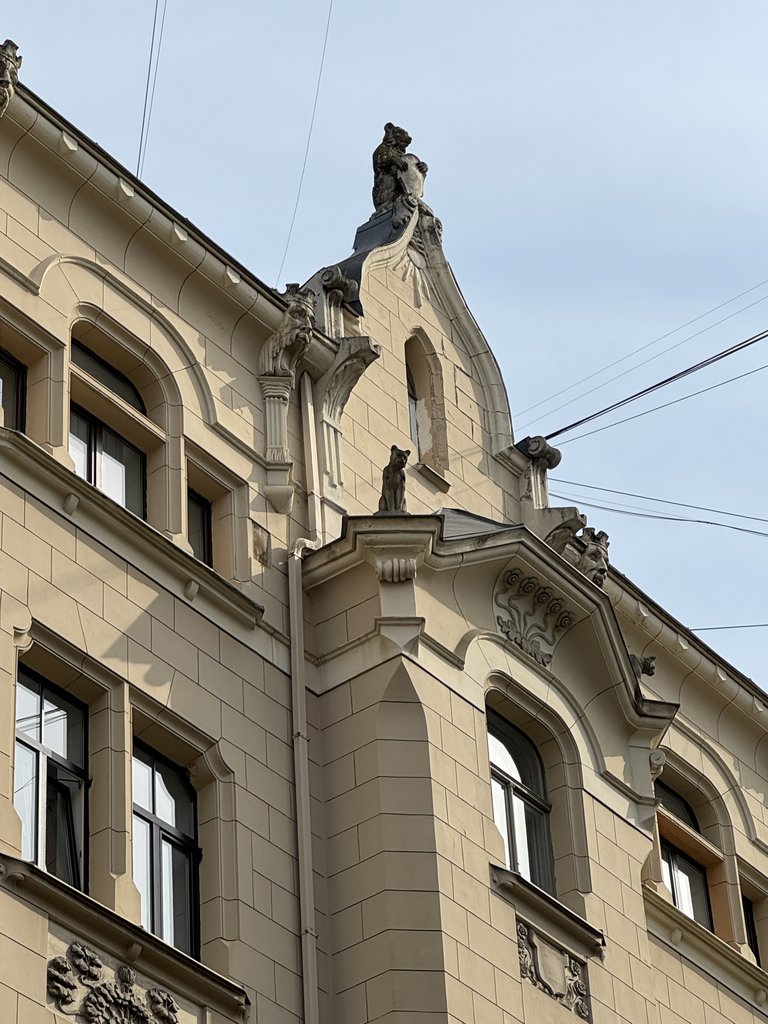
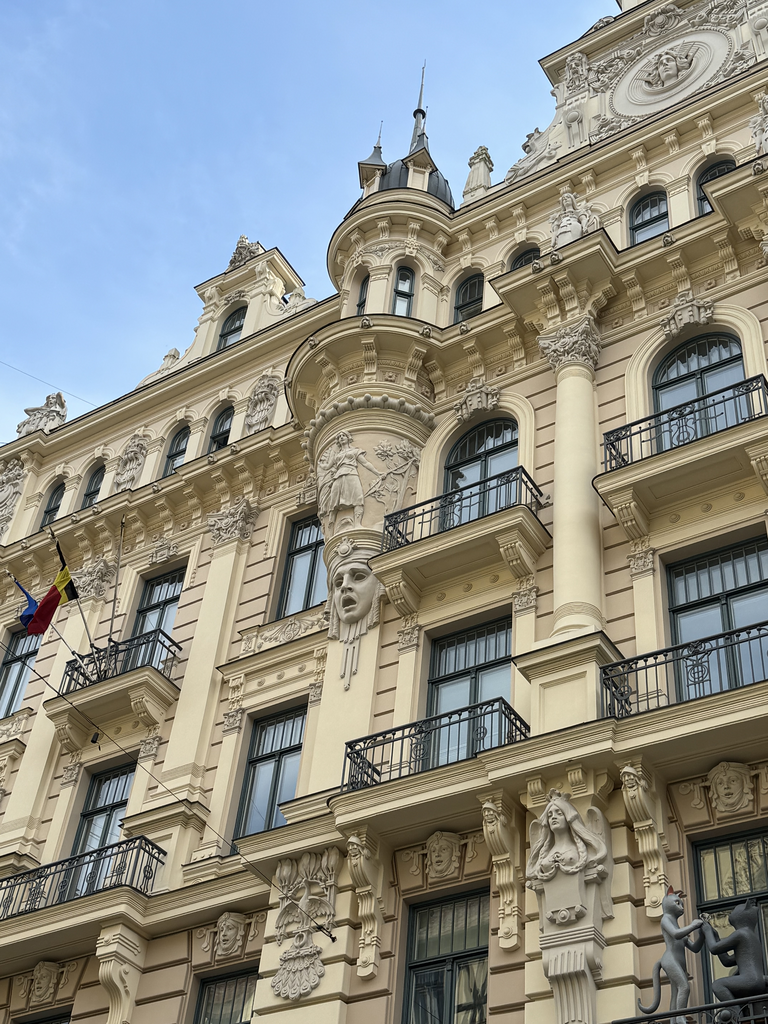
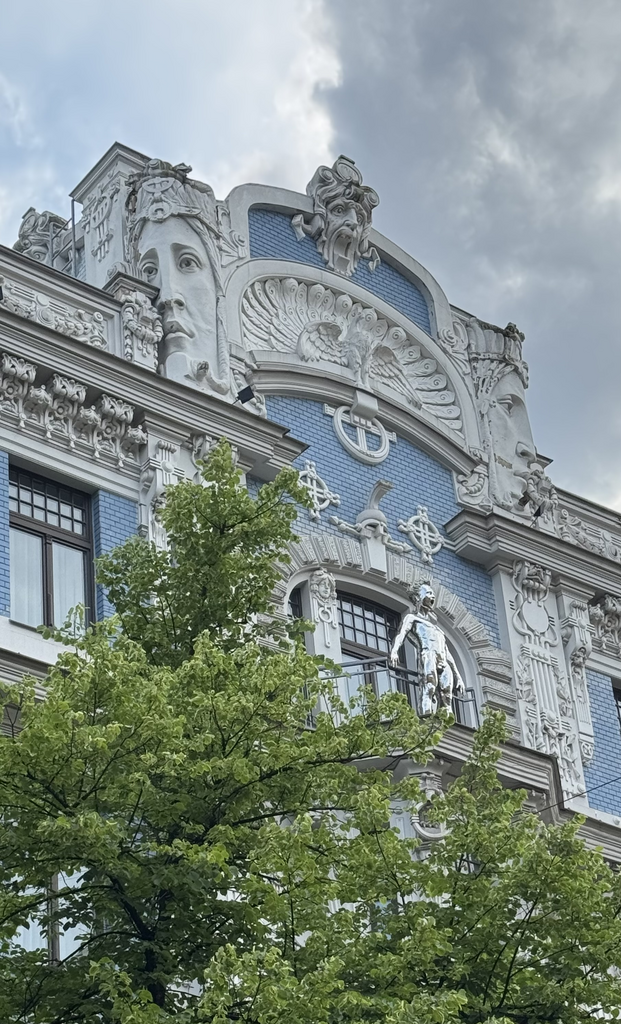
28.1 miles today Lovely breakfast today at the Hotel Tartu. Selections of coffee are always by machine, and the cappuccino and americano were good. After Amy left, I surreptitiously took a pic of her empty cups. She is raring to go. So far we always see a pickled fish, cucumbers, and tomatoes for breakfast. Today, there was smoked salmon and beans, and warm croissants, and an apple cake. Don (Sacramento) and I vented a bit about US news, but eventually agreed we needed to take a cleansing breath and let it go for the day. 28.1 miles today, but with an option to skip the last 17 Km into the border town of Volga/Volka. We set off for the first climb of the day, which on an e-bike is not even worth mentioning, but I was riding sweep today, and I pushed my bike up the last part of the slope in solidarity with Carol and Sandra (the 80-yr-olds). The ride through Otepaa is gently hilly. Called the "Switzerland" of Estonia, Oteppa is known for its cross-country trails, and not the height of its hills. It is Sunday, Fathers' Day. I see kids picking wild flowers, lots of bikers, and storks nests on poles. The land is well tended. Our first stop is Sakatee for pit/food stop. I pick up a bag of Grilled Bacon Lay's Potato Chips to try. It is good, very bacony, but the taste of the "grilling" stays with you. We stop by the Rye Baron's Scottish castle, but don't go in. Another mini Balmoral (what is it with the Baltic German love of English architecture?!) I do appreciate that the stables are of the same style. Amy, Mary, Lisa and I all take the option to sit out the 17 Km. Both British couples elect to ride on, along with one American and two Canadians. Don managed to ride like the wind, and he made it into town, just 20 minutes after we did. Volga is an interesting border town. A British mediator suggested Latvia and Estonia split the town after WWII, so they did. The border is a tiny stream. There is an Estonian swing located on a bridge over the stream. You can say you've been to both countries multiple times by just swinging. Andreius also brings out shot glasses and a bottle of Estonia's favorite drink, a dark liqueur called Vanna Tallinn(blended spices with rum). It's actually quite nice. Don and Lisa riffed on what cocktail they can make with it. They settled on adding twist of lemon, bourbon and call it a Tallinn Martini. Off to Riga, 2.5 hours with one pit-stop at the Circle K. Staying at the Ibis tonight for two nights. Riga Population of 1 million people now around 700 thousand. Many buildings were returned to private owners, but there was no money to rehab these buildings. Floors above the first floor shops look empty, windows blank, front doors locked and abandoned. It was actually depressing. But just a block away from the hotel Ibis, and heading towards the old city (UNESCO listed), the late 19th and early 20th century mid-height buildings embellished with carved entries and bas-reliefs are more Haussman's Paris and the Belle Epoque than Art Nouveau. Maybe I am missing the reference somewhat. There are corner towers competing with other towers that make the street rather lively. Interspersed are definitely Soviet-era brutalist buildings. After dinner, we go up to the bar on the 26th floor of the Radisson Blue to look at the view. Riga looks beautiful in the waning light.


Riga-Jurmala-Riga

Day 8: 2025-06-16 1721


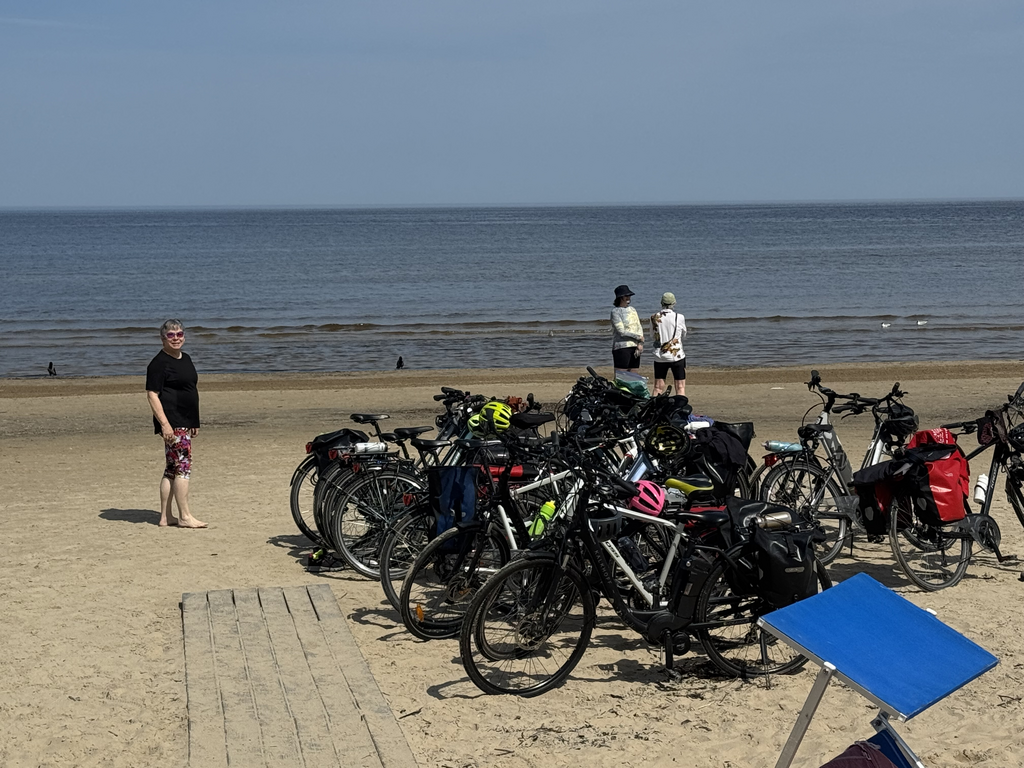
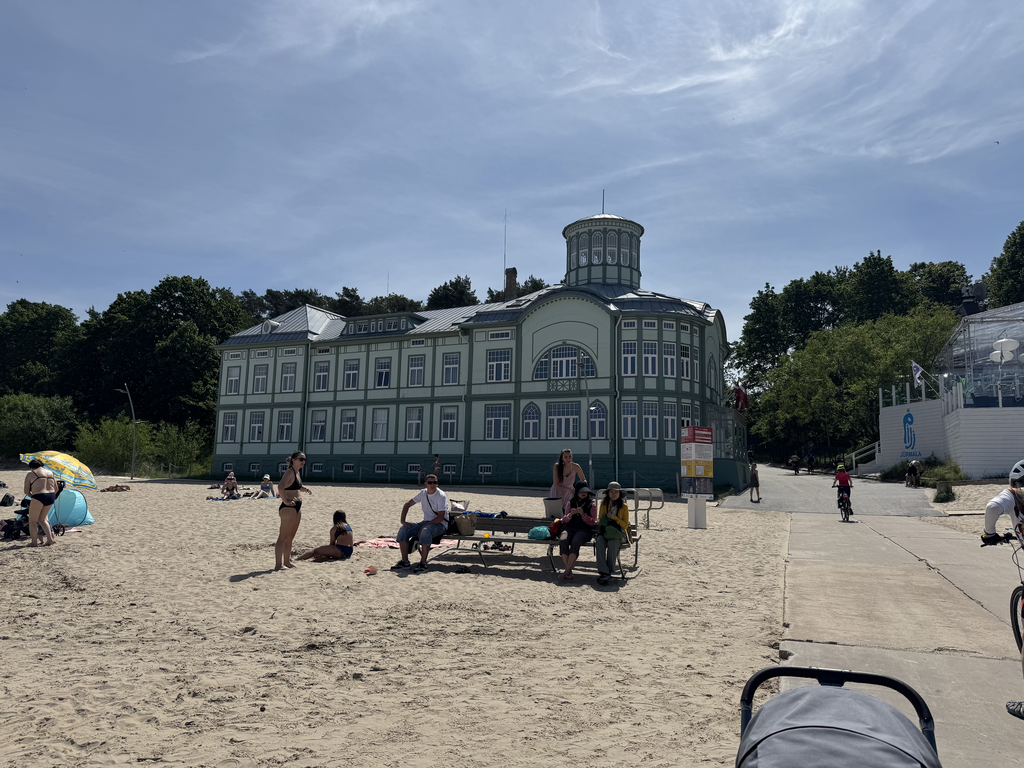
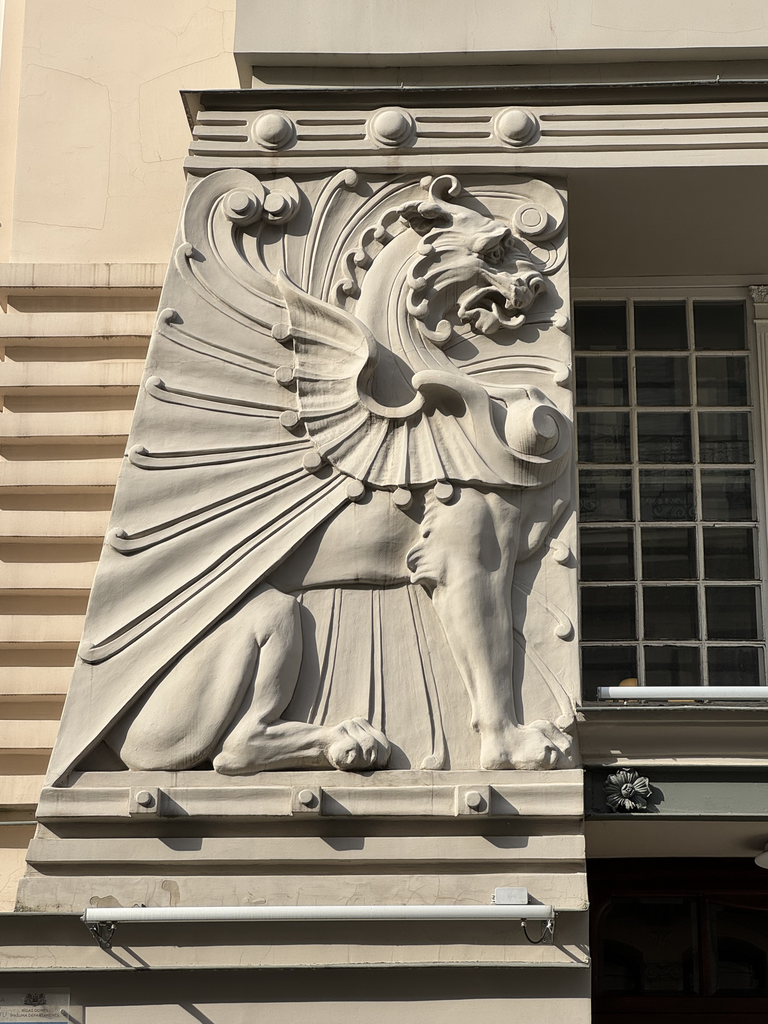
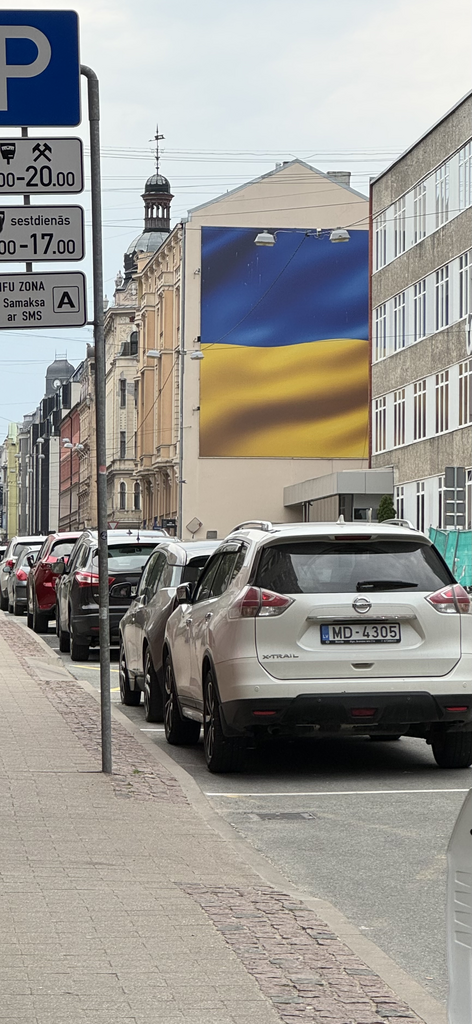
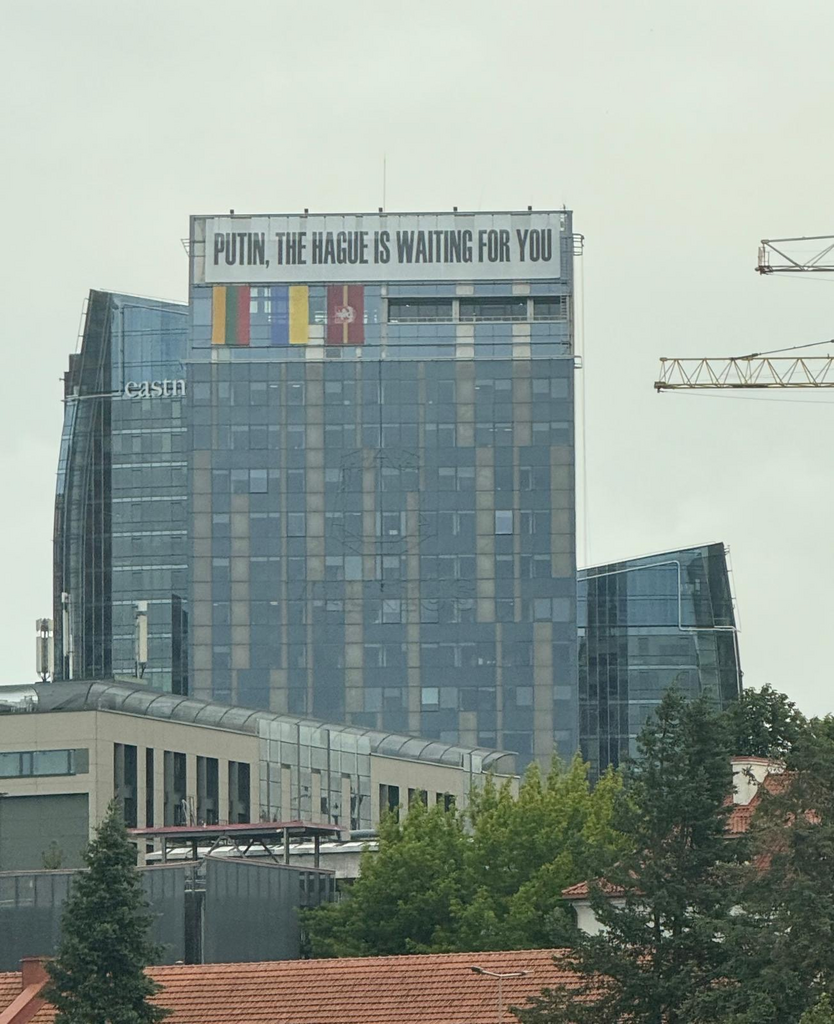
Sunny and hot today, the afternoon will get up to 79 degrees. We start the day on the bus for a 15-min ride out of town, and then a 17-mile ride on paths but through busy intersections to Jurmala ("sea edge"). The last part is a cycling/walking path running parallel to the railway, but through fragrant piney woods. Jurmala is known for its late 19th century and early 20th century wooden houses, many built by the wealthy Baltic Germans (remember Hanseatic League), and later, the Russians. It has 33 miles of beaches. Injured Russian officers first came here to convalesce during the Crimea War and then brought their families back. There are many new condos and single family homes of glass and wood owned by Russians. One gated house had statues around the yard, the most prominent one is of Peter the Great on a horse. He first conquered Latvia for Russia. Of course, he did conquer a town decimated by the plague. High contrast of haves(wealthy Russians) and nots. Although with the visa restrictions on the Russia, maybe they are not visiting as much? The wooden houses are fairly close together and you can tell the area is established by the mature pines and other trees. They are fancy with turrets, gables and carved decorations. The beach is 33-miles long. The shelf is shallow, great for kids, but I saw no one swimming. We bike on the compacted sand and enjoy the sea breeze with a drink. One Canadian and one Brit enjoy the waters. We get back to Riga by bus, along a stretch of divided (6 lanes) highway that links the airport to Jurmala. Andrius refers to it as "15 minutes of the West". It was built by the Russians to connect the VIPs to their beach houses. Khrushchev and Brezhnev were regulars. Whenever they needed to make a propaganda film or simulate western locations, scores of BMWs and Volvos would loop this stretch of road. We cross the River Daugava into Riga. The rivers are navigable, making this a trading port from the days of the Vikings. Riga's location makes it very attractive to hordes of occupiers: the Danes, Swedes, Germans, Russians, Poland all occupied it at one point or another, with the latest winner expelling the previous occupants. Riga after the WWII only had a 37% Latvian population, with Russians making up the rest. Hundreds of thousands of Latvia's ruling elite along with their families were deported to Siberia under Stalin. In 1991, when Latvia declared its independence, they gave citizenship to Russians born 1991 and after. Still, their codependency with Russia continued until it invaded Ukraine and sanctions stopped the import/export of goods to Russia. You can see solidarity with Ukraine everywhere. After the invasion, Riga renamed the street where the Russian Embassy stands as the Ukrainian Independence street. The old city and the buildings that were built outside the old city walls (not really visible anymore), are a trove of styles, many rebuilt because Riga was heavily bombed during WWII.The gems are the Art Nouveau buildings,here more Jugendstil since Riga's example was Germany and Austria. Curved and natural lines, mainly buildings from 1890s when Riga was at its wealthiest. On Albert Street, one architect, Mikhail Eisenstein built five in a row (no 2a-8) and a large corner building (no. 13). A few are not Art Nouveau anymore but moving towards the geometry and exoticism of Art Deco. For dinner we all go to a Vegan restaurant. Fantastic food, and a reprieve from the meat and cabbage heavy fare. I am in awe so far of the resilience of the Estonian and Latvian people to have kept their culture mostly intact through the various occupations. Song and folklore are huge elements of this resistance. I would want to explore those aspects more.


Lithuania:Hill of Crosses to Klaipeda

Day 9: 2025-06-17 1722


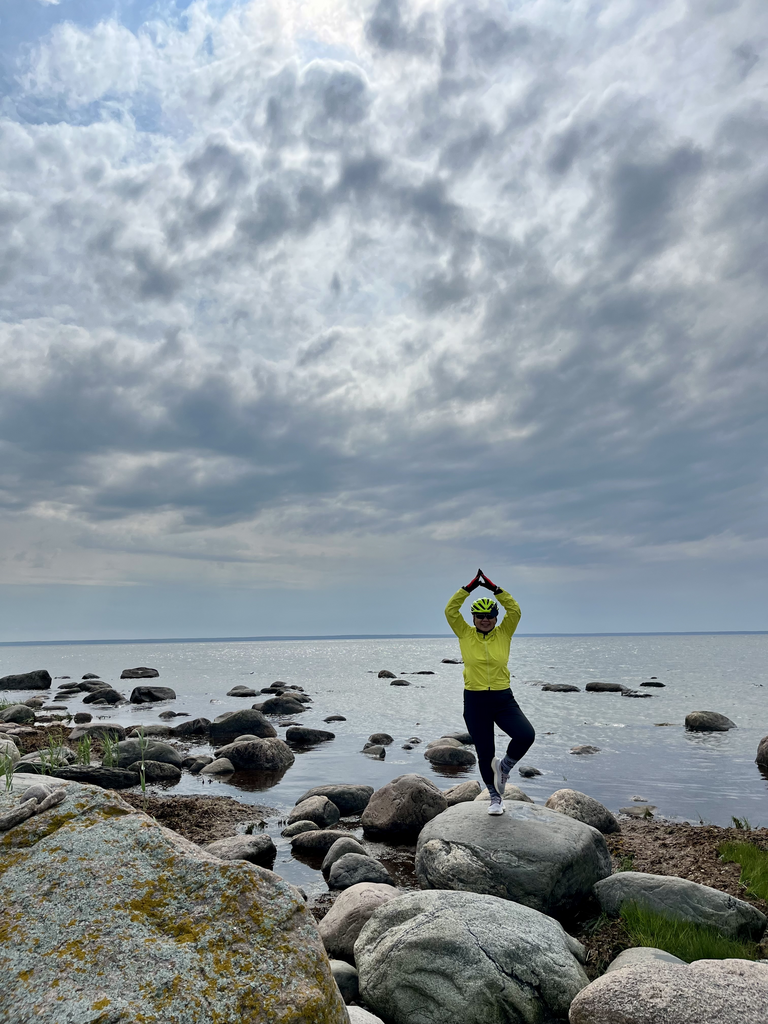
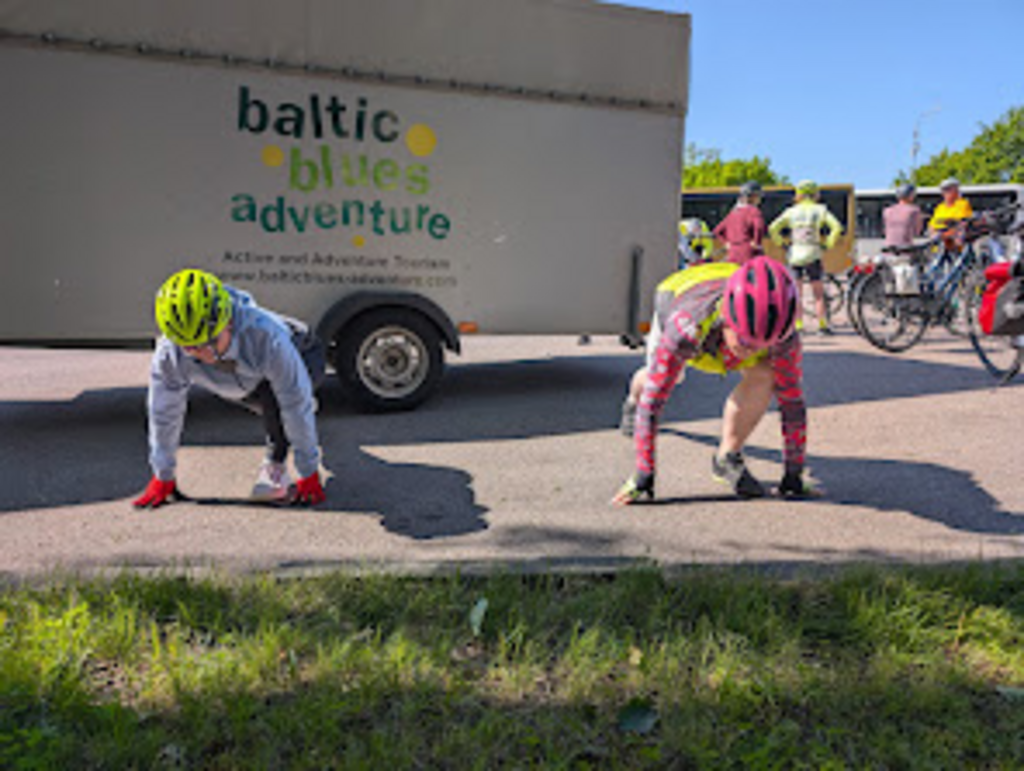
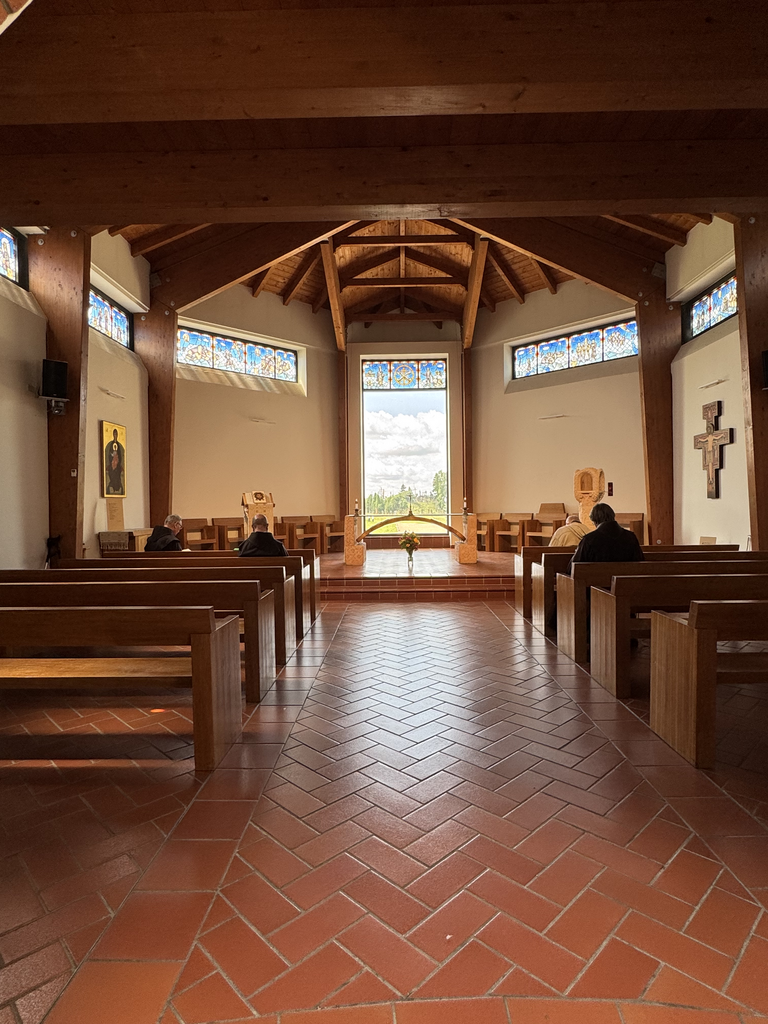
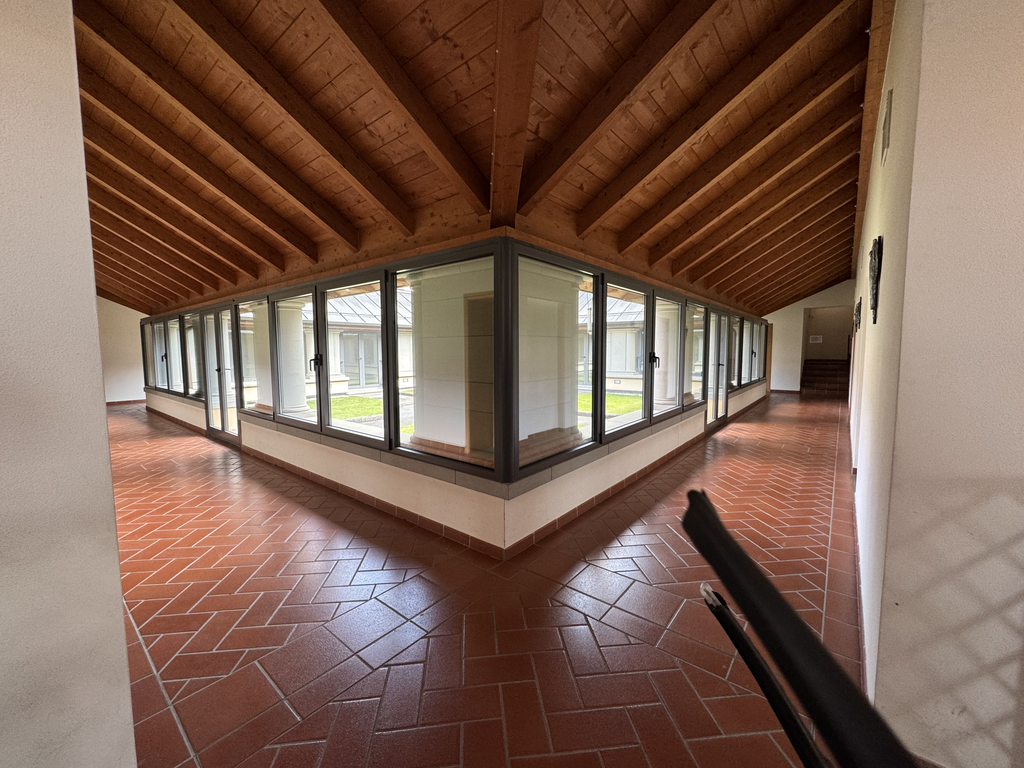
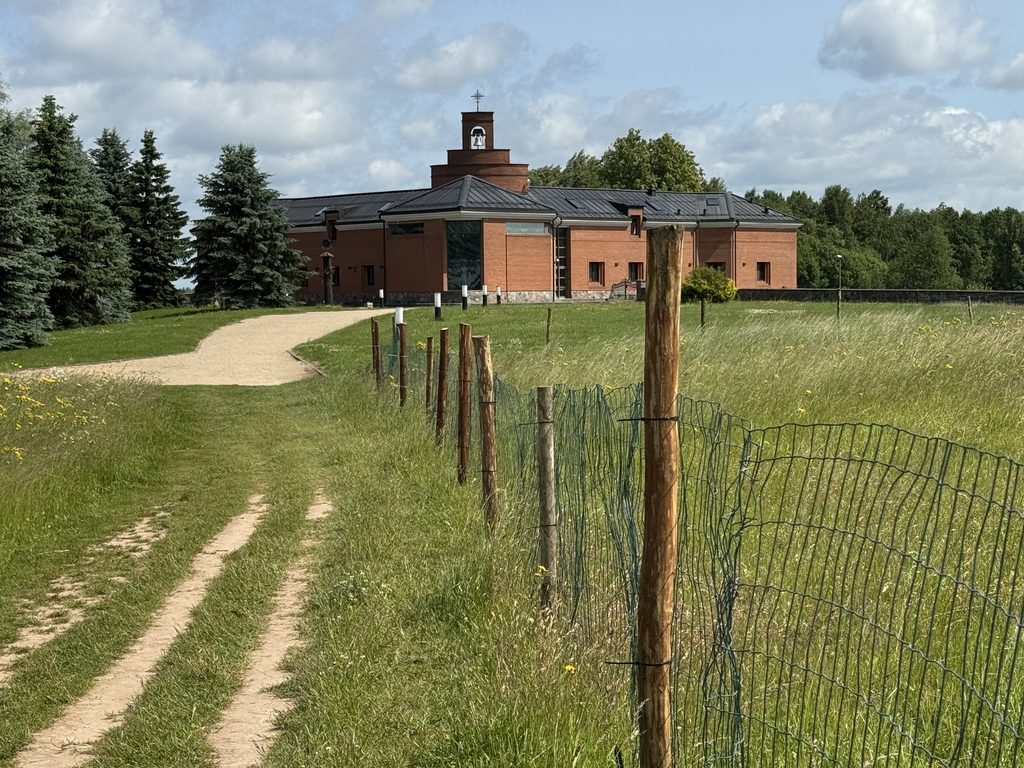
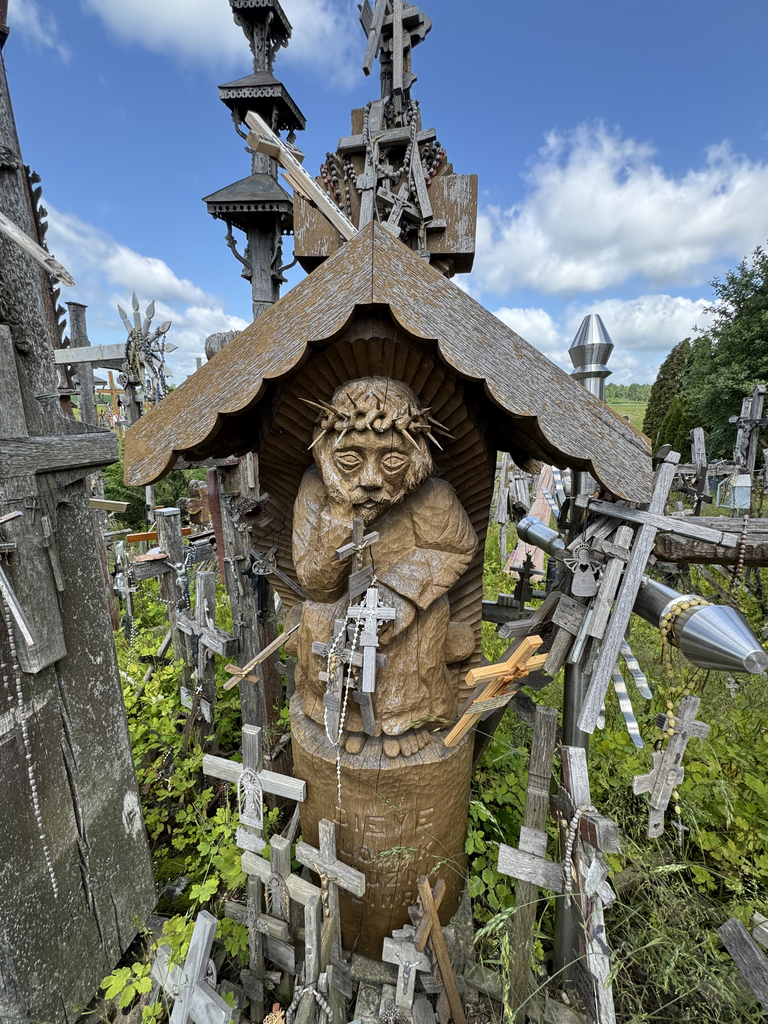
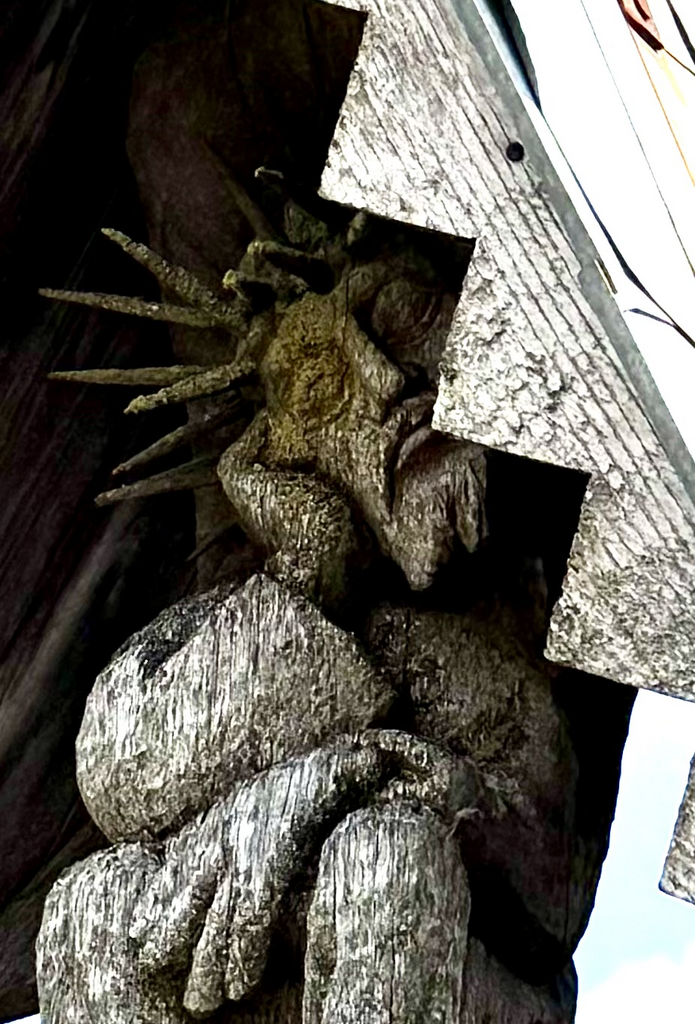
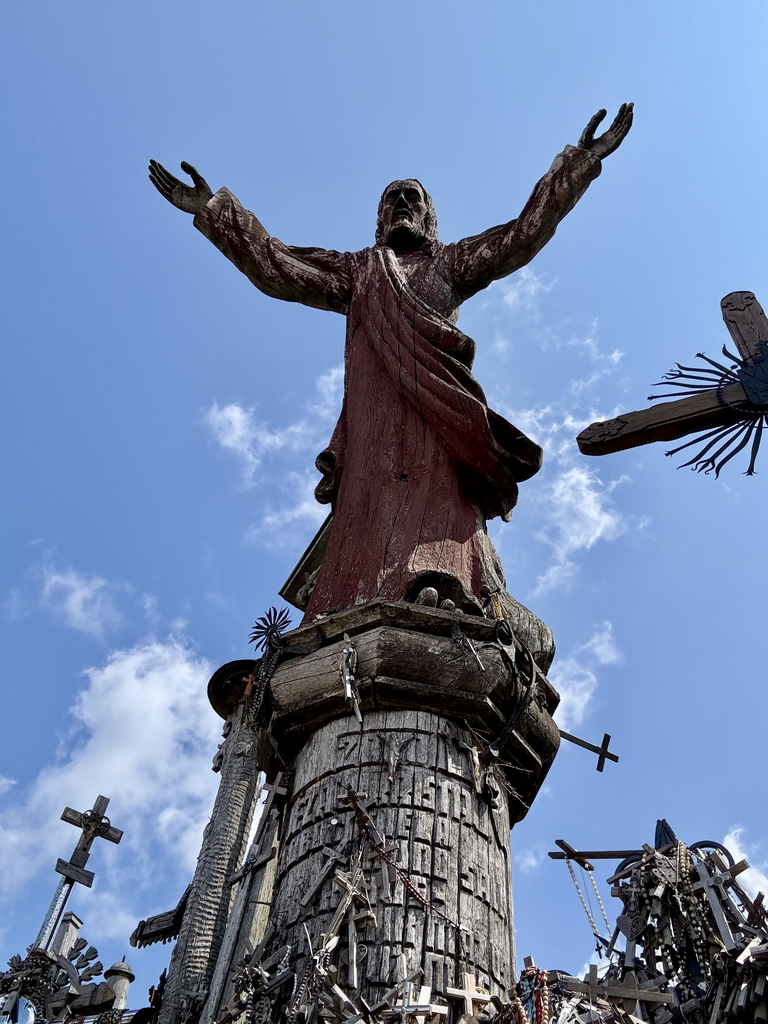
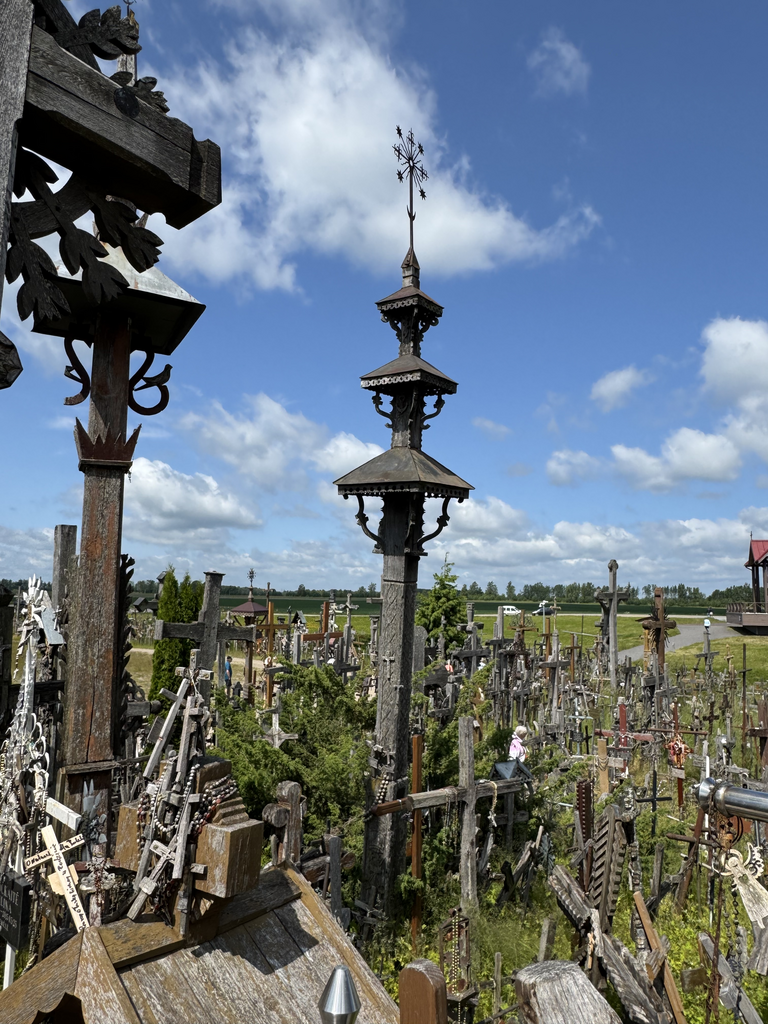
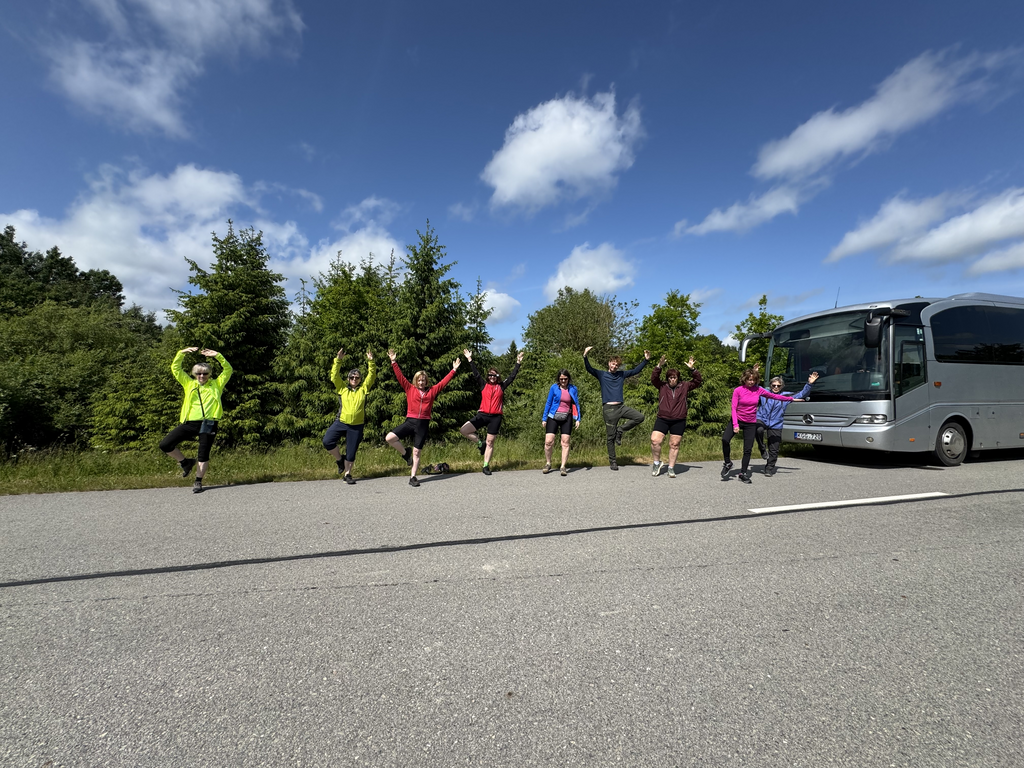
We leave Riga today for Lithuania. The famous Hill of Crosses was not on the itinerary originally, but was added as a nice stopping point. The group voted against stopping by a mid-range missile site used by the Russians to target European Cities called the Museum of the Cold War. Apparently, it is one of three available to be seen in the world; the other is in Ukraine, and I have no idea where the third one is now. The Hill of Crosses was the one place Pope JPII wanted to visit when in Lithuania. It is known as a memorial to those who resisted. Crosses are planted, razed by the Russians, and re-erected in light of heavy pusnishment if caught. JPII had also built a Saint Francis monastery on site. The building is very modern in execution. Instead of a Chancery, it has floor-to-ceiling glass that faces the Hill of Crosses. Walking around the Hill was sobering and beautiful. I am not one for the cross of the crucifixion, but here, Catholicism was the face of the opposition. I see a lot of beautifully carved wooden crosses as well. Many of them have pitched roofs and are a traditional Lithuania folk art. The stop has put us behind schedule, so we miss the window to the restaurant where we had ordered lunch. For 30 minutes, we stretch and do yoga on the road. I got a majority of the women to do tree poses. We are finally on the road and begin riding at 4 PM, making it into Klaipeda via Palanga (both seaside towns). We check-in at 8:05. It is a lovely 4-star hotel. Hotel Victoria. The bathroom alone feels larger than Mary and Lisa's hotel room in Riga! We have a ferry to catch in the morning!


Lithuania: The Curonian Spit National Park

Day 10: 2025-06-18 1723
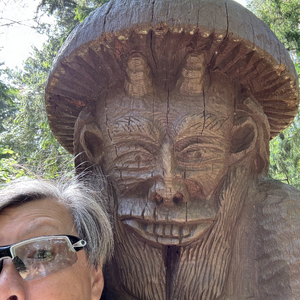


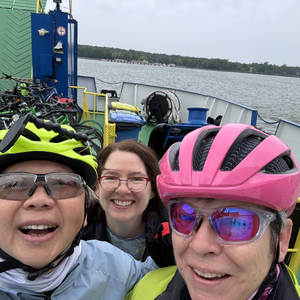
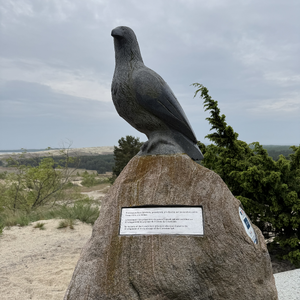
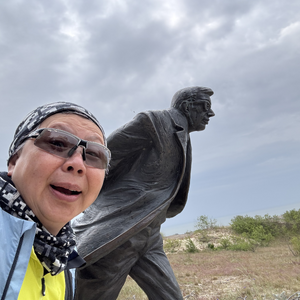
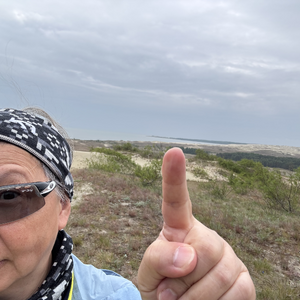
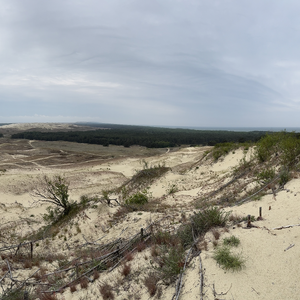
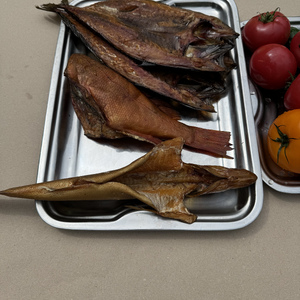
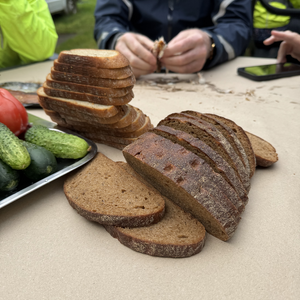
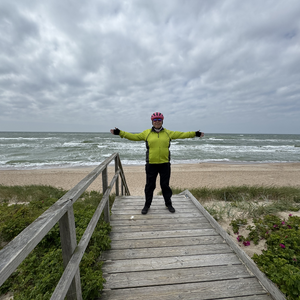
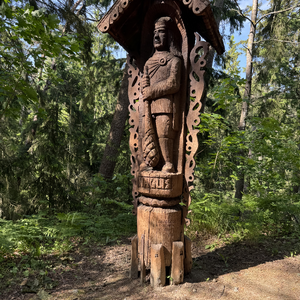
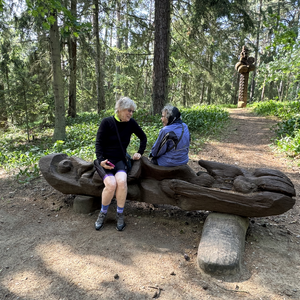
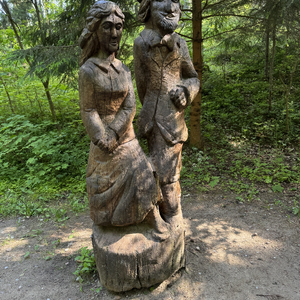
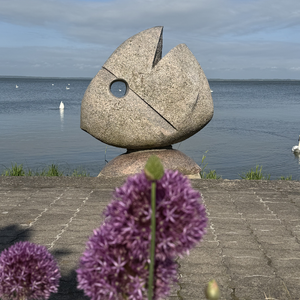
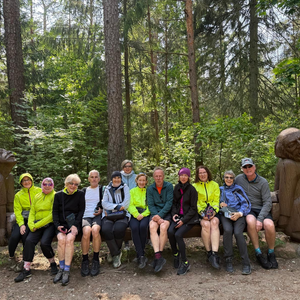
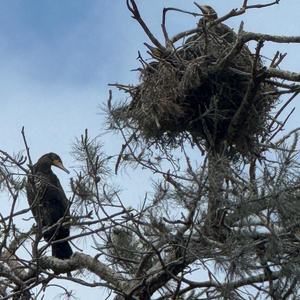
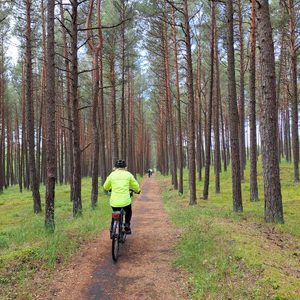
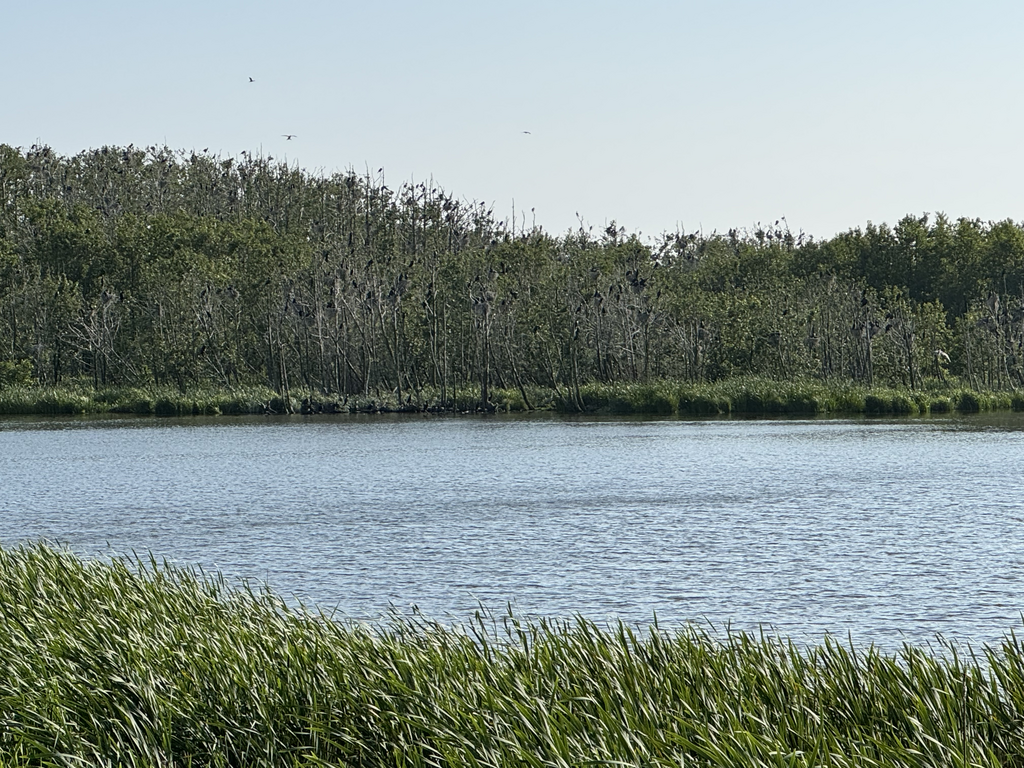
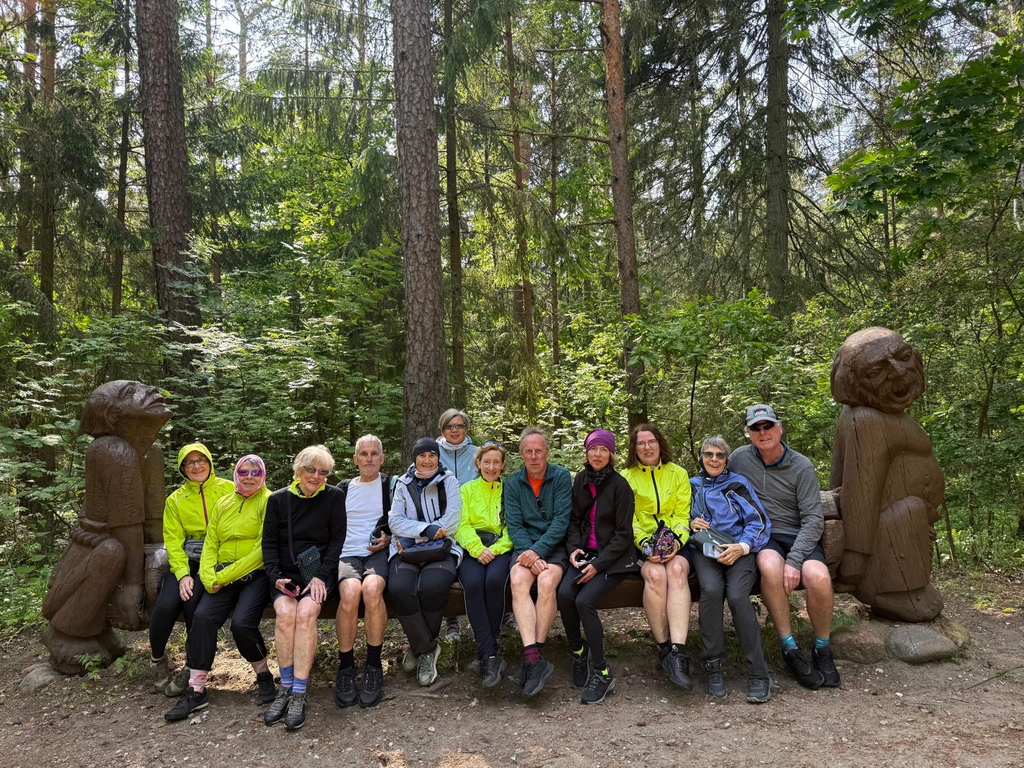
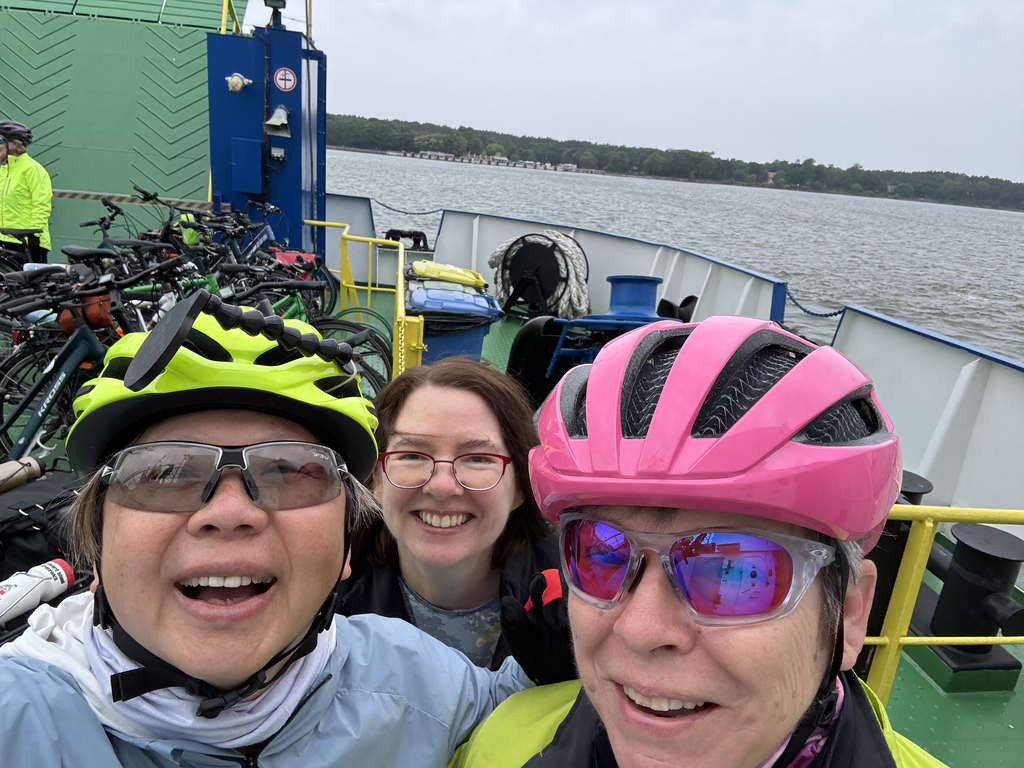
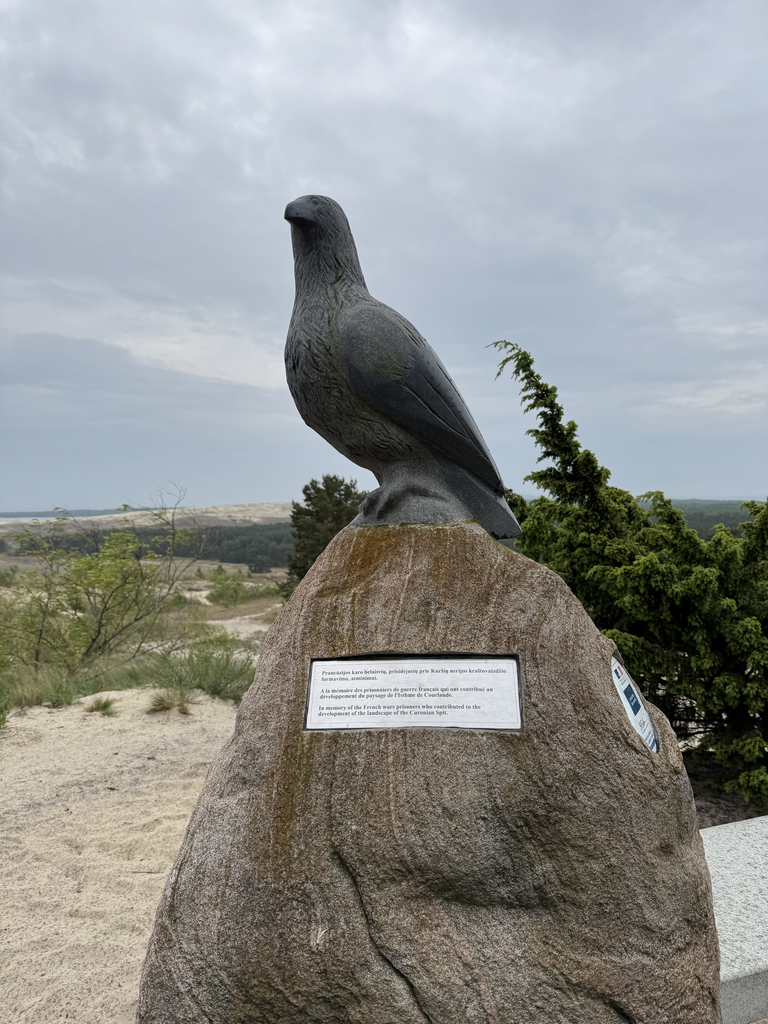
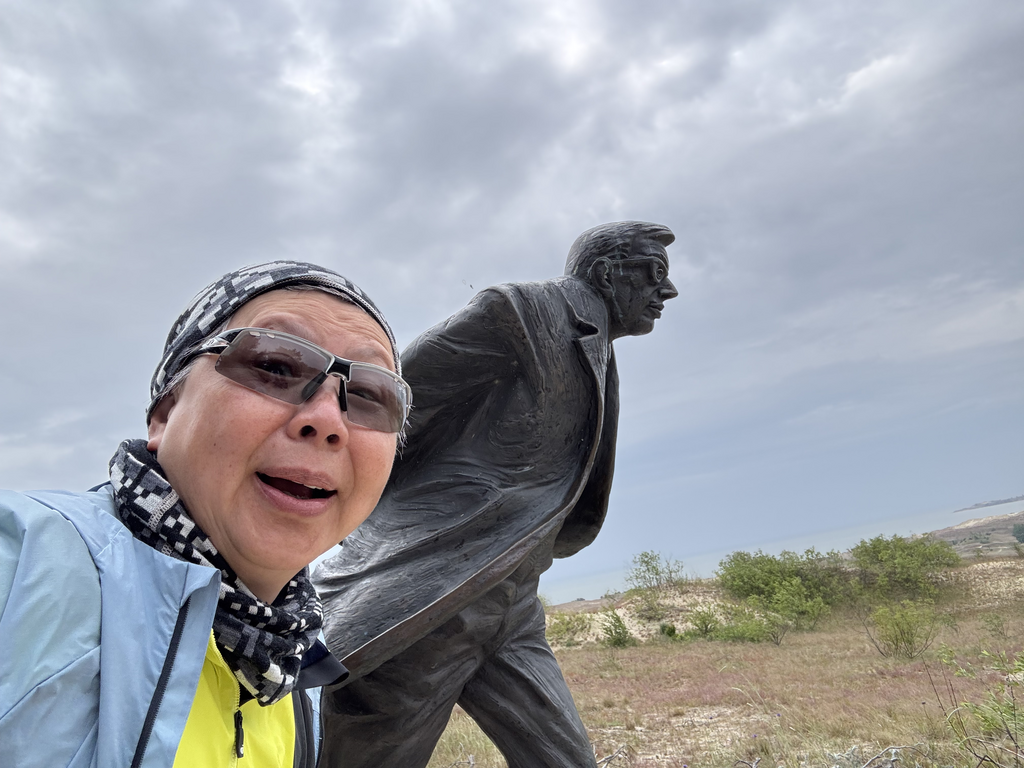
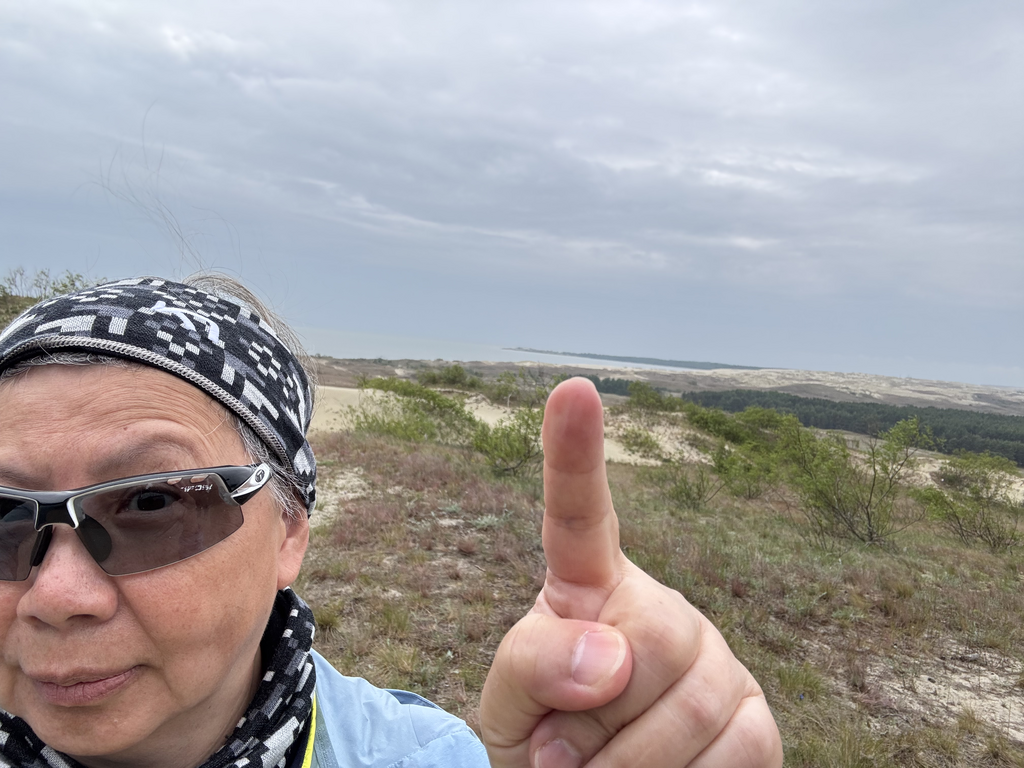
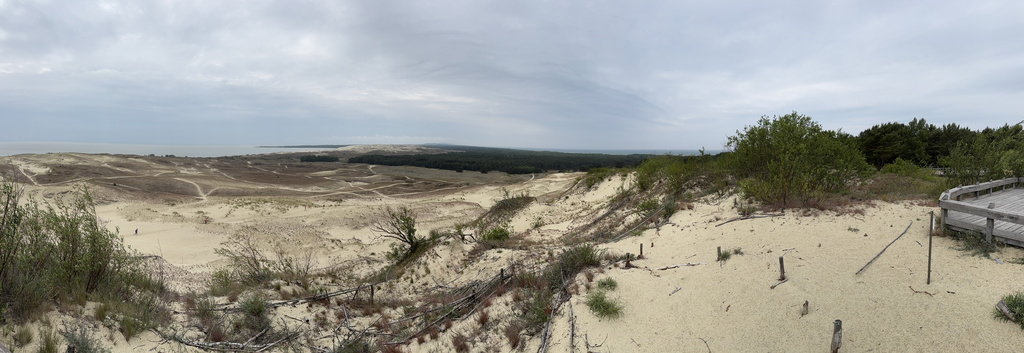
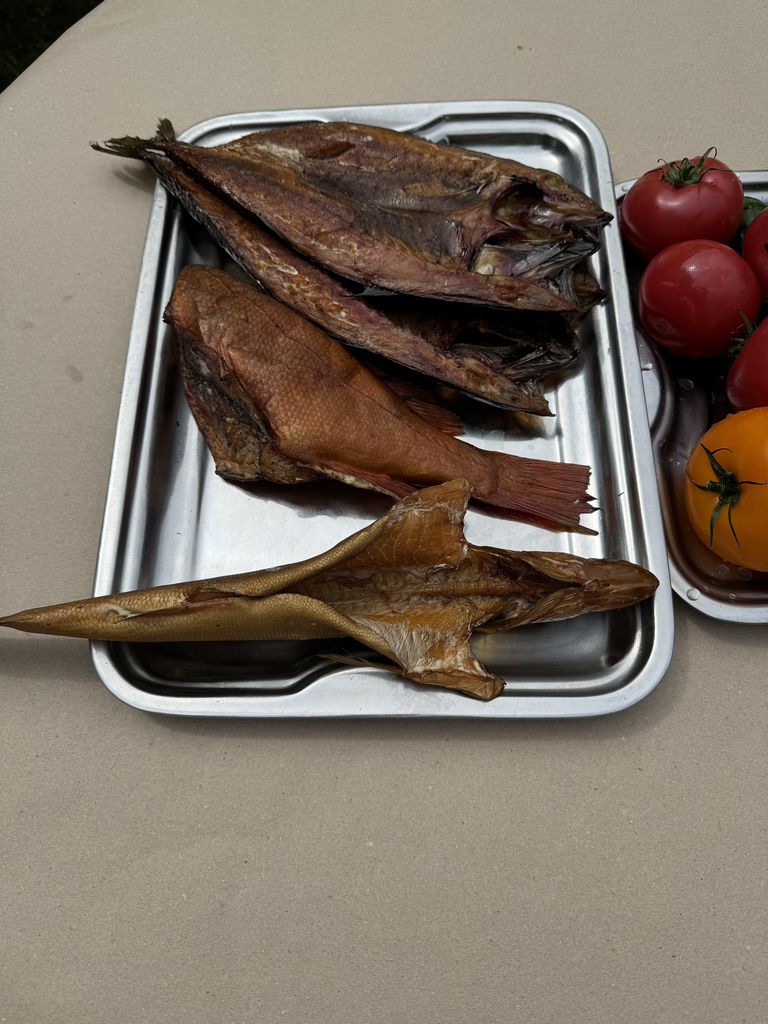
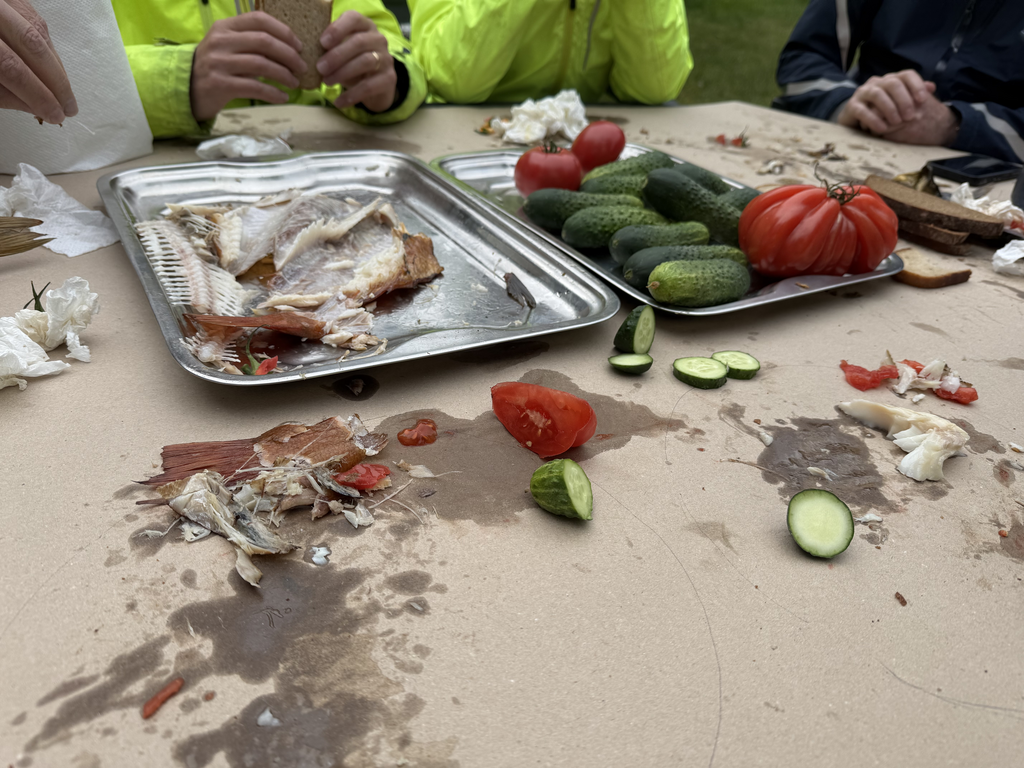
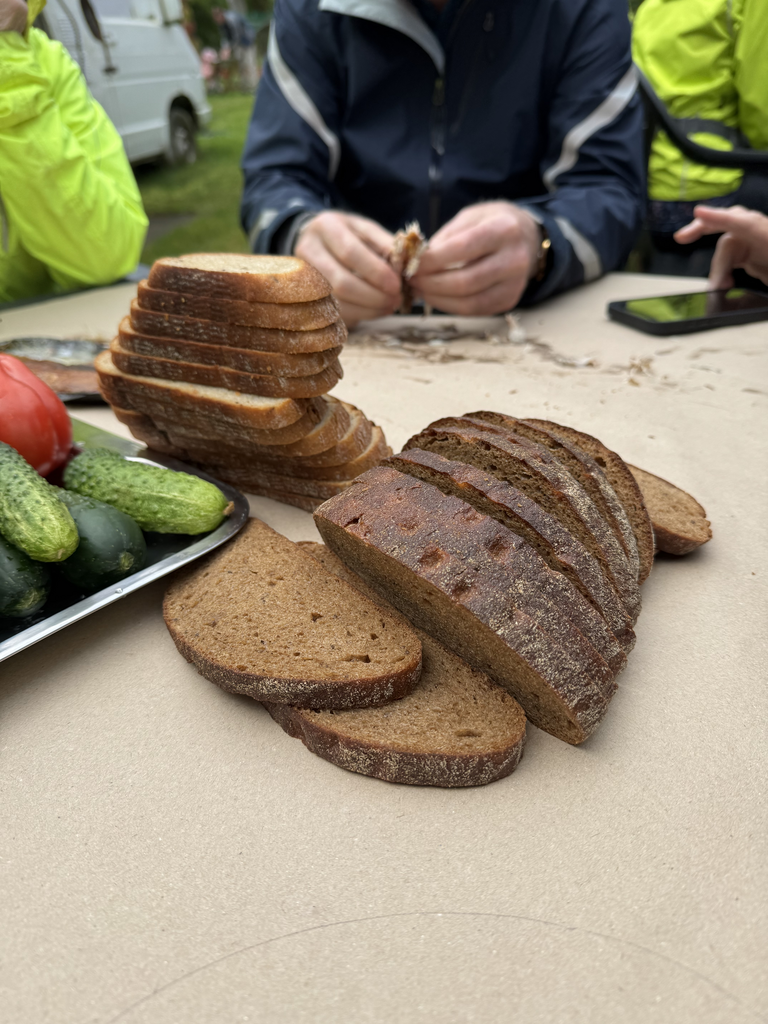
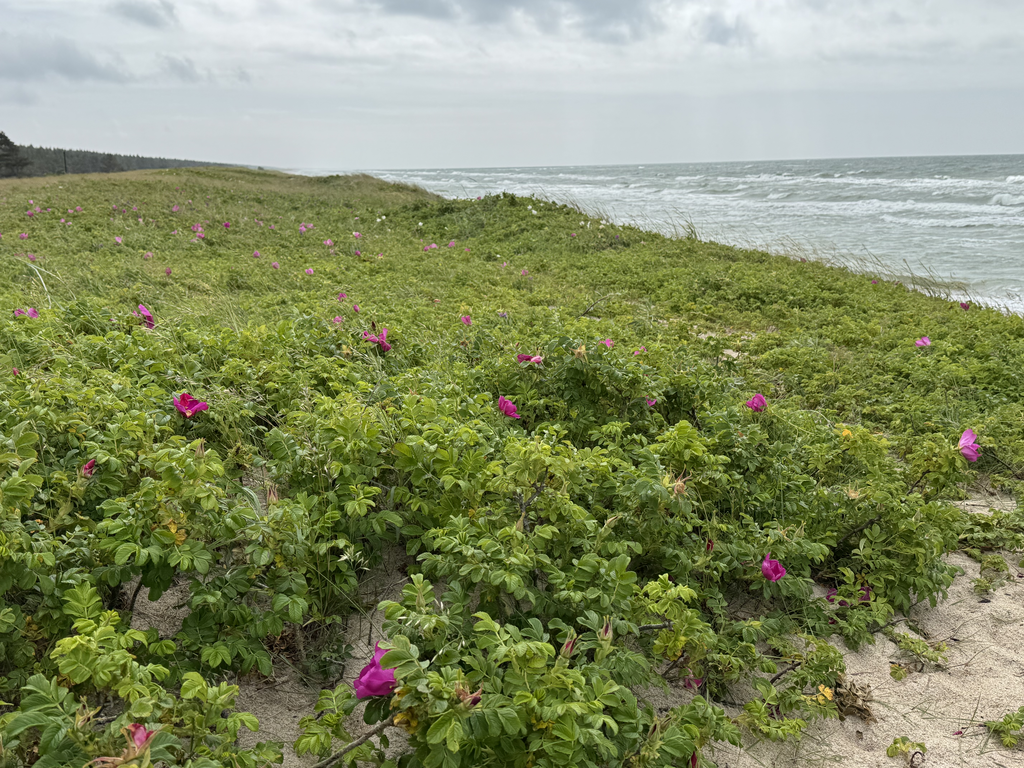
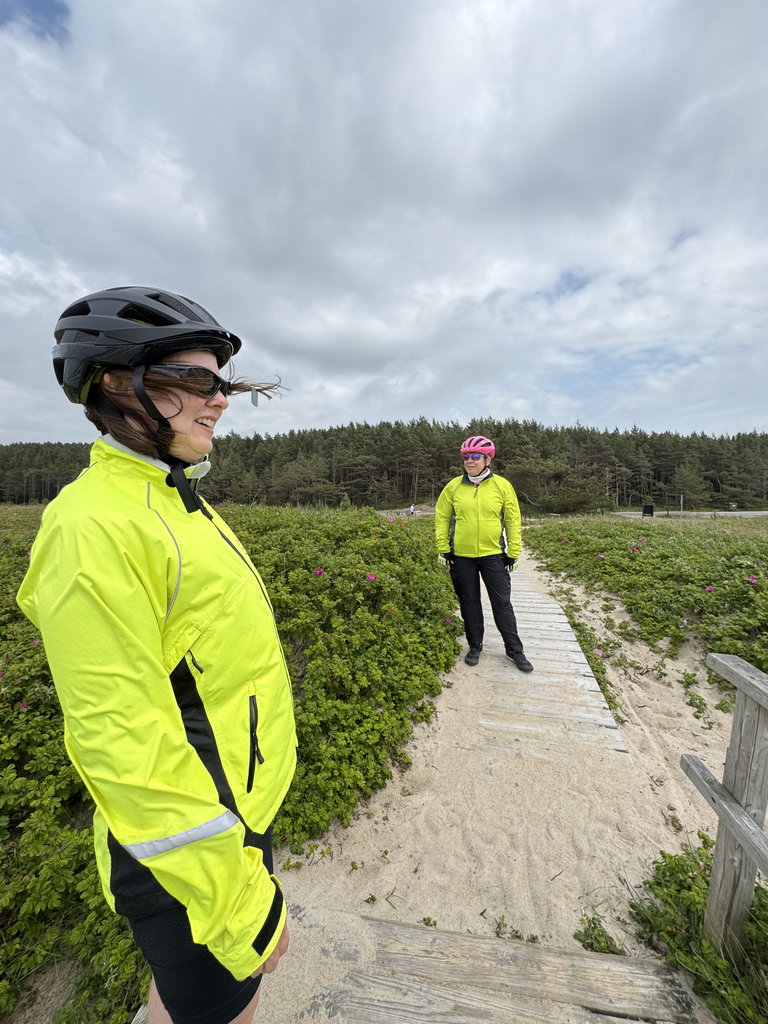
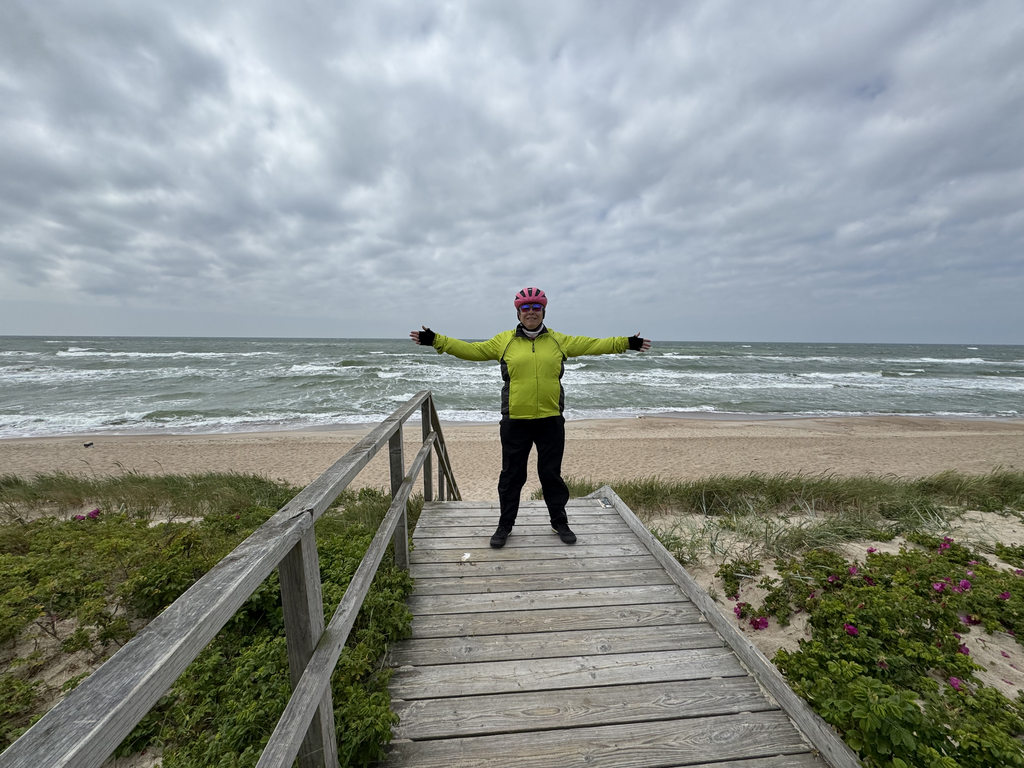
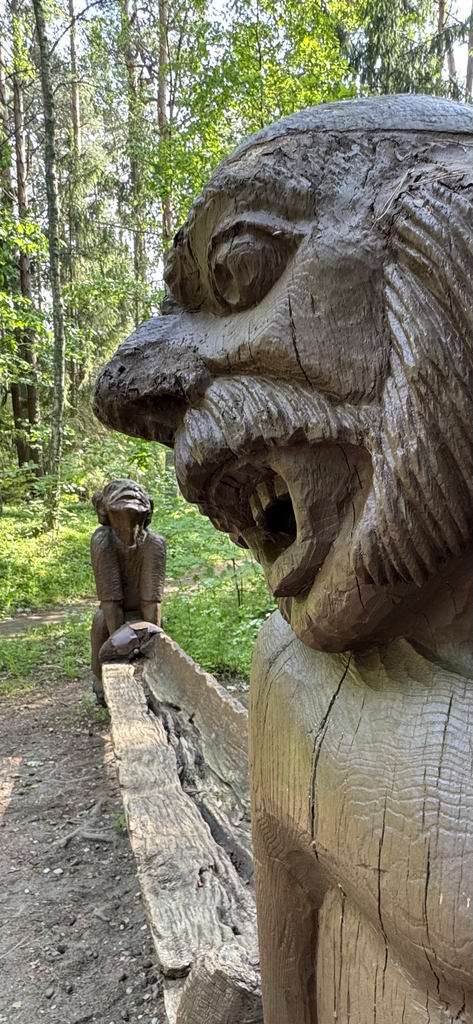
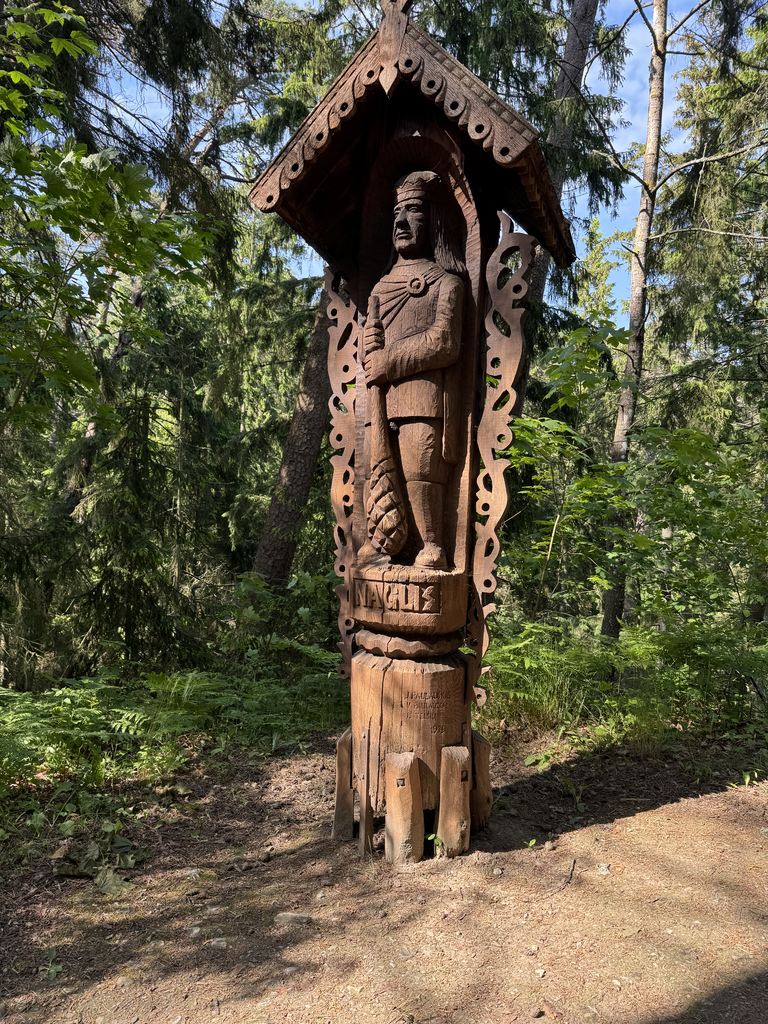
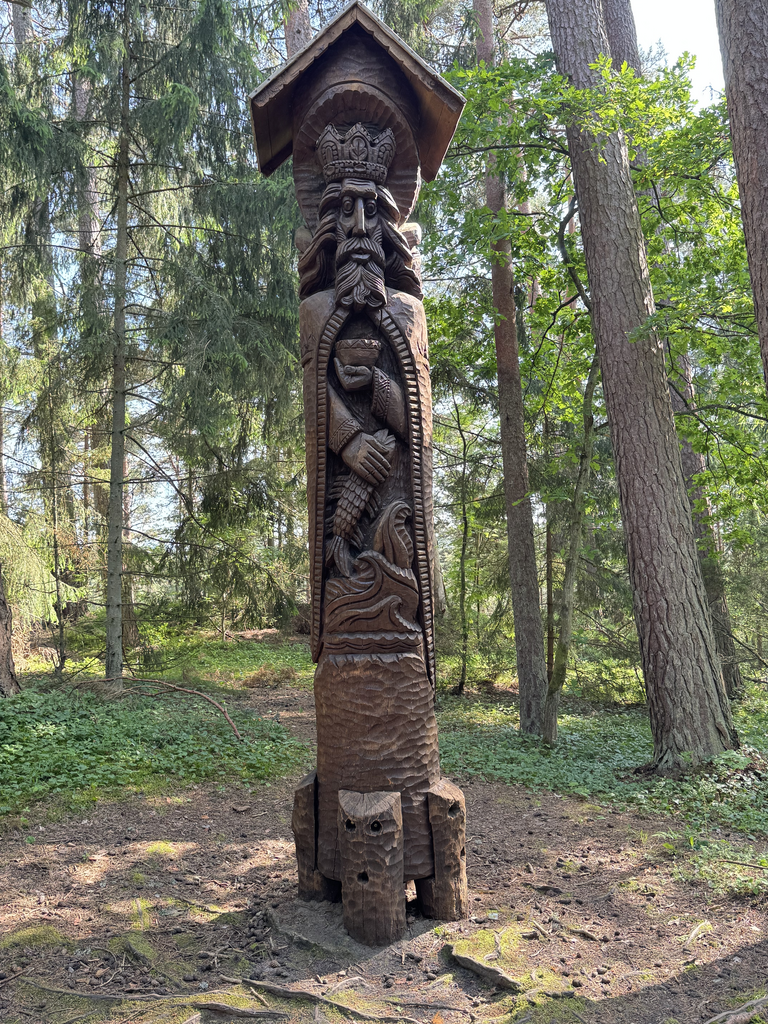
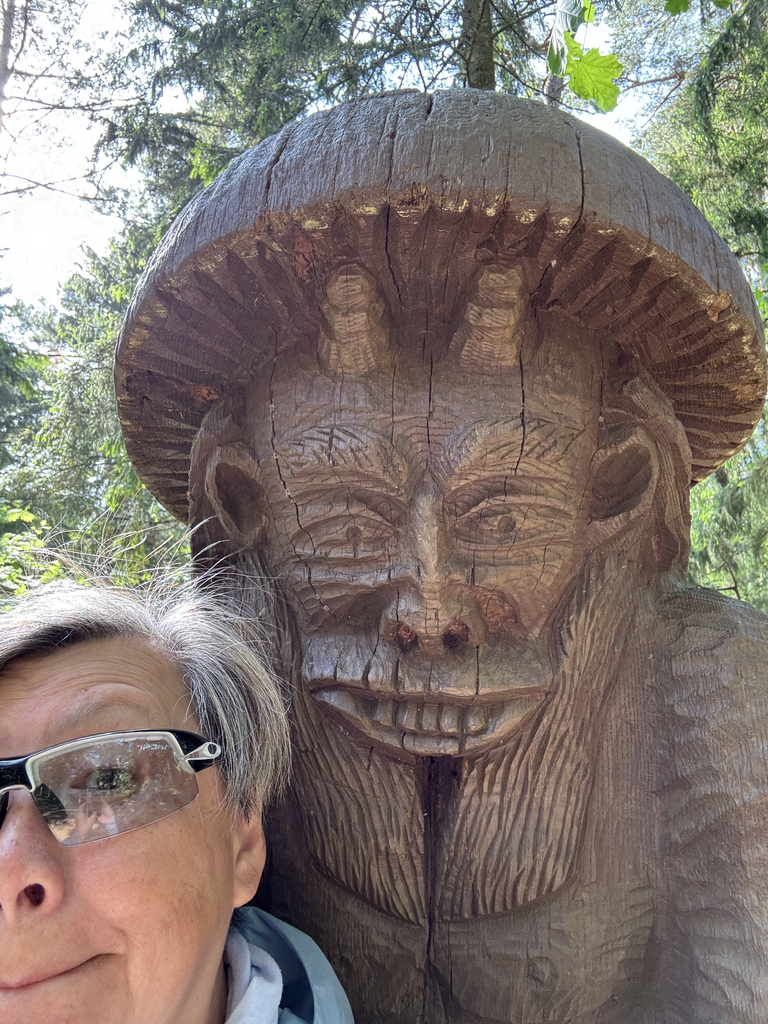
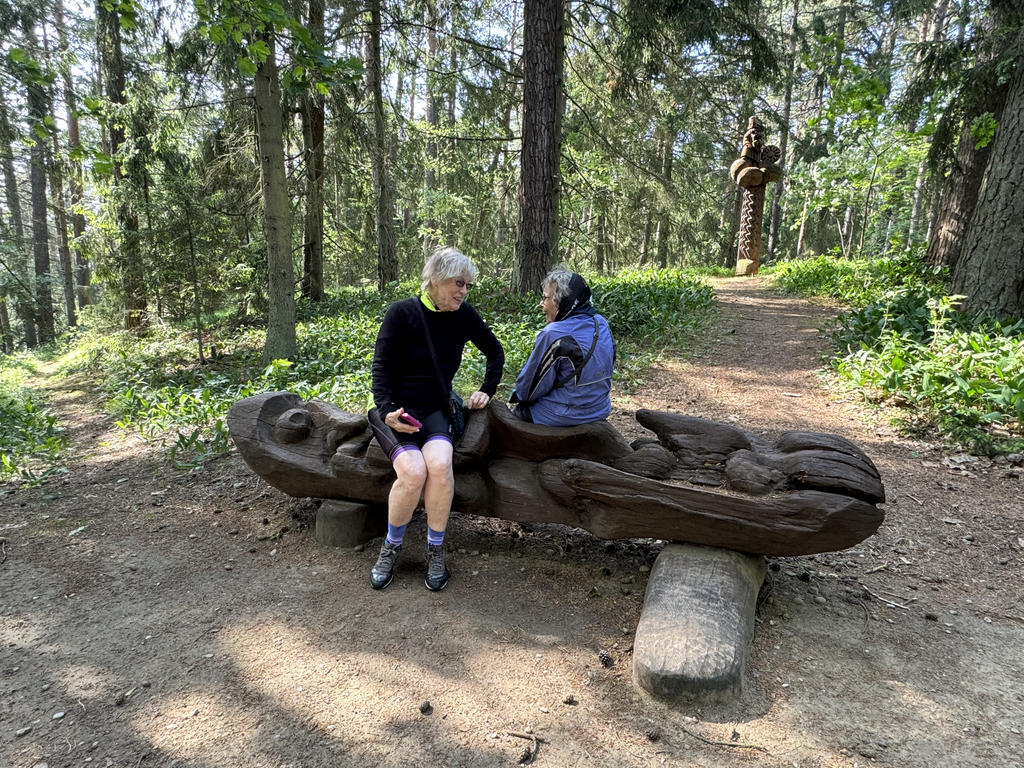
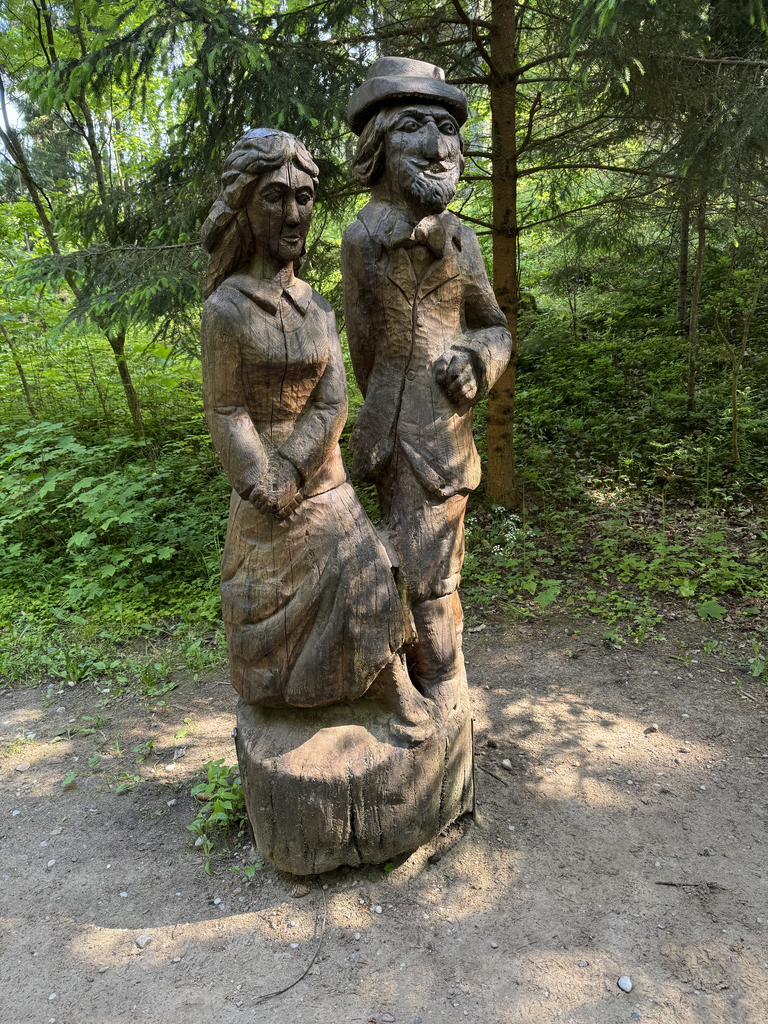
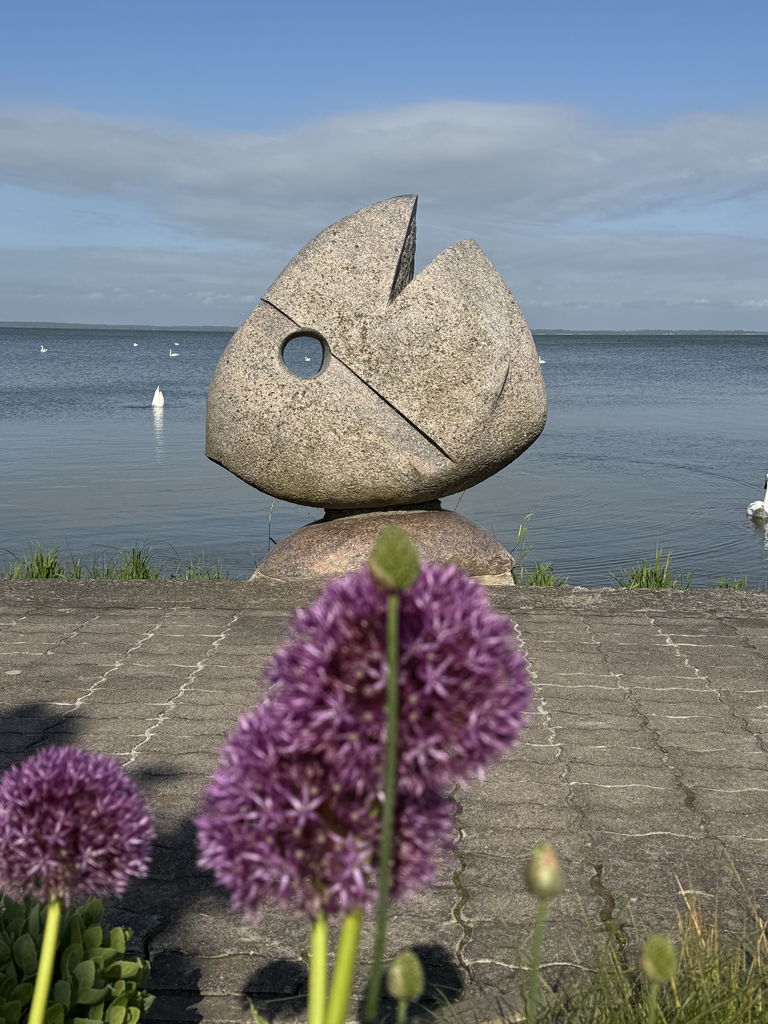
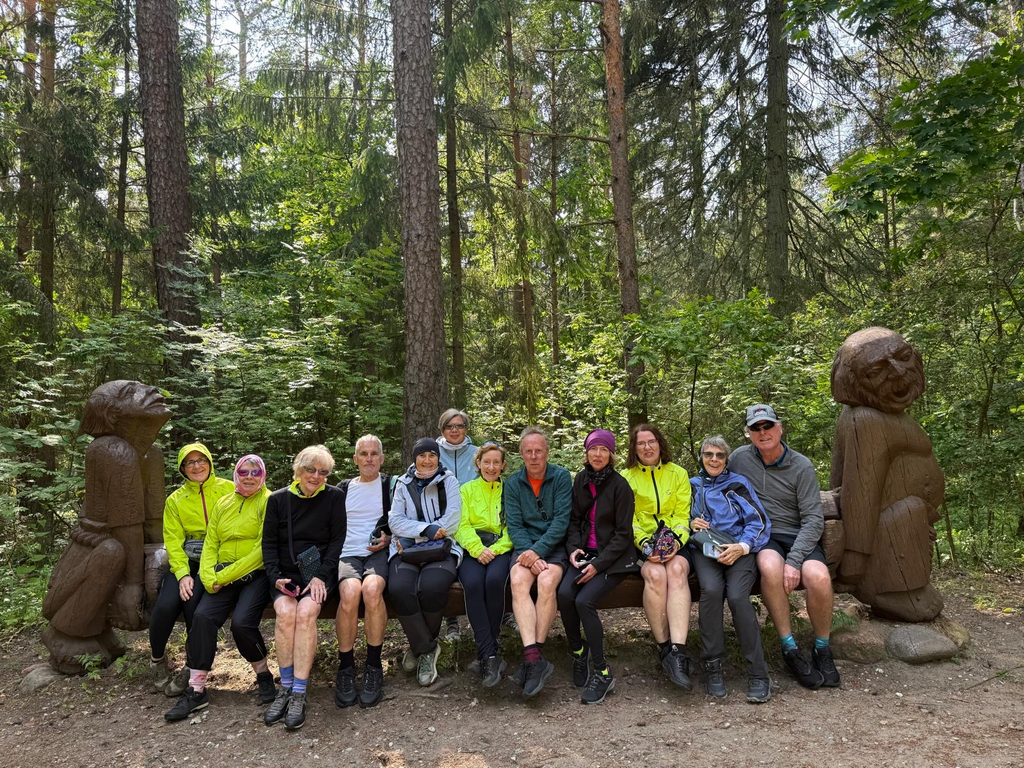
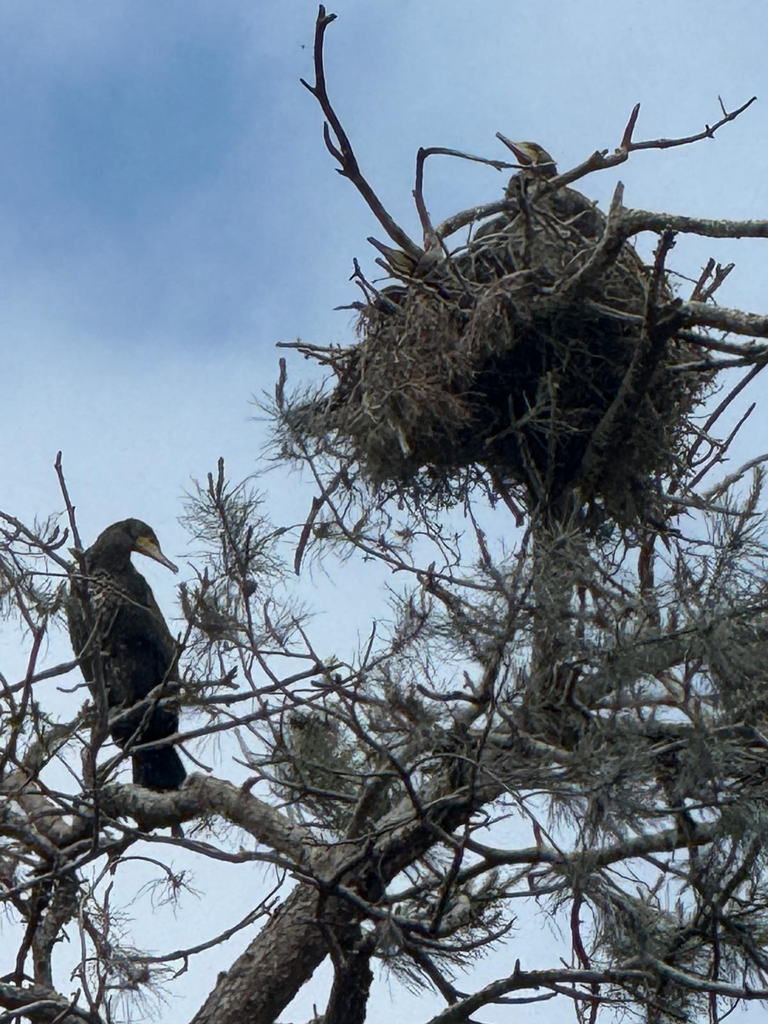
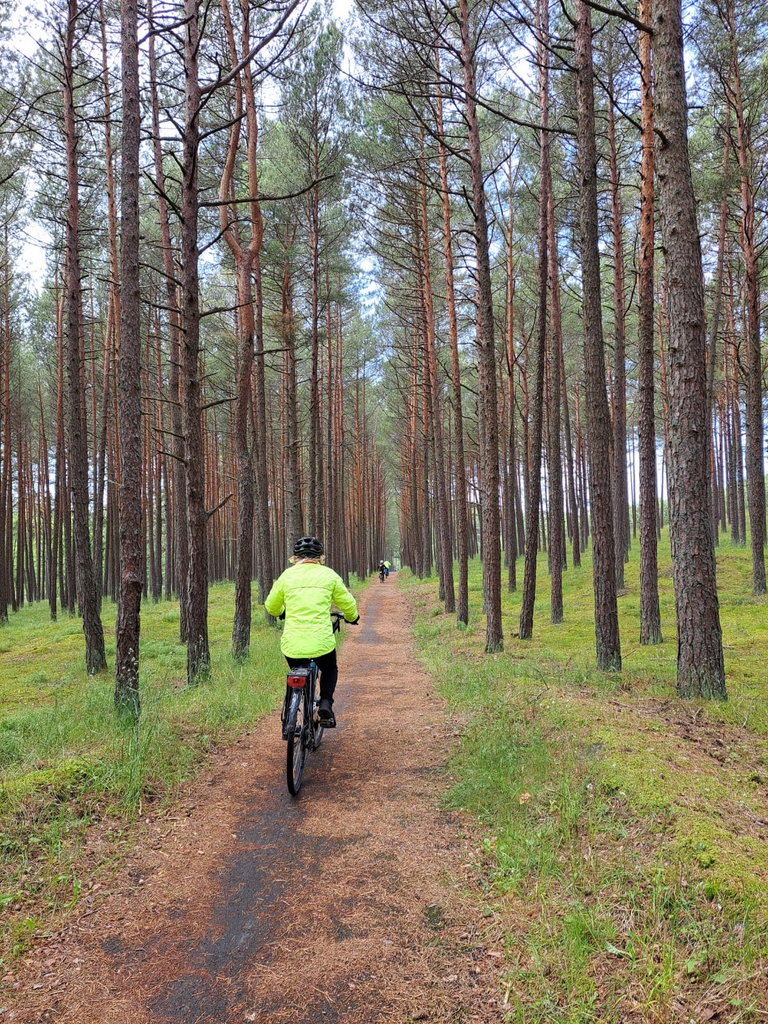
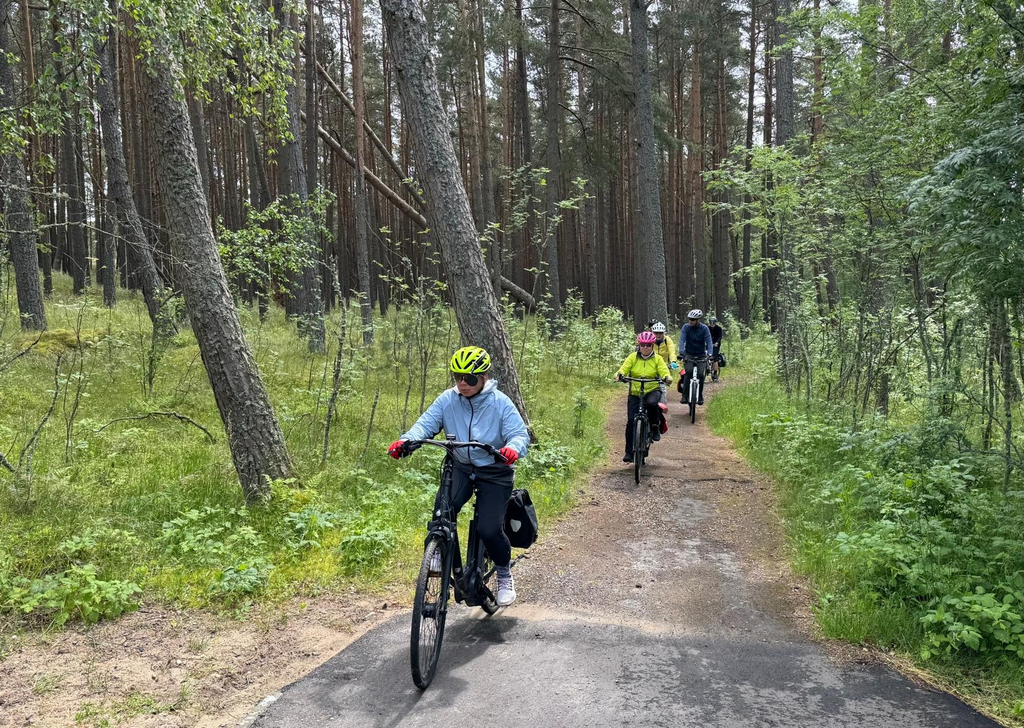
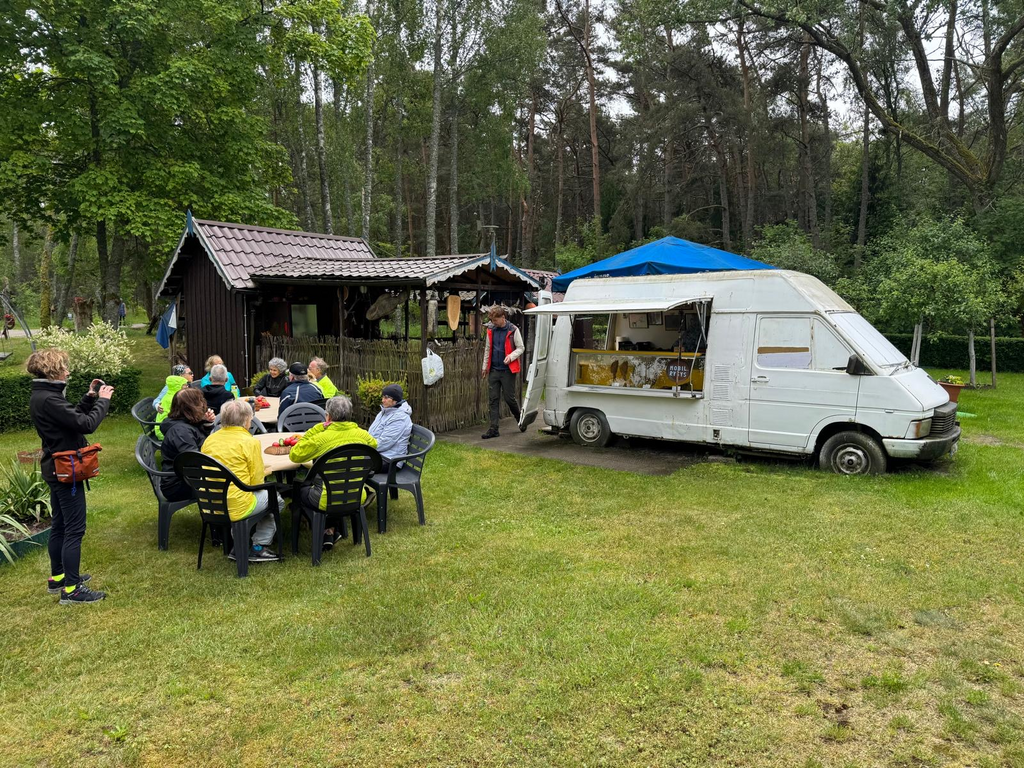
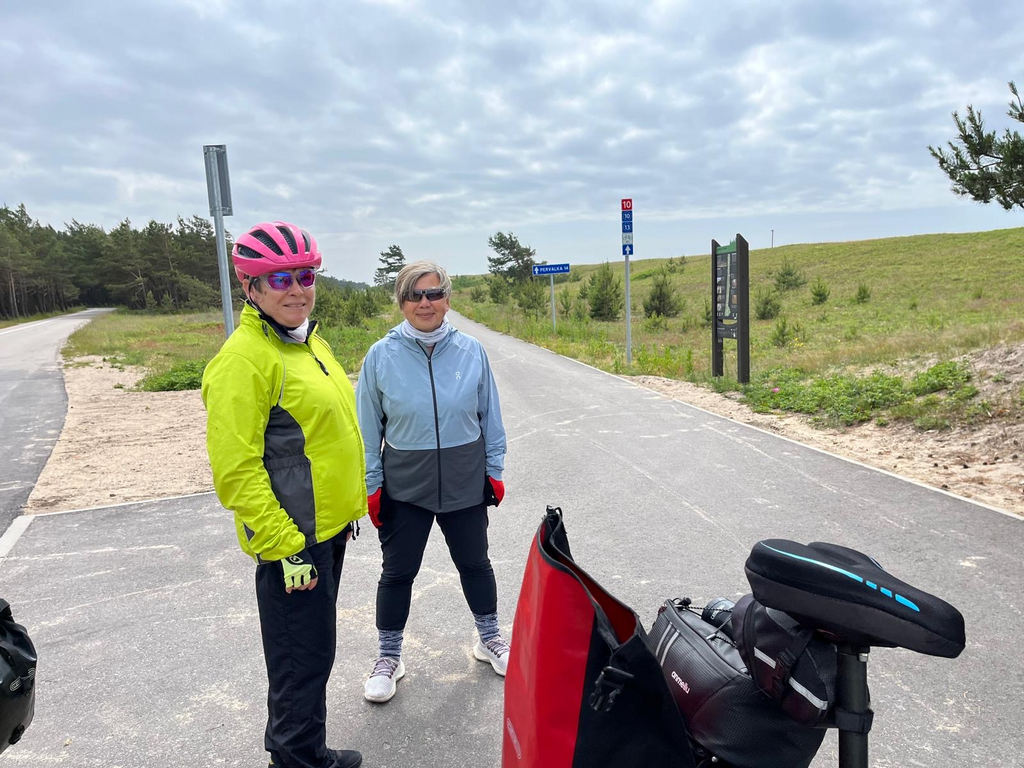
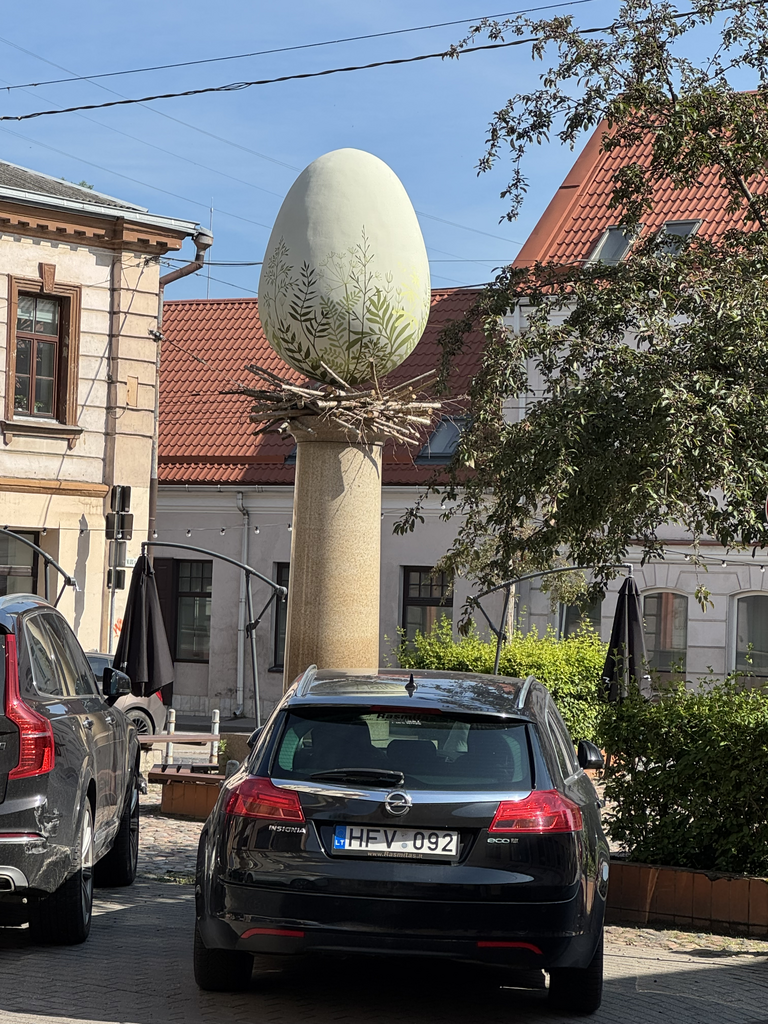
47 km Our biking route yesterday was all on EuroVelo 10. And we pick it up again this morning, cycling from our hotel to the ferry and crossing it at the narrowest point between the Curonian Spit and the mainland. Skies are dark, but we are hopeful. Today's ride is the longest, covering all 61 Km (38 miles) of the route to the viewing platform where we can wave to the Russian Territory of Kaliningrad. The route weaves in and out of piney forests, buffered by tall sand dunes along the Baltic Coast. The dunes were courtesy of the French POWs from WWI, when the territory was still part of the Prussian Empire. The POWs, men ranging in age from 18 to 40, certainly attracted the notice of the local girls, especially since the men in the area were off fighting in the war themselves. Coves have such names as Love, Tryst, Midnight, and Death (I think our guide was joking about that last one). They are impressive, rising high (up to 197 ft) and blocking our view of the waters, making this a very pleasant ride. The path is very well maintained. We boogie along at 14-16 mph. However, it was too good to last. After 15 miles of glorious riding, we are all soaking, and the bus picks the lot of us and drive to the platform to view the Russian border, then to a lunch of smoked fish (mackerel, sea perch, and Zander, a pike perch.) The mackerel is the most delicious. All this was served with cucumbers, tomatoes and bread that Andrius picked up in town. We hope to resume riding after lunch. Kaliningrad was a true surprise. It is tucked in between Lithuania and Poland, and it is Russia's only ice-free port. They had received it after WWI from the Prussian Empire, and kept it after the the Baltic States broke up. The last town in Lithuania, Nida, is only 3 Km from the border. Kaliningrad is administered from Russia as a province, with a population of over 500 thousand Russians. Going up to the viewpoint, someone had recreated a famous image of Jean-Paul Sartre "Against the Wind." In case you can't tell from the picture, I am pointing to the next bay over at Russia. There are only four towns on this long barrier island, and collectively, they are known as Neringa. Neringa is the local giantess who, to help the fishermen, created the spit with sand she carried in her apron. After lunch, the skies do clear and we ride an additional 14 miles through a cormorants nesting area. Andrius warned us "ride up the hill, you will smell them, and I will meet you at the bottom of the hill." We ride up the hill, and hear and see the cormorants soaring in the trees above us, the undergrowth is all whitish, and the smell is a a combination of bird shit and rotting fish. I am just hoping not to stop and not to have anything land on me. At the bottom of the hill we climb up to a lookout to see the cormorants and their nests high in the pines. After that, more single-track biking through the swamps and along the shore facing the lake rather than the sea, calmer waters, sunny day, lots of public art. We bike to the amber bay where the locals had become wealthy digging out Baltic amber (at least 35 million years old). After, we climb the hill to see at least 70 wood carvings spread out along an old sacred hill from pagan days. The townspeople who invited artists to come to town to work provided room and board, and wood. This has been happening since 1979. In the late summer sun, the place was magical. Benches, totems, see-saws, and slides. Some of the stories: The King of Grass Snakes and his wife and children. In the story, he is betrayed by one of his kids which becomes the aspen, always shaking and afraid. The boys are oak, ash and birch, and the grieving widow is the fir/spruce. Another involves how to tell the devil from man. When dancing, the devil will be disguised as a man, wearing a hat and shoes, but it cannot hide it cloven feet, so young women stomp on their dancing partners' feet to make sure. Back on the bus, across the ferry to the hotel Victoria and a soak in the bathtub. The four of us have ramen tonight. It was truly a magical ride.

Lithuania: Zapyskis, Kaunas and Vilnius

Day 11: 2025-06-19 1724


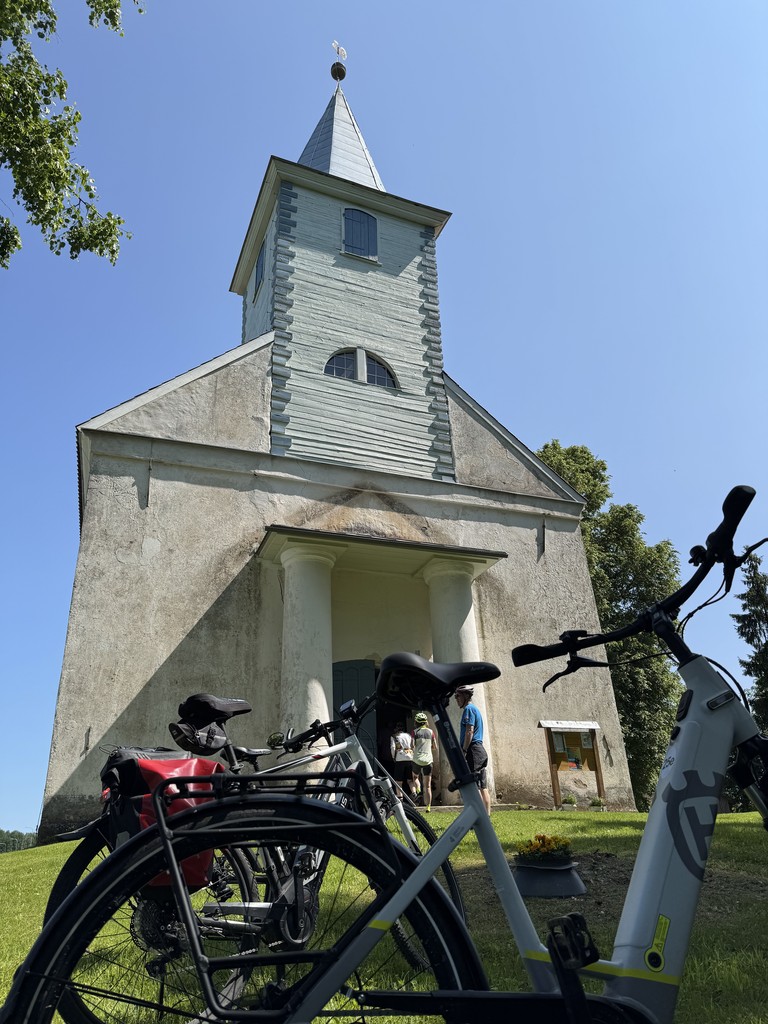
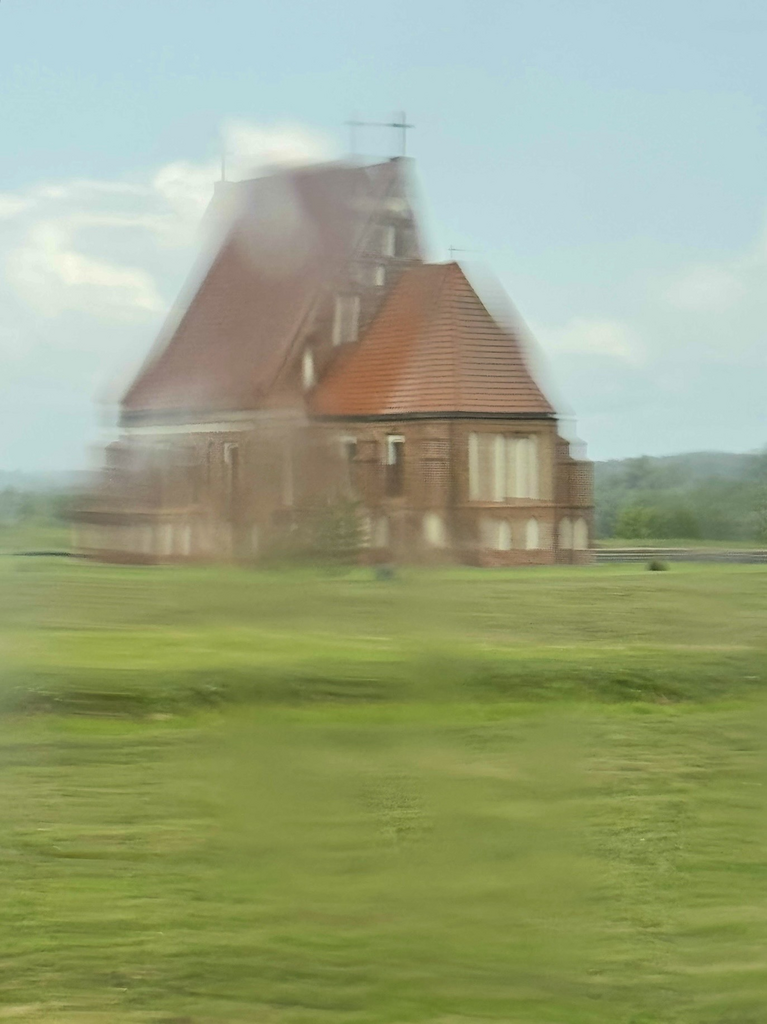
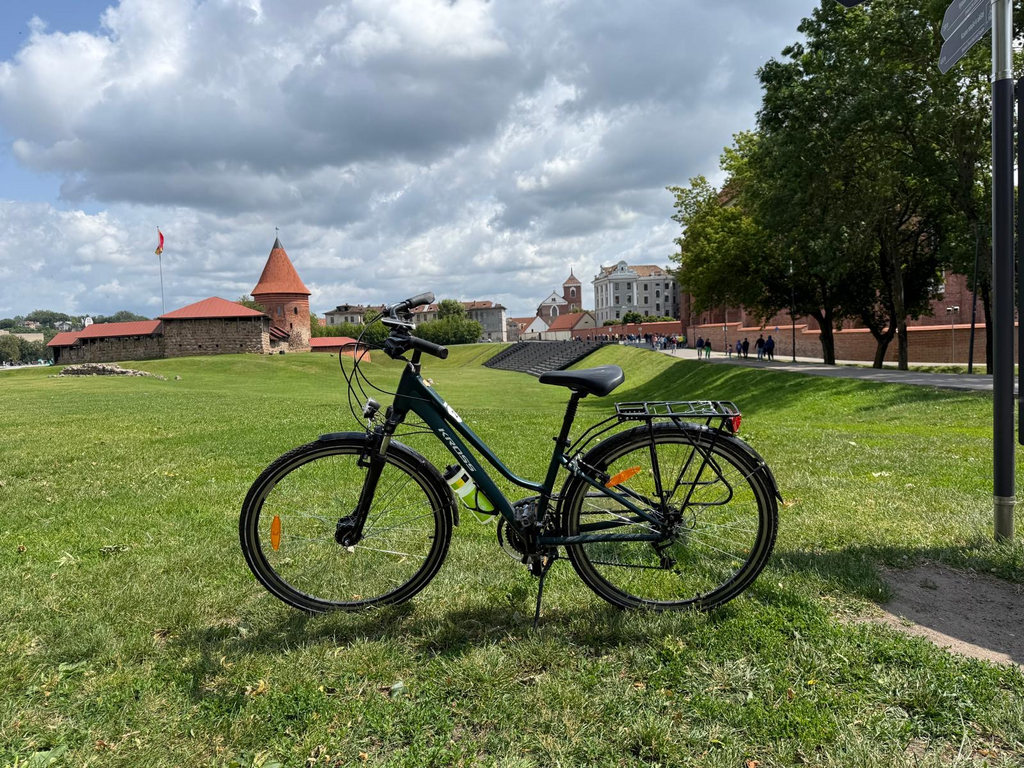
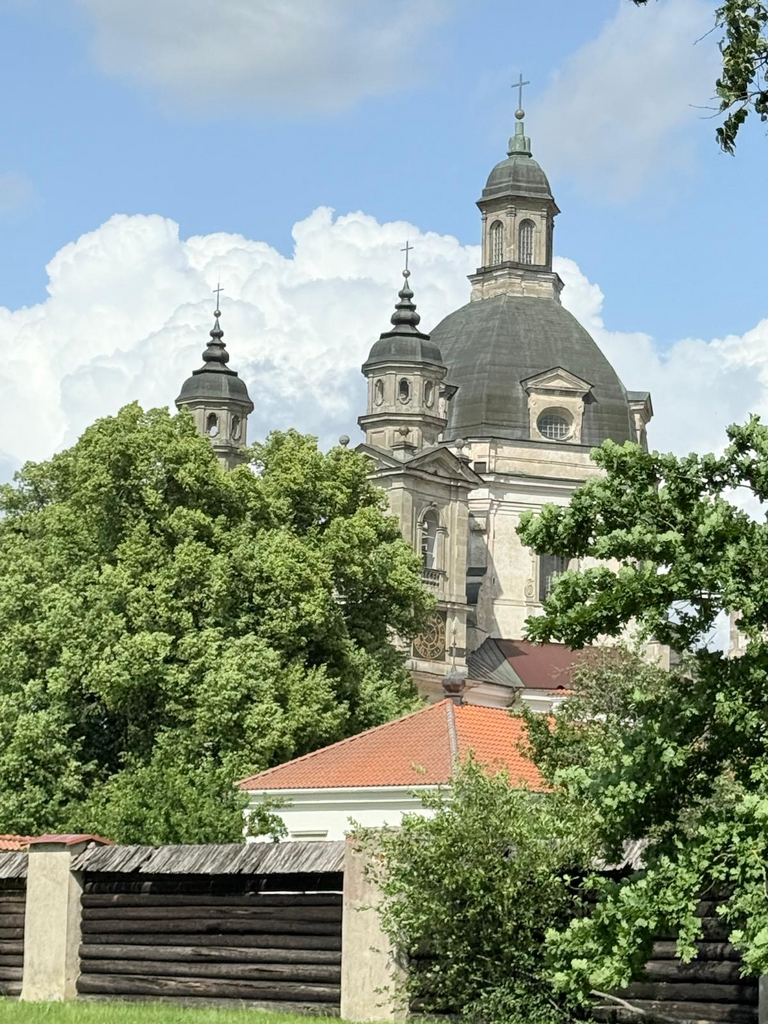
20 miles We plan to drive for an hour, then ride to lunch after, and then back on the bus to Vilnius for the night.The day turned out more complicated than that. We are all members of the 9 o'clock club. Except for the first day, we've pretty much adhered to this schedule. Those with e-bikes (4 of 16 riders) are given their battery chargers and it is their responsibility to charge the batteries for their e-bikes. Andrius regales us with stories of life under the soviets in addition to information about the ride and sights of the day. He was amazed the first time he was able finally able to read George Orville's Animal Farm and how accurately it described life in the Soviet Union. 1984 was even darker and hopeless, but accurately reflected the doublespeak of Putin's lies. Rain in Zapyskis at the site of the only gothic church in Lithuania. Rare since Christianity came to Lithuania in the 1400s, after the heyday of the style. The church sits alone in a low-lying area as the townsfolk moved to higher ground. We start the ride after lunch in the city of Kacergine. Next to the restaurant was a photo exhibit taken by a Lithuanian who smuggled a camera in a loaf of bread when they were resettled in Siberia. The entire community was left to fend for themselves with very little supervision. These were not farmers but people from the city along with their families. We ride along the River Nemunas to Kaunas. While we biked through the old town, we had no chance to really explore. Onwards to the Pazaislis Monastery and our transfer to Vilnius. The monastery is site of a Michelin starred restaurant and hotel complex. There was not enough time to really explore the monastery (plus they charged a 10 euro entrance fee). Might have been worth it, but it was late in the afternoon, we had biked 21 miles, crossed a wide river with fierce cross winds (I walked the bike), and across a dam (again, I walked the bike). Vilnius comes into view (more history later), we check into the Comfort Hotel (yes, associated with Comfort Inn), and it is the Rock and Roll themed hotel, very hip. Dinner is at a Georgian restaurant nearby. Exhausted after 8 days straight of biking.


Lithuania: Last biking Day

Day 12: 2025-06-20 1725


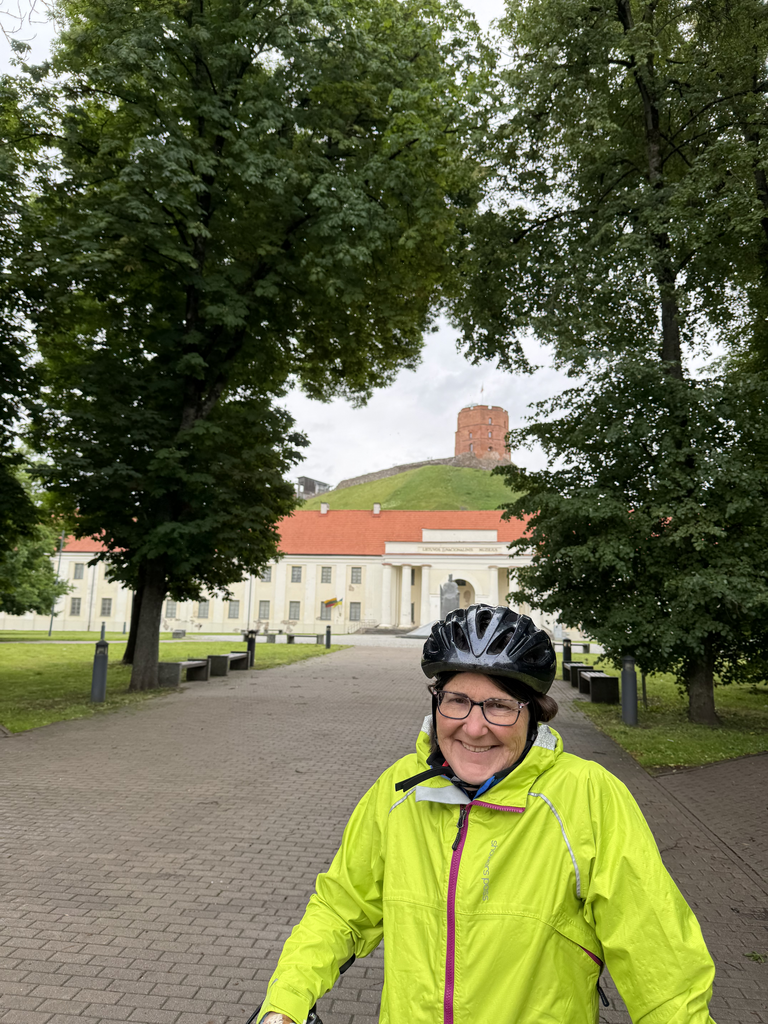
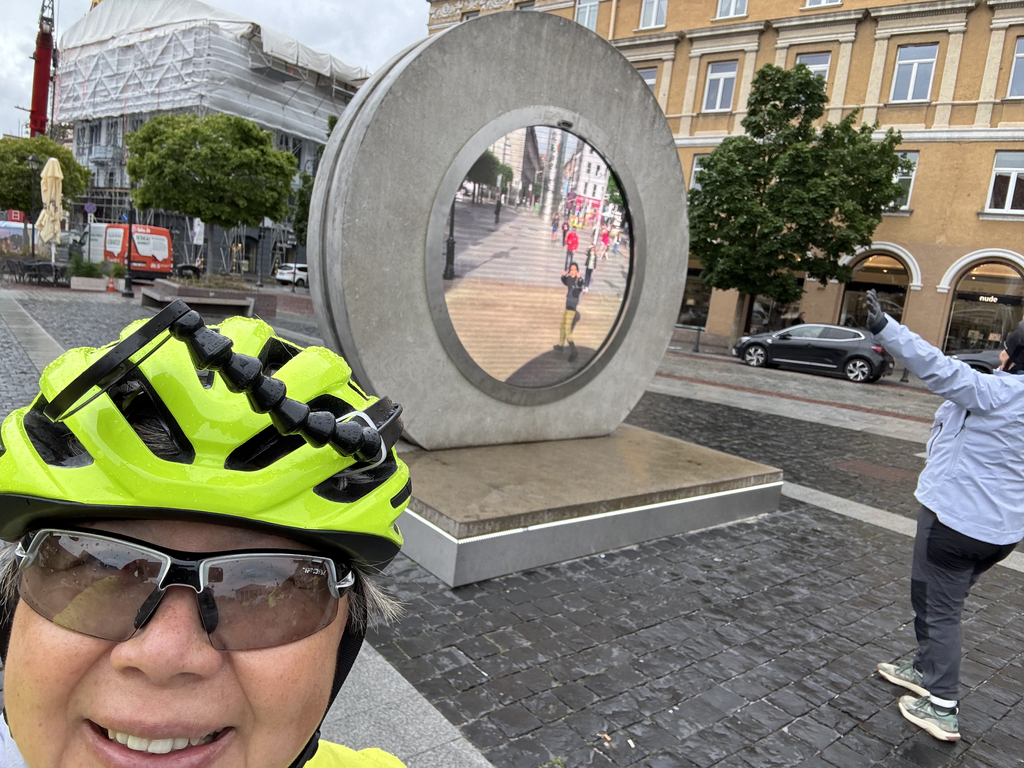
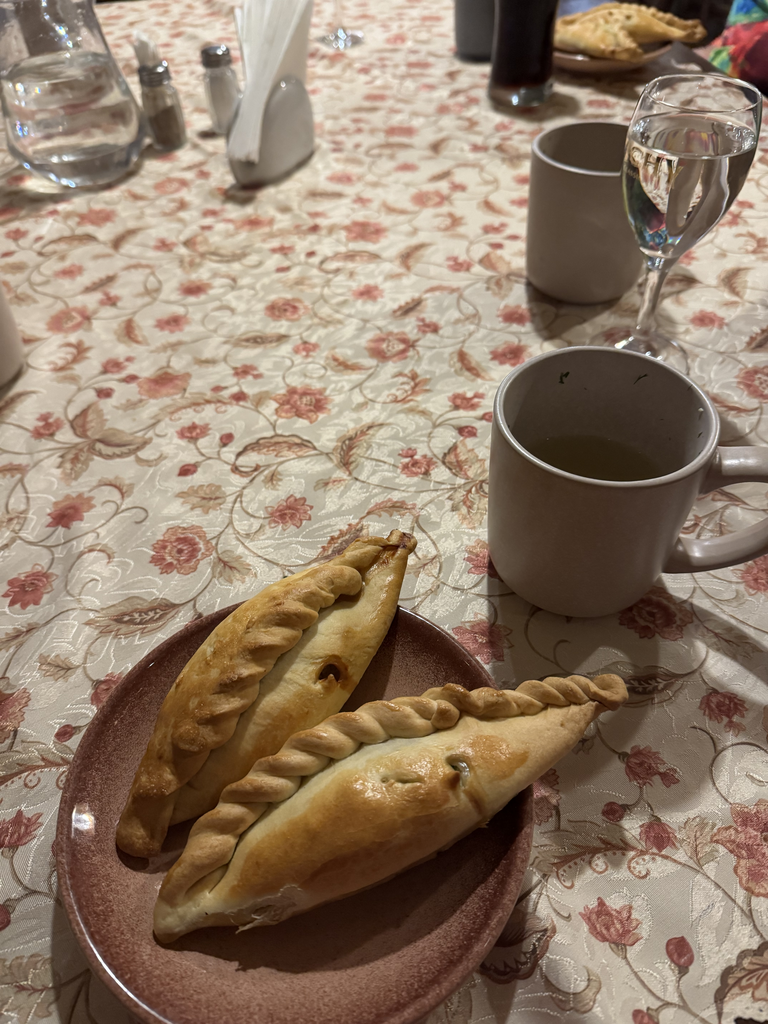
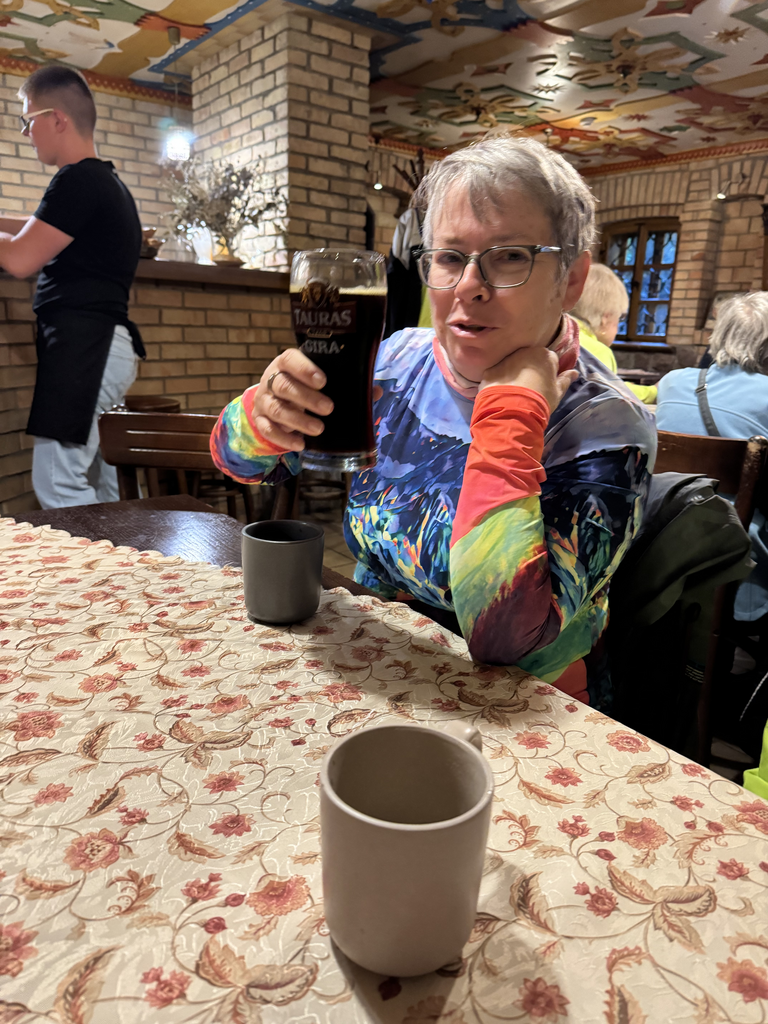
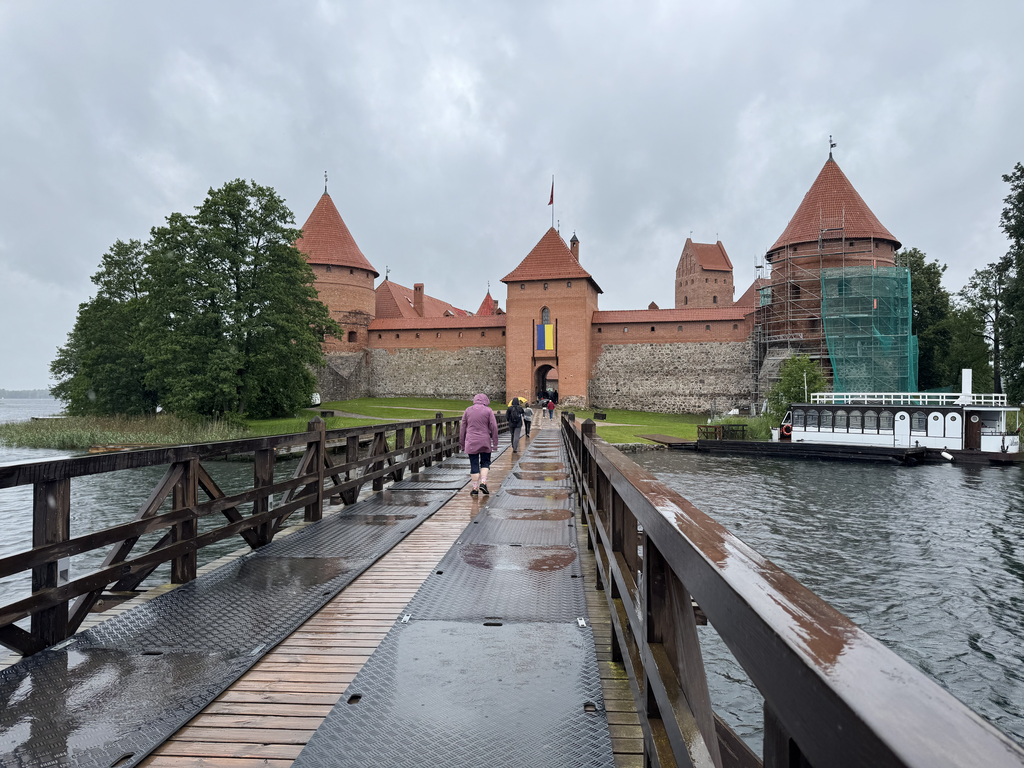
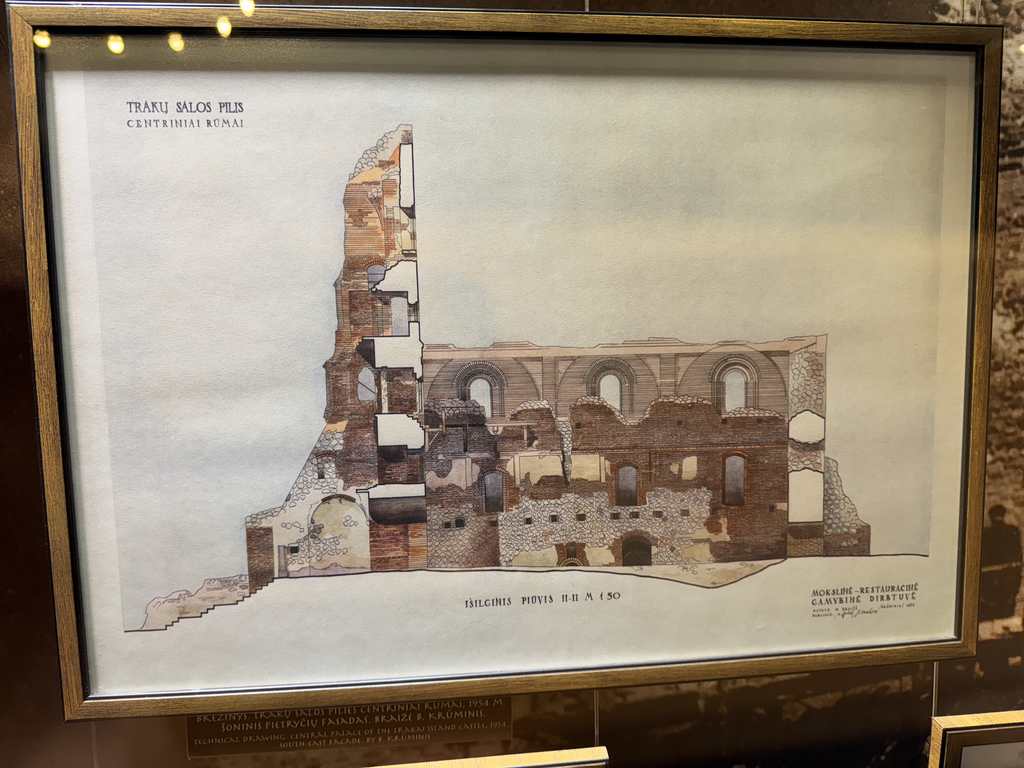
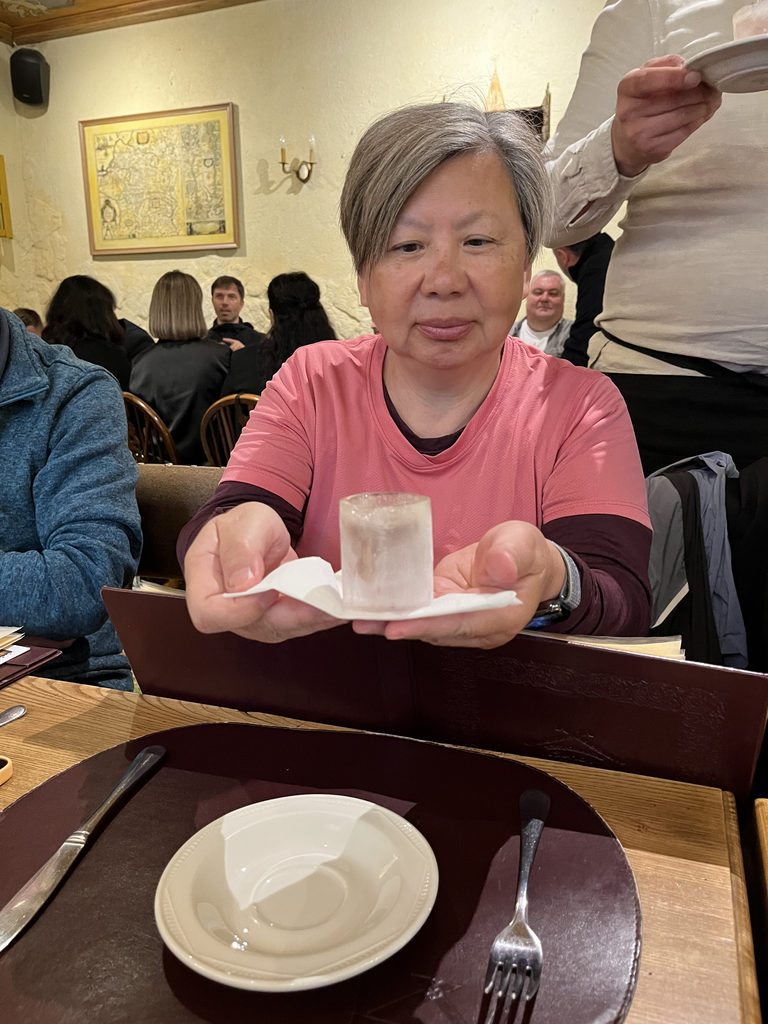
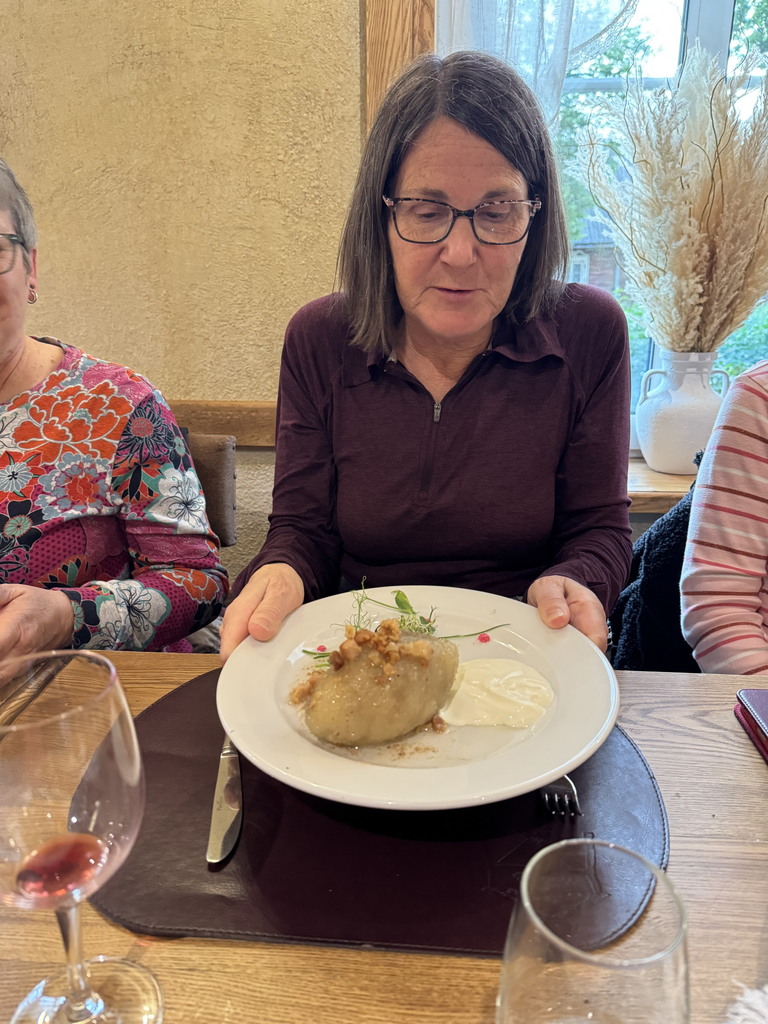
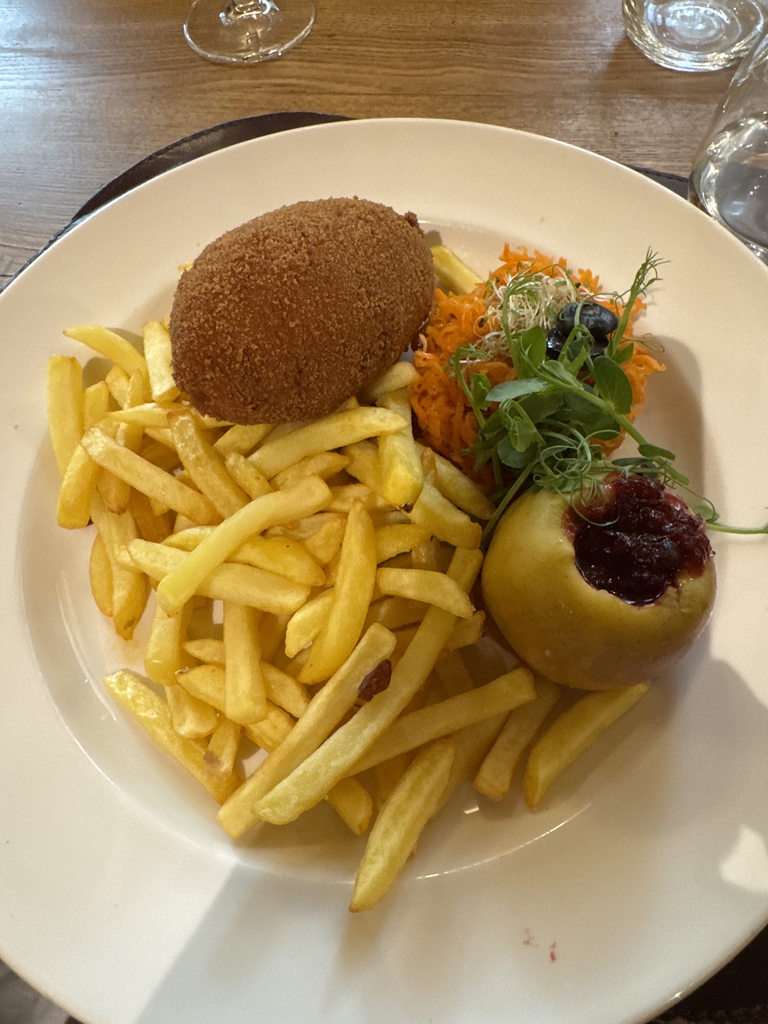
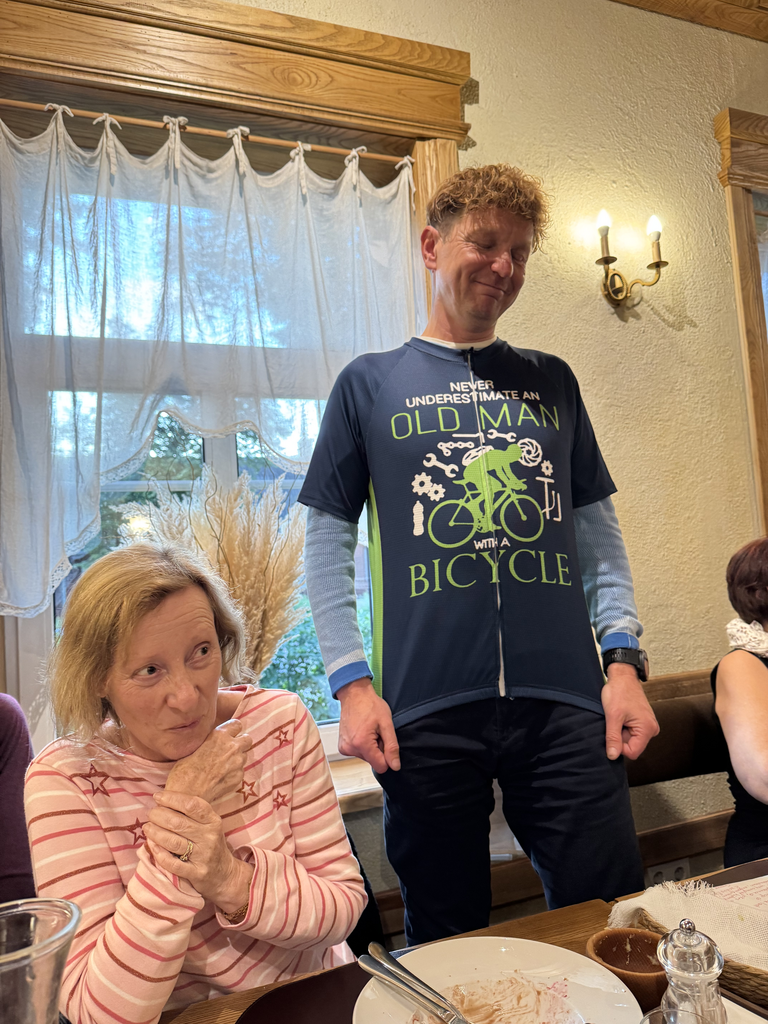
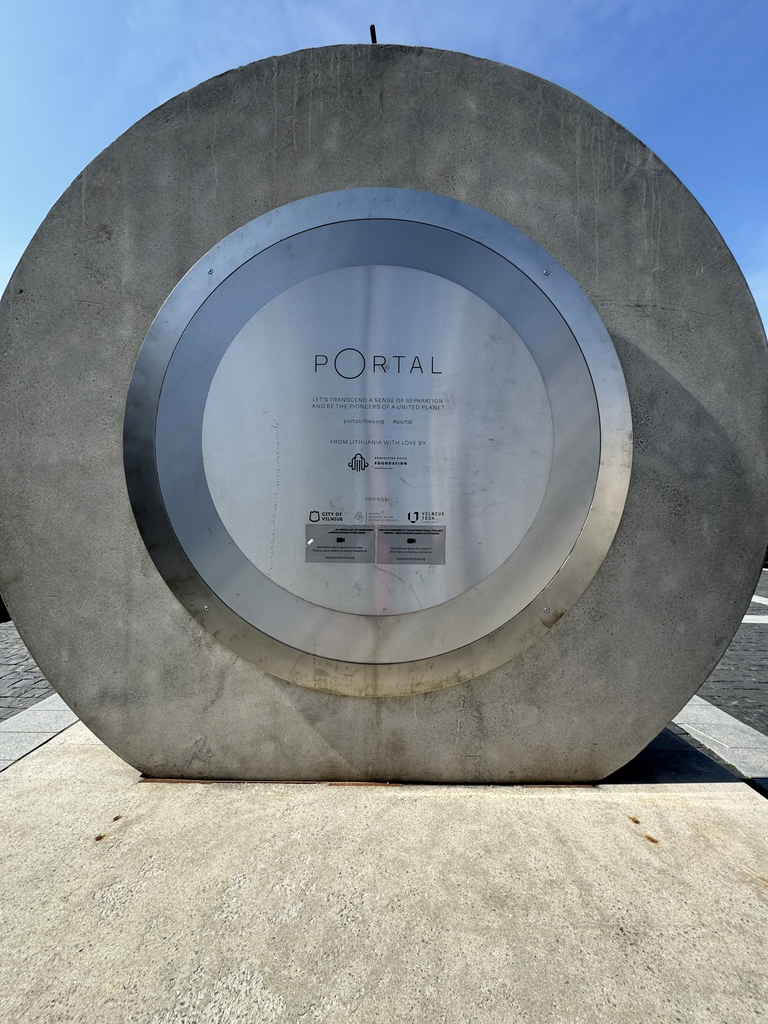
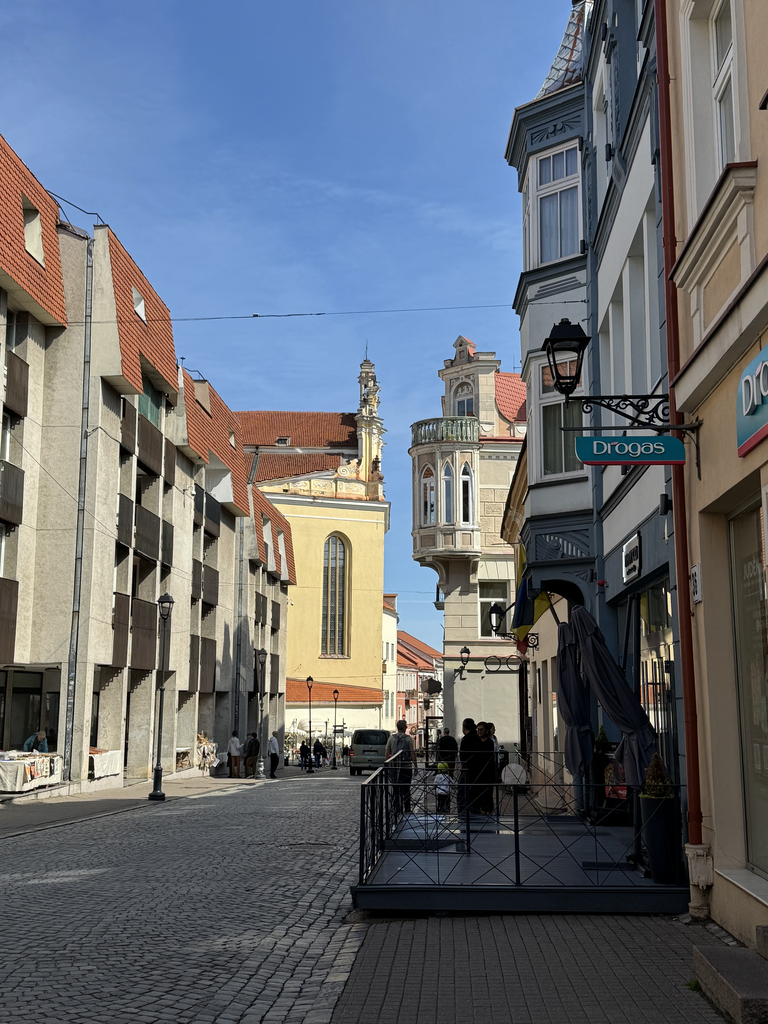
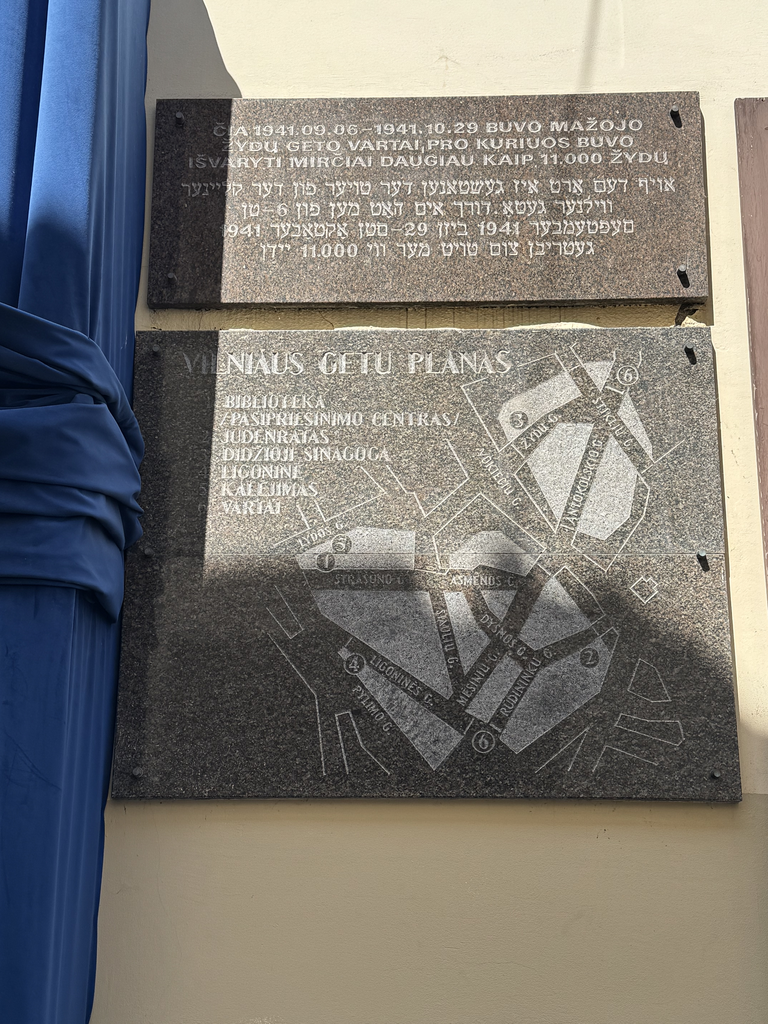
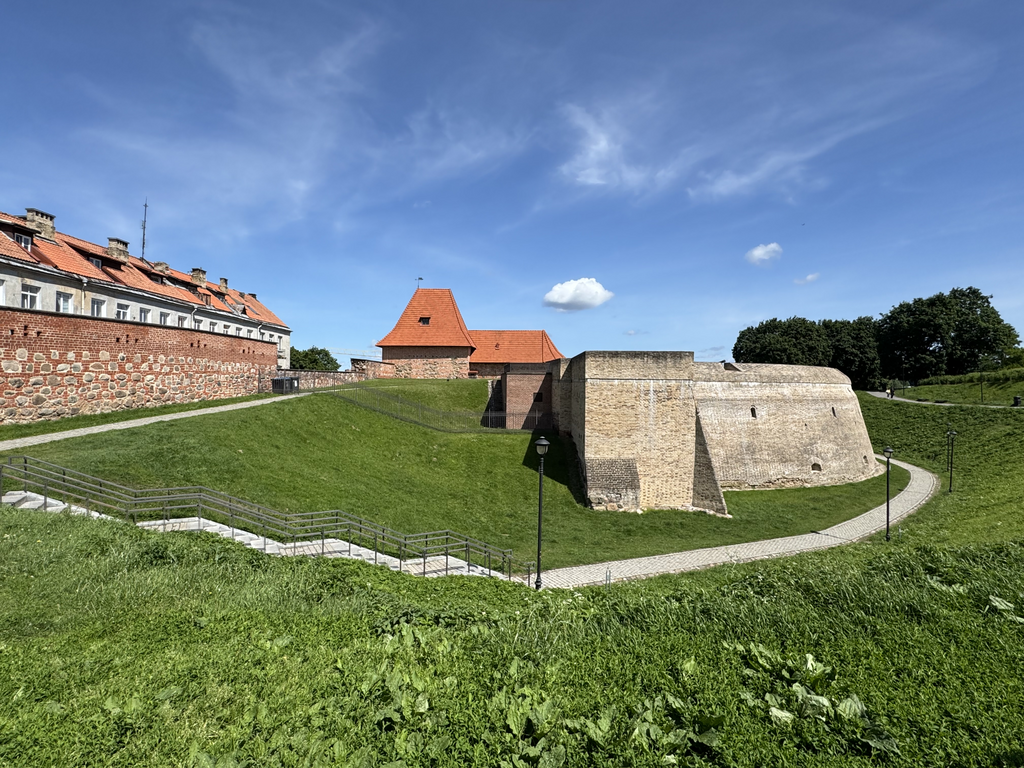
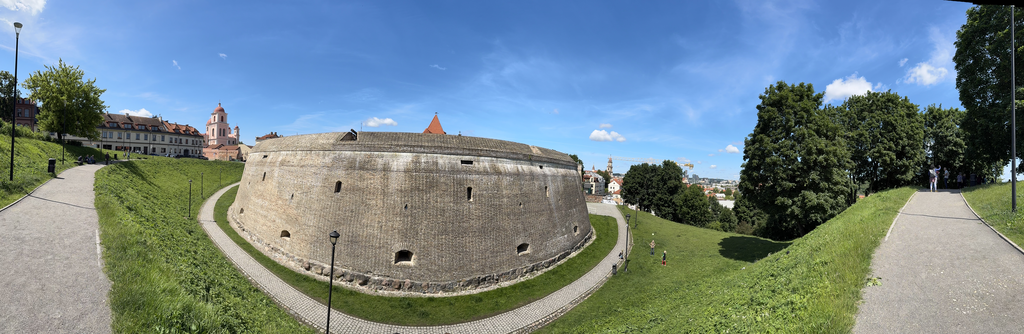
Day before Midsummer Rain, rain, go away??? Andrius regaled us with interesting facts about Vilnius and Lithuania: there is a bust of Lennon next to the hotel, and somewhere in old town there is a tribute to Frank Zappa. In addition, Louis Armstrong is almost an adopted son. As a young boy, he worked for a Jewish Lithuanian family who bought him his first trumpet. Armstrong apparently spoke Yiddish. Andrius also shared some facts about his youth. It was 1988, and the smell of freedom from USSR was in the air. Instead of compulsory military service in the soviet army, he went to Georgia to study Georgian and Hebrew, he was going to be a translator. According to him, there were about 50 applicants for each spot at the university. He was there for eighteen months He is proud of his country and of Vilnius (gleefully telling us that Vilnius has surpassed the population of Riga by a few people!) It is an old city, UNESCO for cultural and natural heritage, with much bustling. Unlike the outskirts of Tallinn and Riga, the soviet block buildings have been removed and new skyscrapers rise. There is definitely enough rubble of the old soviet state around because one of the experiences offered on Air BnB is a walking tour that highlights the old next to the new. For the morning, a change in itinerary. We will get on the bikes and have a short biking tour of Old Vilnius and then go out to the ancient capital of Lithuania at Trakai. The rain is dreary, and the ride is miserable on cobblestones, but it was also beautiful and very informative. The buildings are baroque, mostly built in the 16th century. So many churches! The old walled city was big, but except for one tower, nothing of the old wall remains. It is sobering to learn that there were two ghettoes set up by the Nazis. No concentration camps were ever built. Jews, Lithuanians and others were simply marched to the edge of town and shot and their bodies left to decompose. In 1943, when the Nazis realized that the world will find out about their atrocities, they sent able-bodied Jewish men to burn the pits and mix the remains with ash. These men dug a tunnel through the stench and decomposition, and eight men escaped, and through them, the story of the atrocities. It was also in Lithuania that the Japanese vice-consul in Kaunas, Chiune Sugihara, issued thousands of transit visas to escaping Polish Refugees and to Lithuanian Jews to travel through Russia to Japan and points beyond in 1940 and 1941 ahead of the German occupation. So much history, building and culture here. I am overwhelmed by it all. And suddenly, a travel portal appears, and we are waving to sunny Dublin and Lubin. So cool! Then we pass an electronic pylon with a joke and Andrius translates: How many programmers does it take to change a lightbulb??? None. It is a hardware problem. And just like that, I am back in the present. Trakai Trakai is a reconstructed castle located on an island, the entire area is now a national park. Built in the 1320s, Grand Duke Gediminas enlarged the area of Lithuania so it pretty much formed a barrier from the Baltic Sea to the Black Sea. He had tartars, karaide (Judaic group who came as his guards), and Jews all living together. He did not convert to Christianity, but did allow Christian monks. Savvy fellow, bet on many fronts and saved them from the Livornians from the West and Ottomans from the East. The castle and keep are reconstructed, but done in a very thoughtful way. I appreciated the informative displays of how they rebuilt the walls after figuring out which brick shapes to manufacture. Then had archaeologists and architects draw up detailed plans. We had a choice of boating around the island, but this was better (maybe not for the Brits who have seen lots of castles). Honestly though, I have not seen castles presented like this in my travels. They are usually structures that have been continuously occupied or in ruins. Dinner last night was at a Georgian restaurant. The food was delicious, and Andrius ordered a sharing meal of roasted Eggplant, a cheese pizza with no sauce and a canoe shaped flat bread with high sides where you break off the ends of the bowl to use it aggressively to mix egg and cheese mixture in the center. There were also mega pork soup dumplings. Lunch today are pastis filled with various meat and vegetable fillings. Tradition of the Karaides. The last supper is at a Lithuanian restaurant, where we had fried bread and cheese sauce with an herbal drink served in an ice shot glass called 999. There are potatoes everywhere. I ordered a Chicken Kiev in solidarity with Ukraine. Celine (Montreal) had collected the tips from everyone, and John (British Columbia) attorney gave a nice speech and presented Andrius with one of John's own Jerseys (washed of course). The meal ended with a nice shot of mead.


Last Day: Tour of Vilnius

Day 13: 2025-06-21 1726


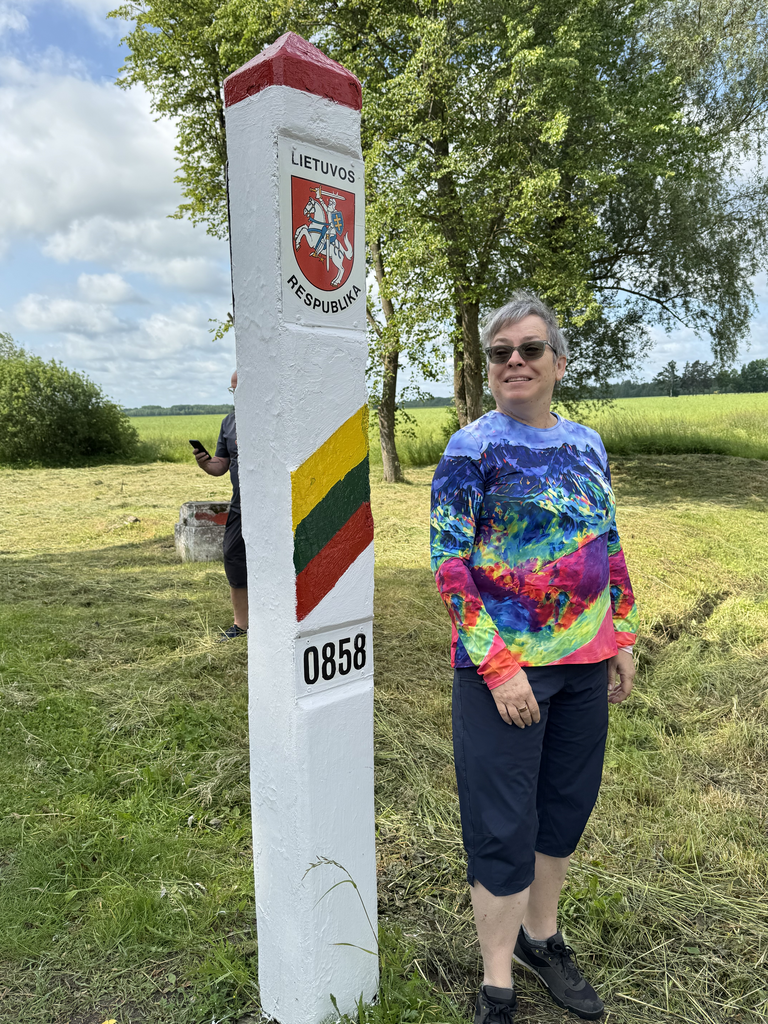
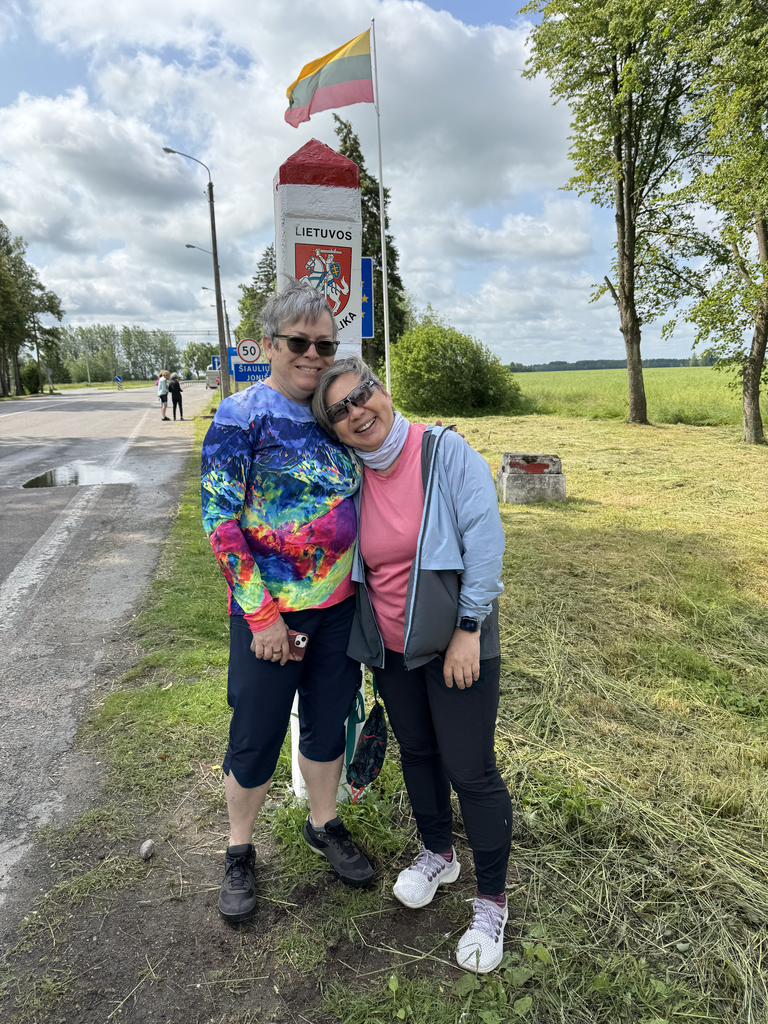
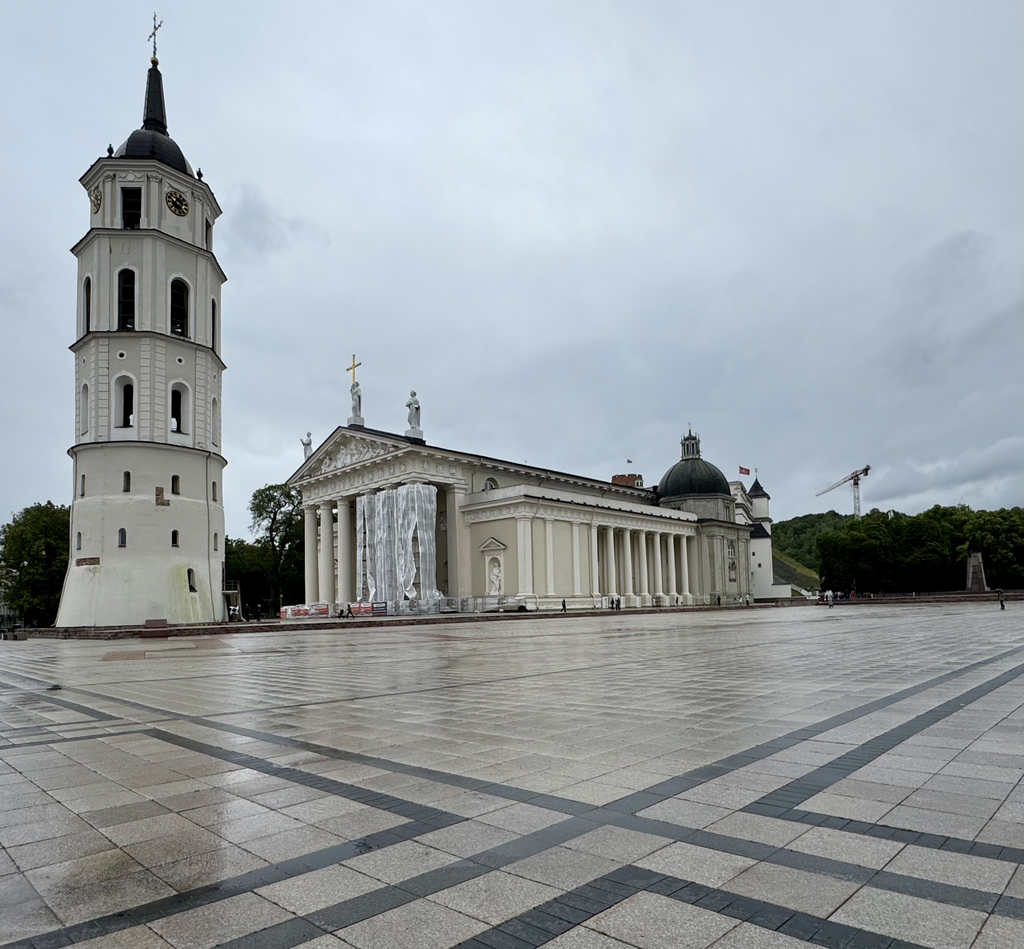
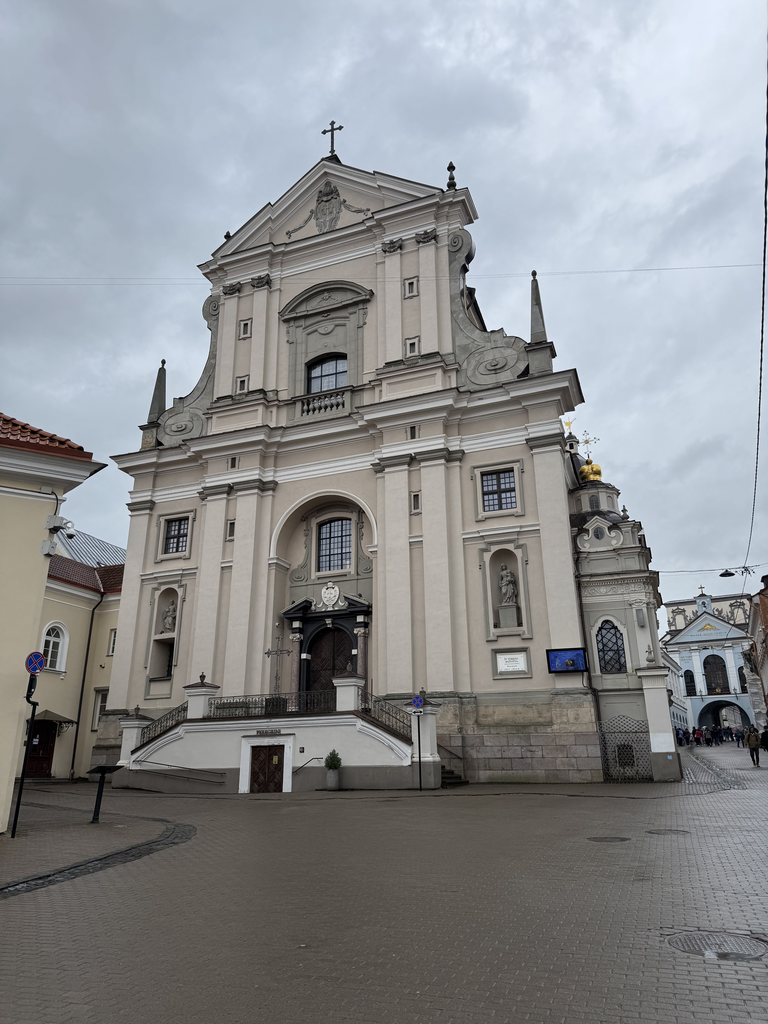
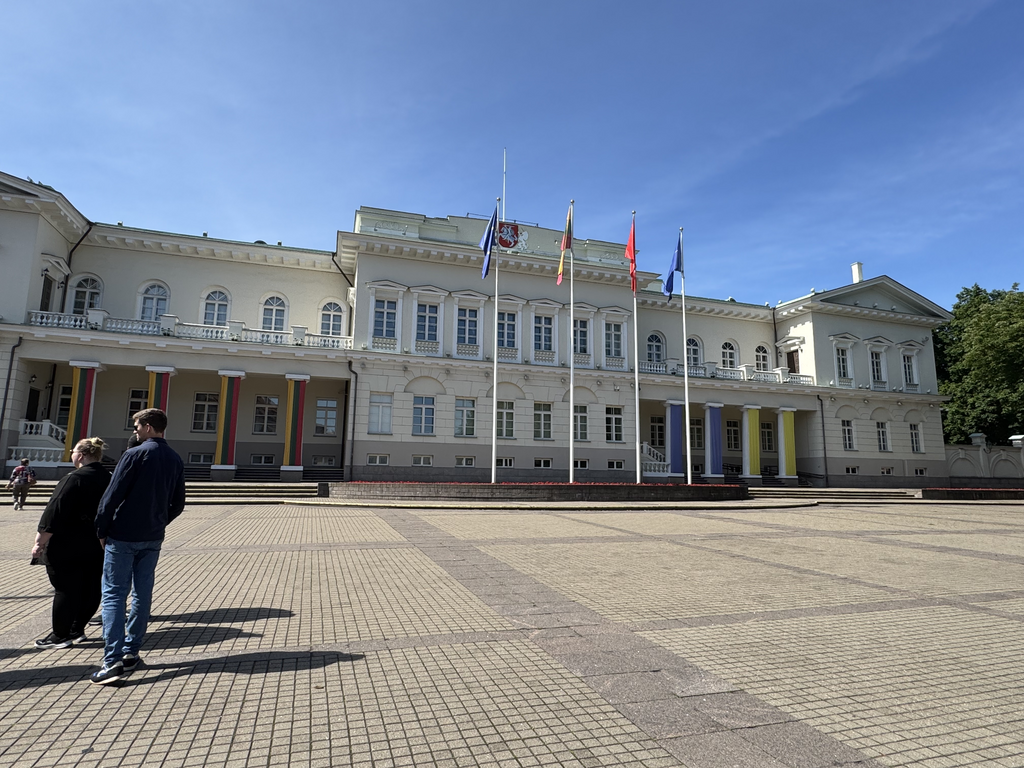
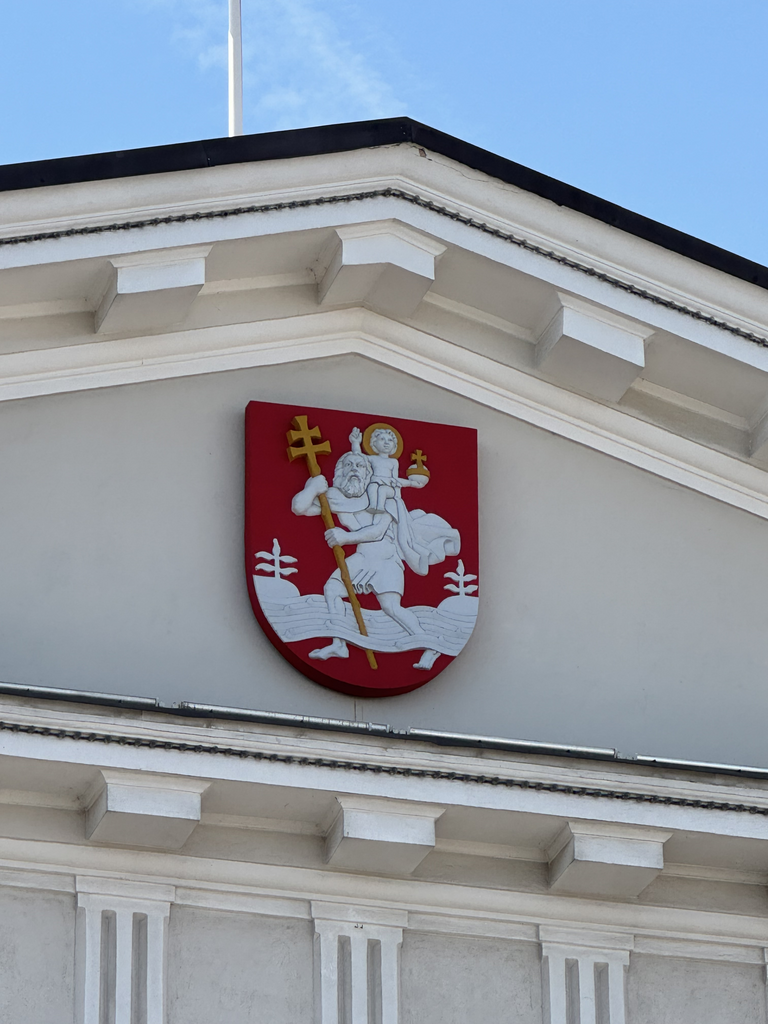
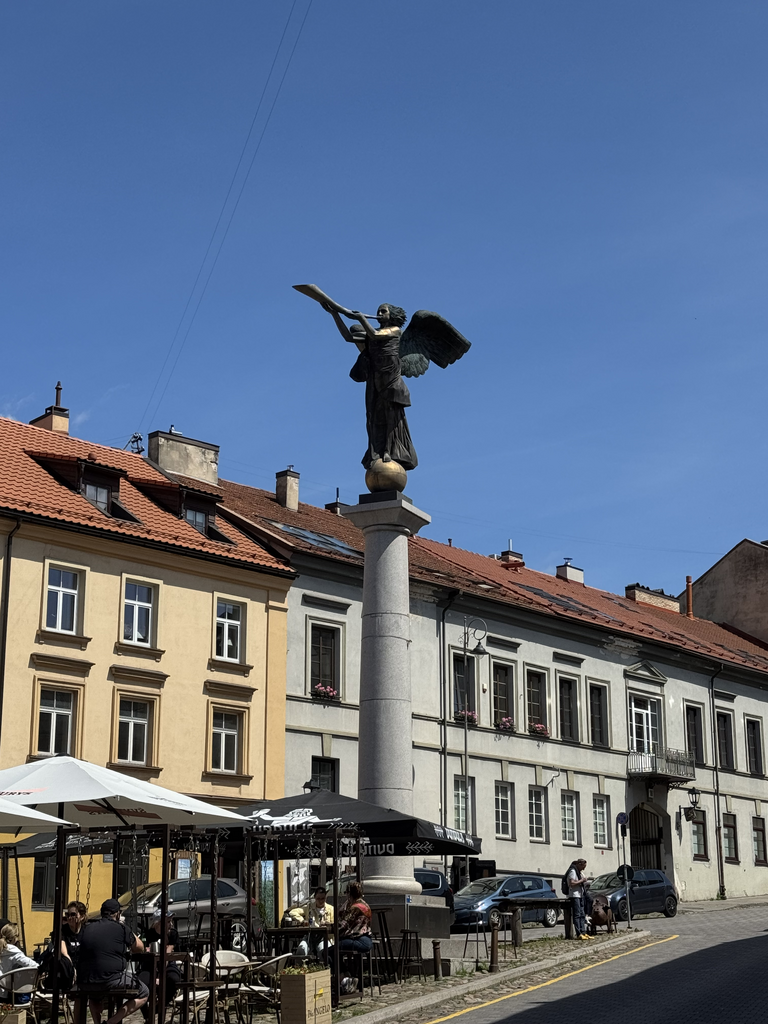
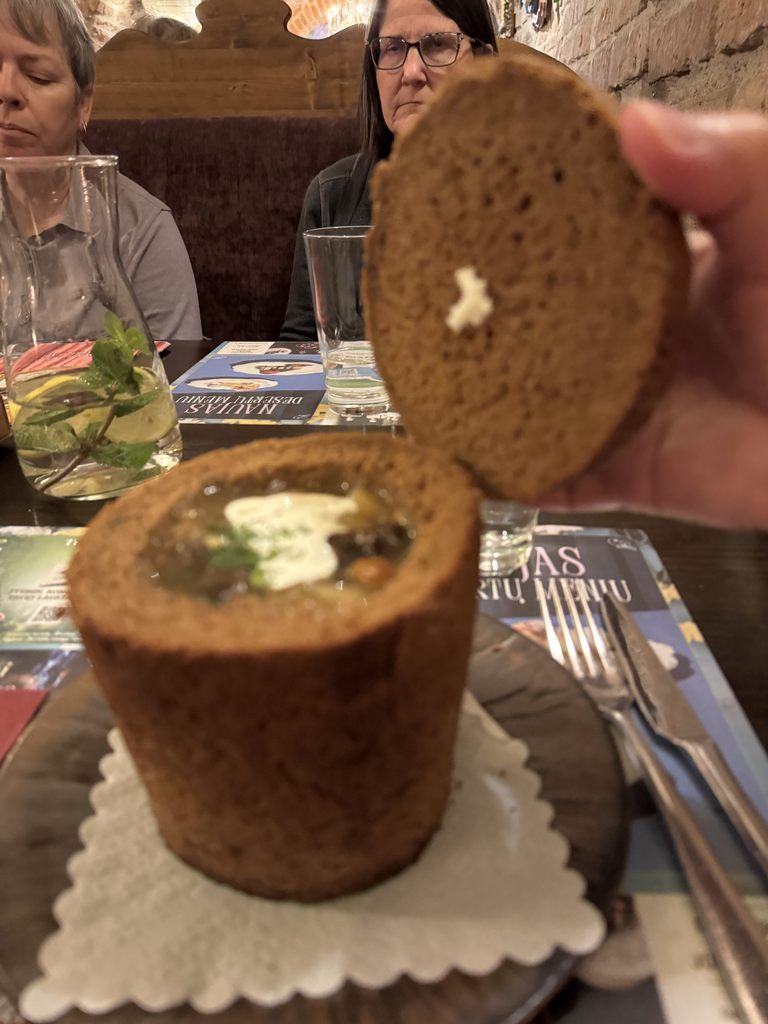
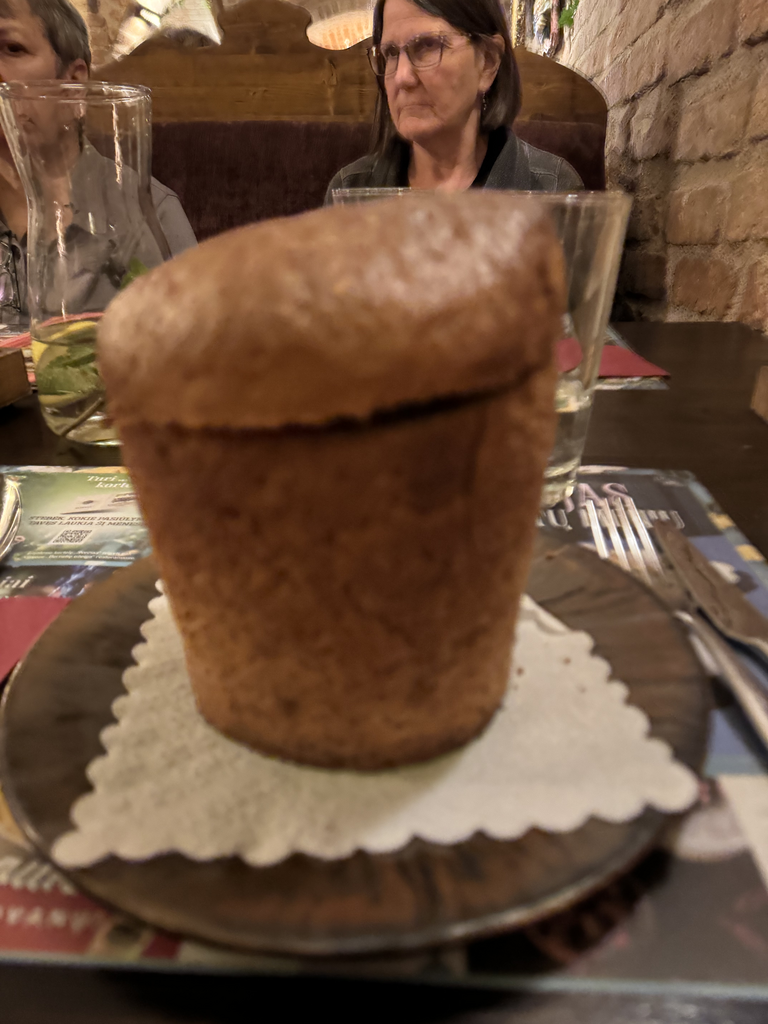
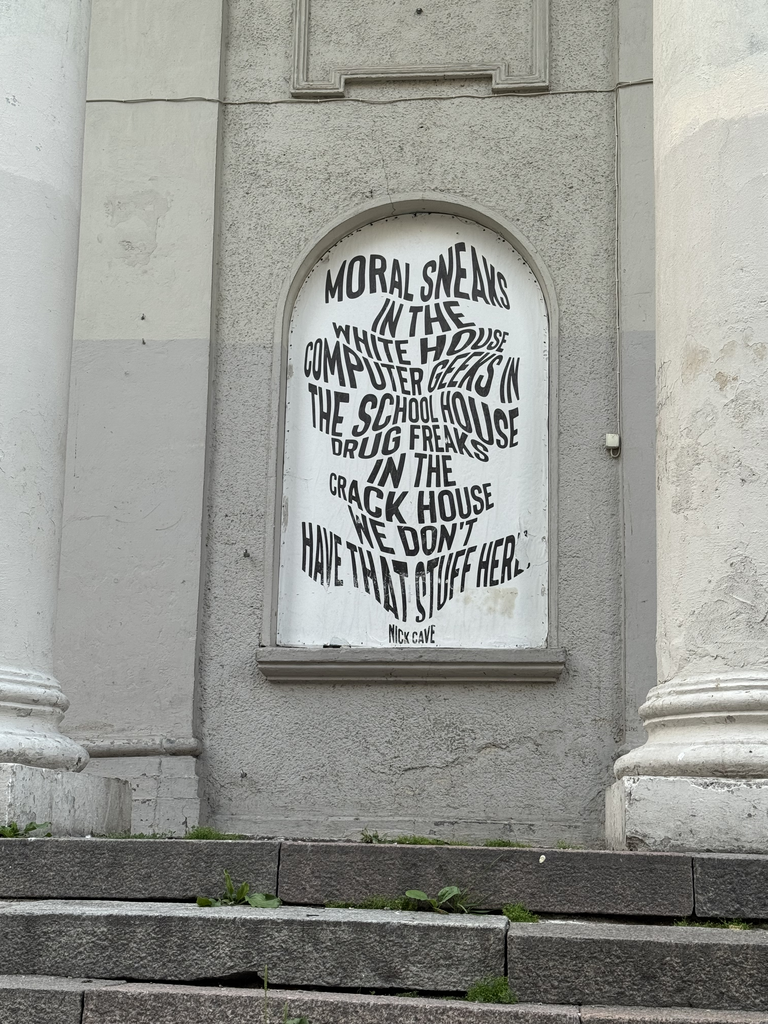
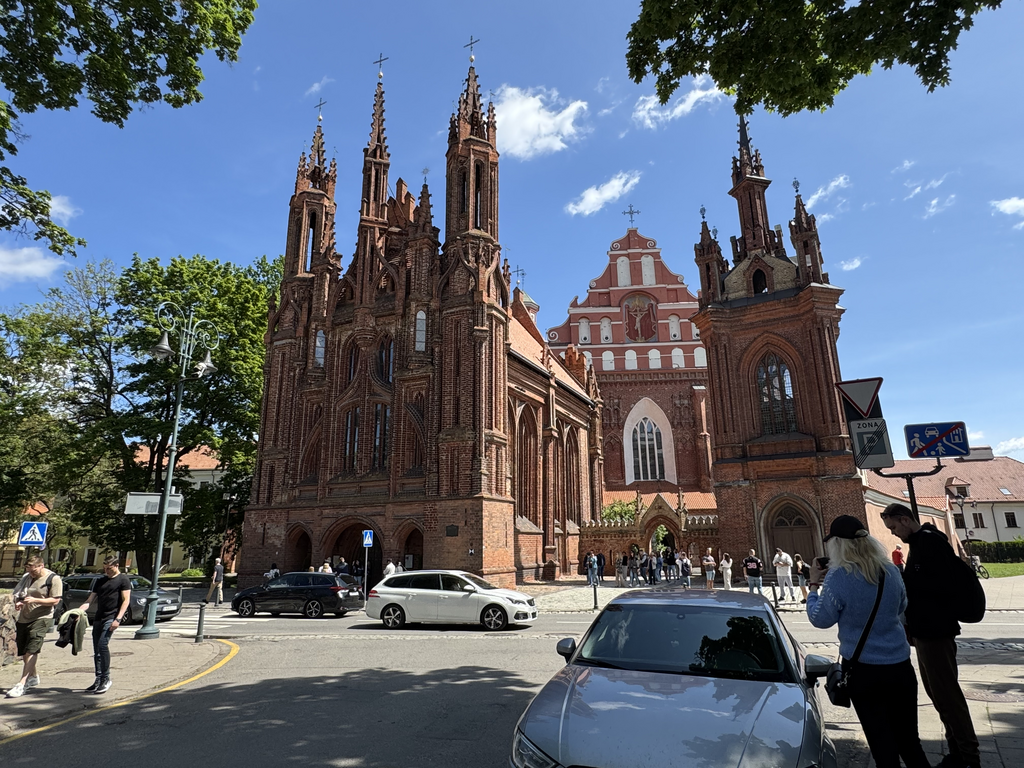
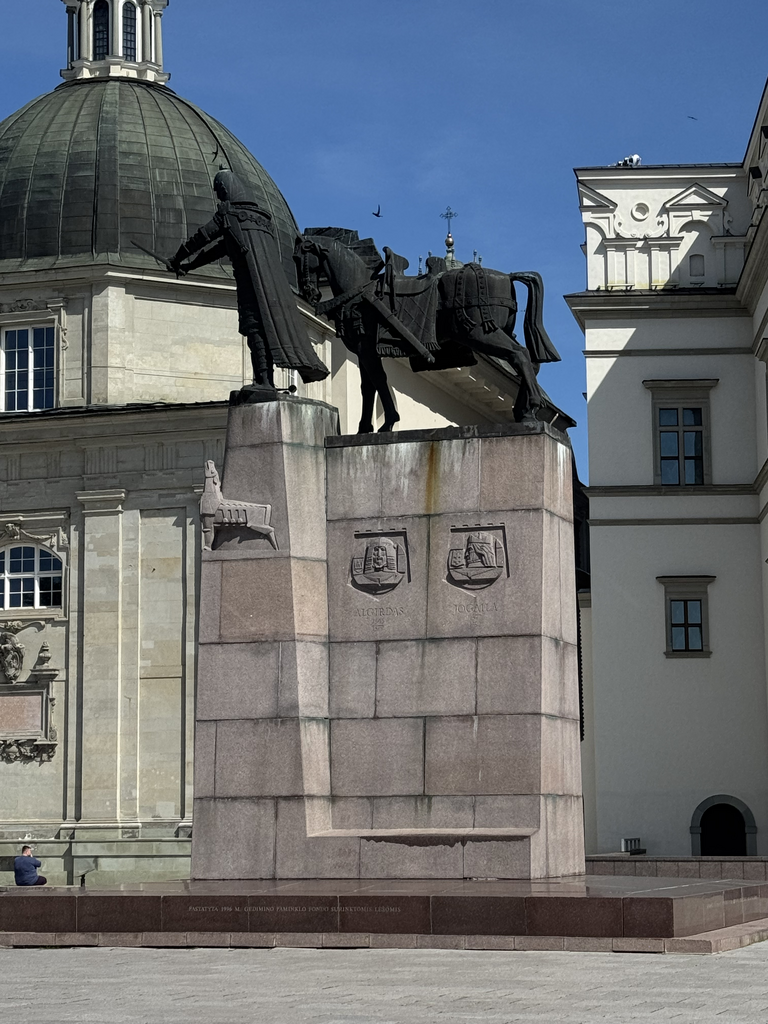
Last night was bittersweet knowing many folks are going home today. The breakfast club: Don, Amy, myself and Jackie show up shortly after 7, but the rest of the group (minus those that took off first thing in the morning) trickle in after 8. Lots of good-byes and goodwill. I had booked a 2.5 hour of Vilnius on Airbnb. It is a free walking tour, and you pay the guides at the end anywhere from ten to twenty euros. Don joins us for the morning walk. We meet the guide at the statue of the grand duke, who founded Vilnius because he dreamed of a pack of iron wolves. Look at the statue carefully and you will see the wolf. We cover many of the places Andrius took us on the bike tour, but this time, it is slower, more leisurely tour. We see the presidential palace from the front instead of the back. Note the Ukrainian colors, and the absence of guards at the front. This time, we walk through the ghettos that were walled off. The Little ghetto were for the non-working women, children and elderly. It was open for just months. The large ghetto was open for three years. Hundreds of thousands of people died. Before the war, Vilnius was the center of Jewish learning. 96% of the Jews here were killed. After soviet occupation, 125 thousand Lithuanians were forcibly removed to Siberia. The duchy of Lithuania that stretched from sea to sea eventually became parts of Ukraine, Prussia, Russia, and Poland, Germany and the USSR. But in 1988, after the glasnost of Gorbachev, there was hope that the Baltics would be freed from USSR. Lithuania led the way, from here, on October 23,1989. About two million people demonstrated peacefully across the Baltic; folks joined hands, forming a chain, starting in Vilnius. We learned that the average height of Lithuanian men is 185 cm, and 165 cm for women. It is now a Roman Catholic country (note that during Soviet occupation, any religion was a sign of rebellion), but whether Andrius realizes it or not, he did adopt the atheism of the former oppressors. Walking around, one can see that Vilnius is the city of churches. At the end of any road is a church. Many of the churches were repurposed during the occupation, some have reopened as churches. The city is also known as the city of Angels. We walk by throngs of tourists (much better in the rain), many gathered in the portal and we wave to folks in Philadelphia. It is such a simple and beautiful work. The one surprising style of architecture is the Gothic Flemish at the church of St. Anne from the 1500s. We end the day at a modern amber store and Amy, Lisa and Mary buy amber jewelry. The amber in the baltics is from the Eocene 30-40 million years ago vs. Jurassic, which is 100 million years ago. At the last supper, Andrius gave each of us a small bit of unpolished amber to remember Lithuania. The four of us celebrate the end of the trip with a dinner at Augustine, a Michelin bib gourmand restaurant. Two bottles of pink prosecco later, we walk back through the streets of Vilnius, looking at all the ways Lithuanians express themselves, through art, flags, buses that continuously flash "Vilnius heart Ukraine." And their PR department came out with a campaign not too long ago: The G-spot of Europe, When you find it, it is amazing. Some facts: Populations: 2.85 million people; 1.8 million Estonia; 1.3 million Latvia. Paganism - last country to convert to Christianity. Portal cities: Lublin Philadelphia Dublin Vilnius St Kashmir - patron saint of Lithuania Miracle 1 - no sex 2, girl came from the dead Indo european language- Sanskrit, Greek, Latvian Add "as" to the end of the words Labas-Hello Achoo- Thank-you Foods: Cold borscht; Mushroom soup; Fry bread with cheese and garlic;Anything potato and cheese; and the national dish, Cepelinai (yes, a filled, grated, squeezed and boiled potato dish)


Finland and Baltics Final Thoughts

Day 14: 2025-06-22 1727


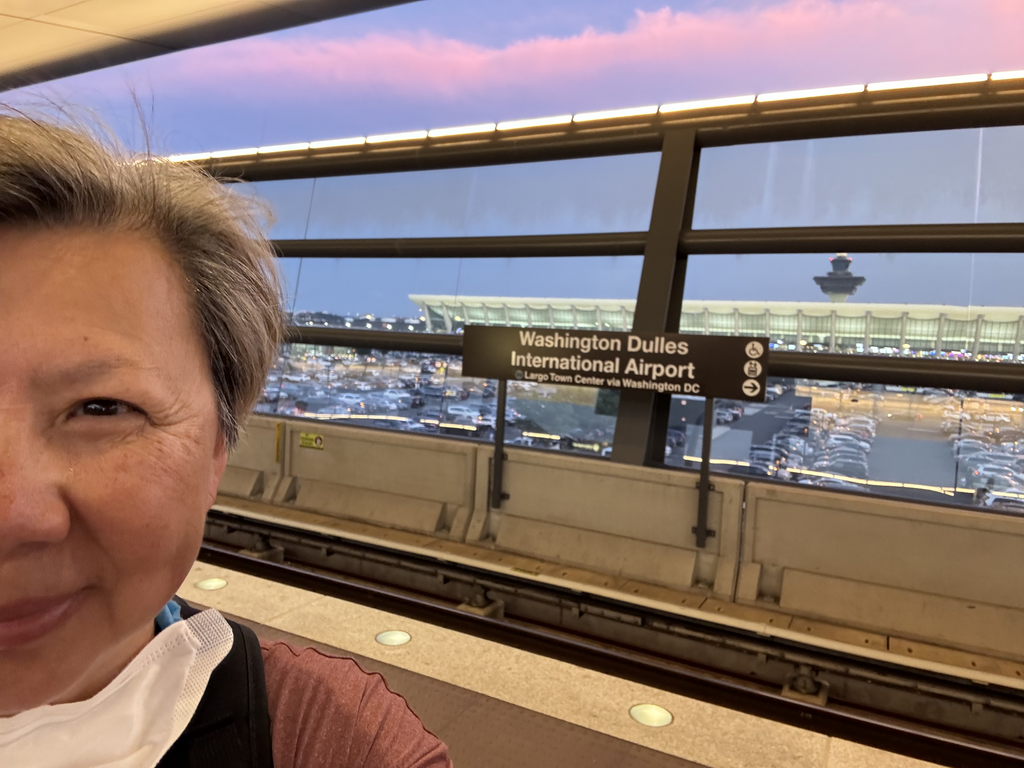
The four of us fly out today on SAS to Copenhagen and then Boston and Dulles. Mary, Lisa and I share an uber there (all of 10 minutes), while Amy takes a bus from center town to the airport for under a dollar. It is Sunday, quiet early morning streets. Mary and Amy alert us to their long wait at passport control in CPH, but they make their connection. Lisa and I are seated at the front of the plane and get off quickly. We land in Terminal D, and take off from Terminal E. Passport control is between the two terminals. It took us three minutes, and even though half the plane had boarded, we walked straight through because we had SAS Plus tickets. The differences with SAS Economy Plus and regular economy are all about priority boarding, checked baggage, and real silverware, one more meal and snacks. The legroom is not as generous as other Economy Plus outfits. Passport control through IAD was quick with Global Entry. We were told to look into a camera and walk through without breaking stride. Lisa normally uses Mobile Passport Control which is also fast, but she had not downloaded it to her phone. The real wait was for the bag, that took a while for Lisa. Here, I bailed on her. Because I was still on Bonine, I took the metro home. I greeted Bill in the waiting area.
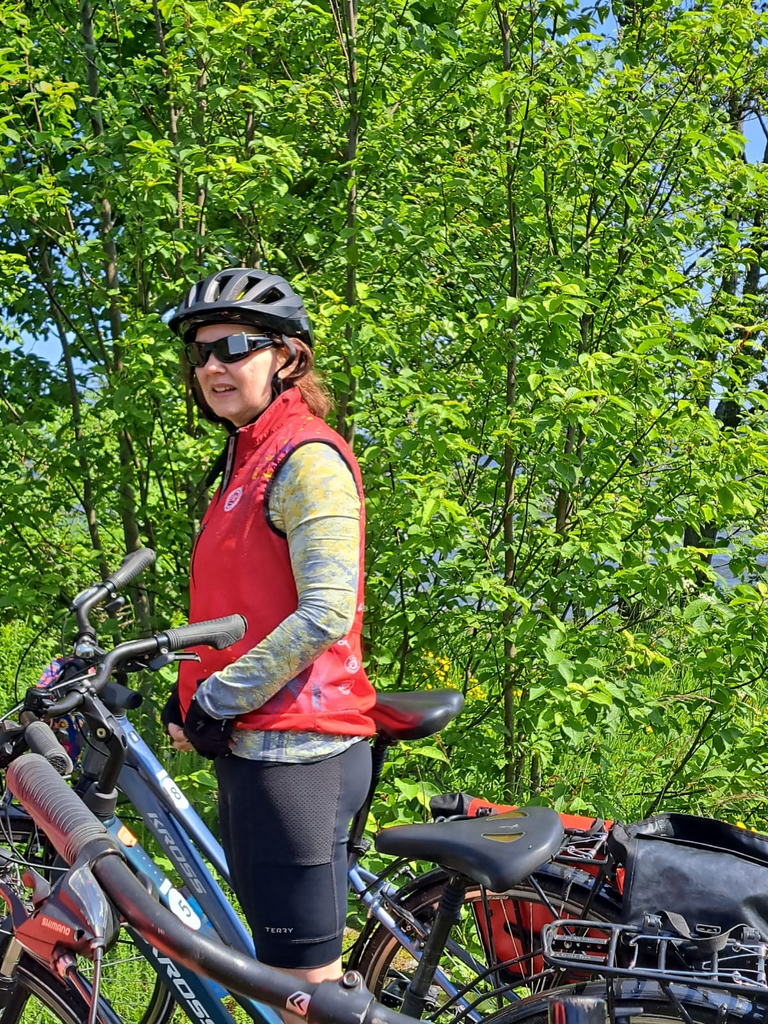
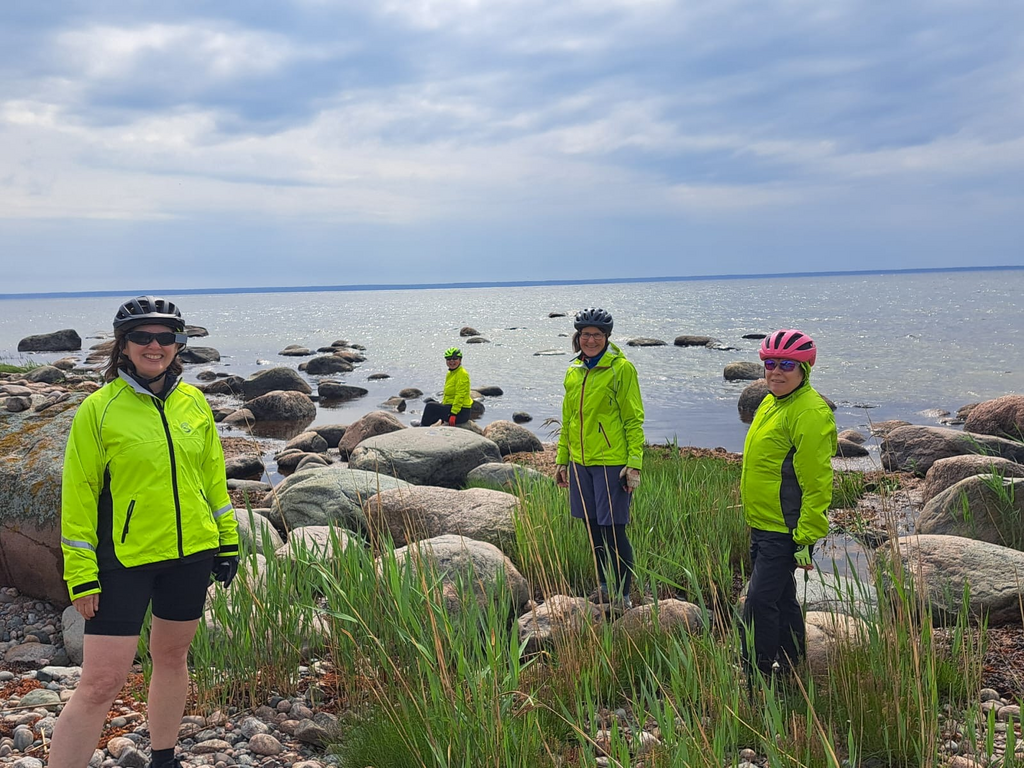
There is a strange symmetry to starting my trip on public transportation, and ending it the same way. We both got home at about the same time.

Addendum

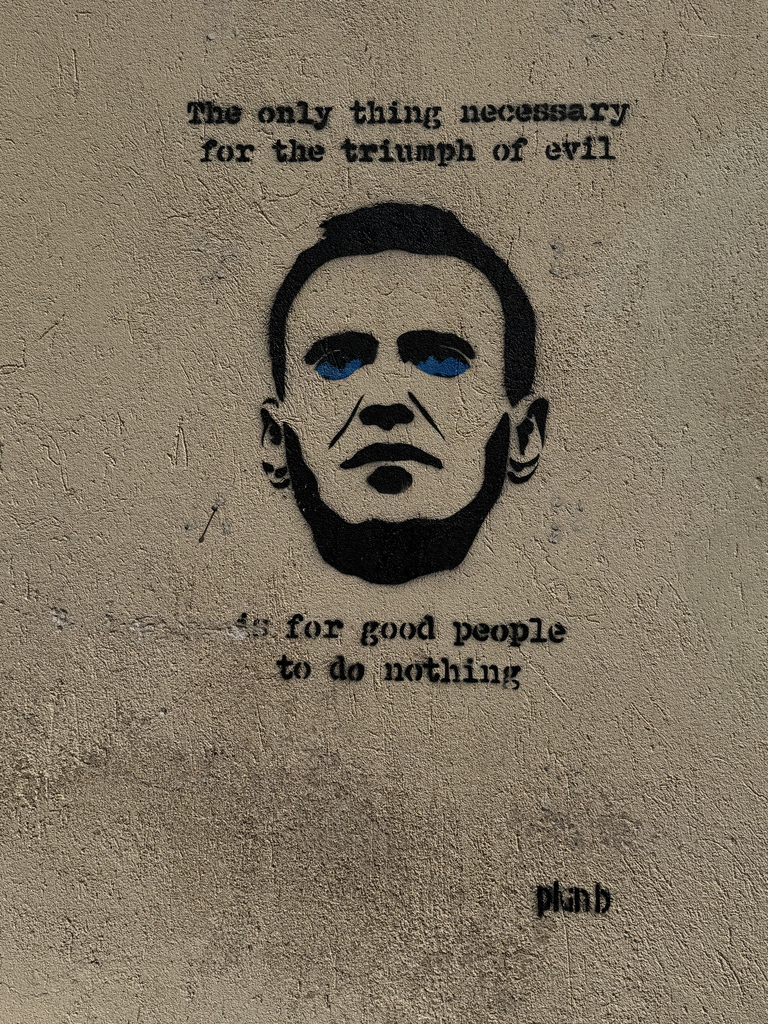
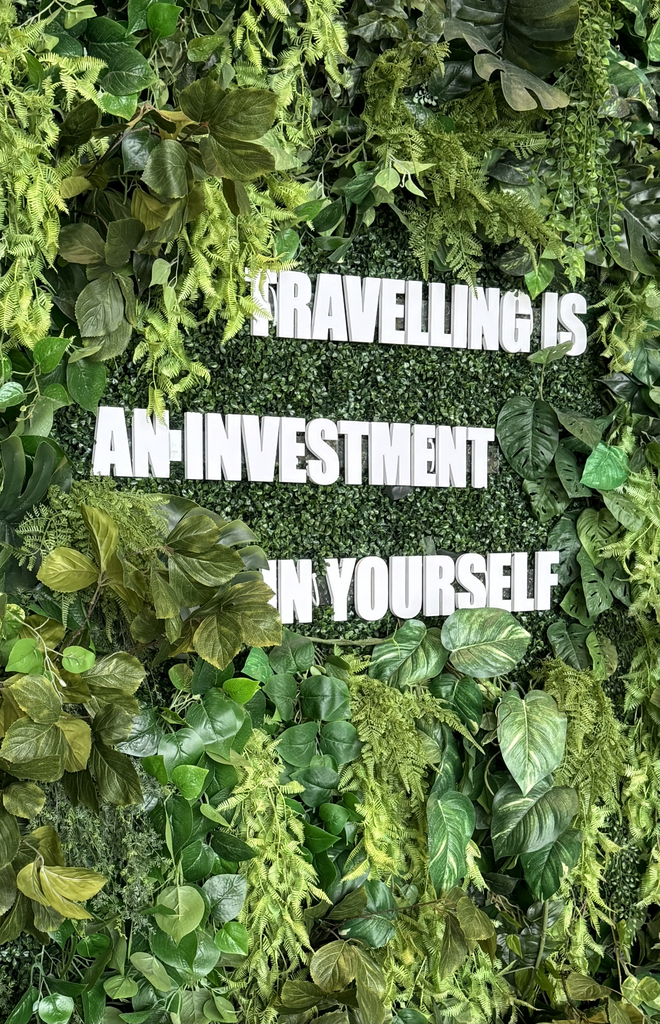
I read through the blog and couldn't help noticing how much was left out. But that is the nature of a daily blog, one can only put down so much after a long day in the saddle and with people. At times, I felt like a slave to this, but in the end, I am glad there is a record of the trip. One thing I come back to is how true the signage in the Tallink Terminal rings: "Traveling is an investment in yourself." I would add that traveling with friends is an even better investment. I am so glad we were able to do it together. Thank-you Amy for inviting me along, and thanks to Mary and Lisa for agreeing to come as well.

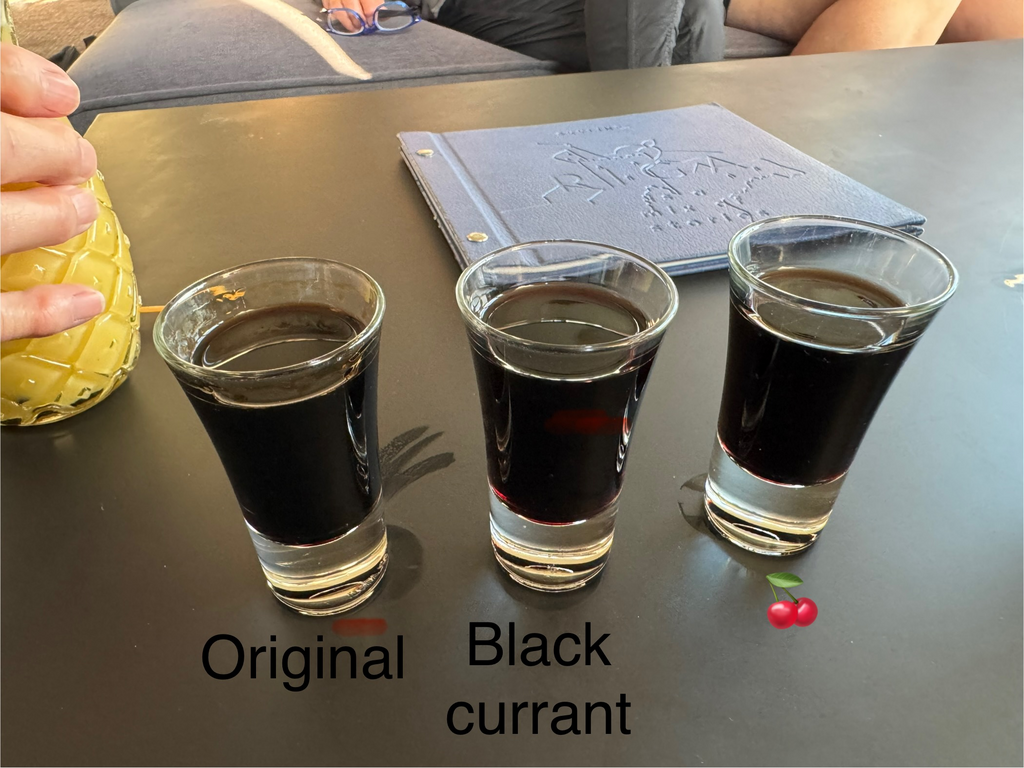
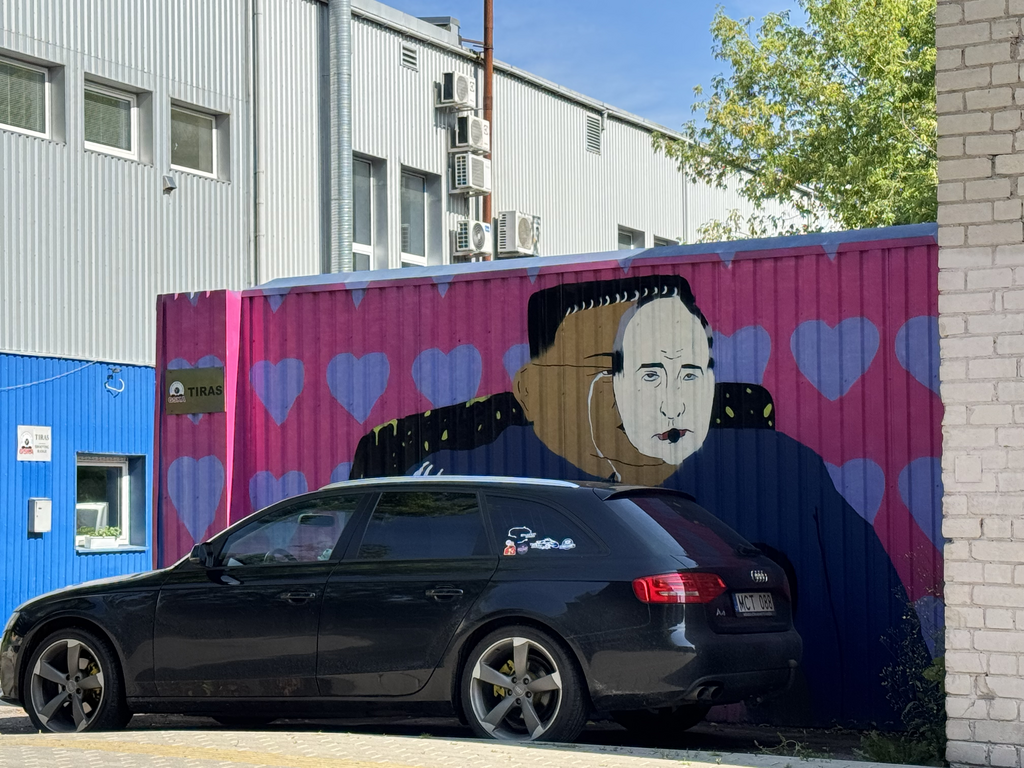
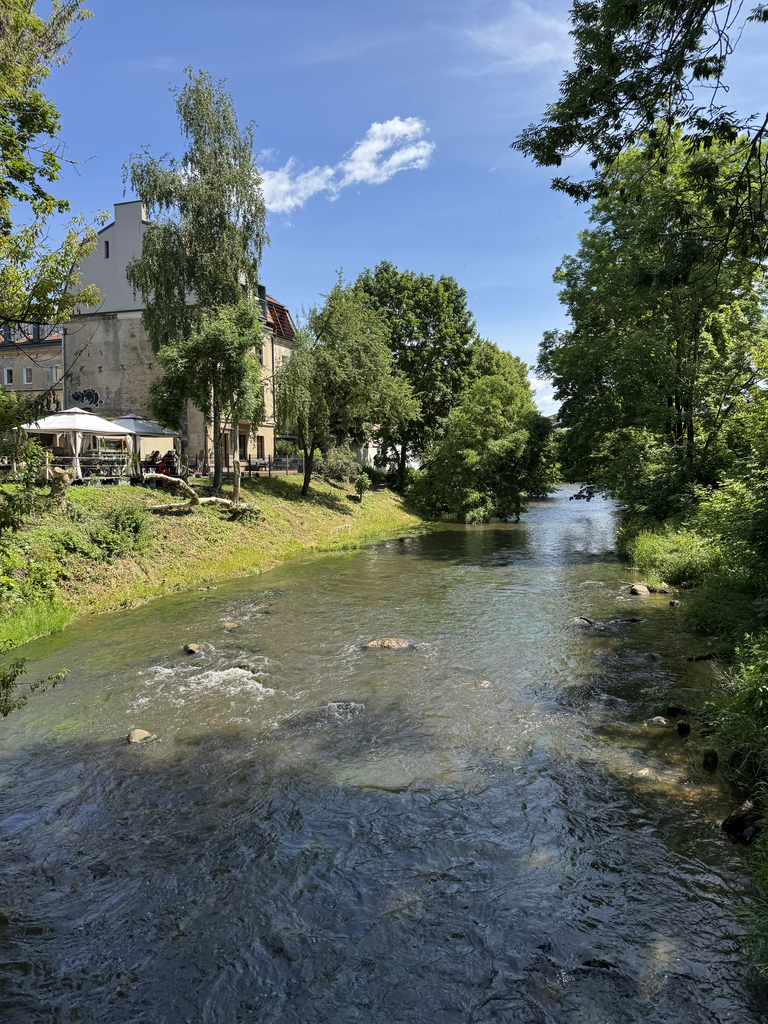
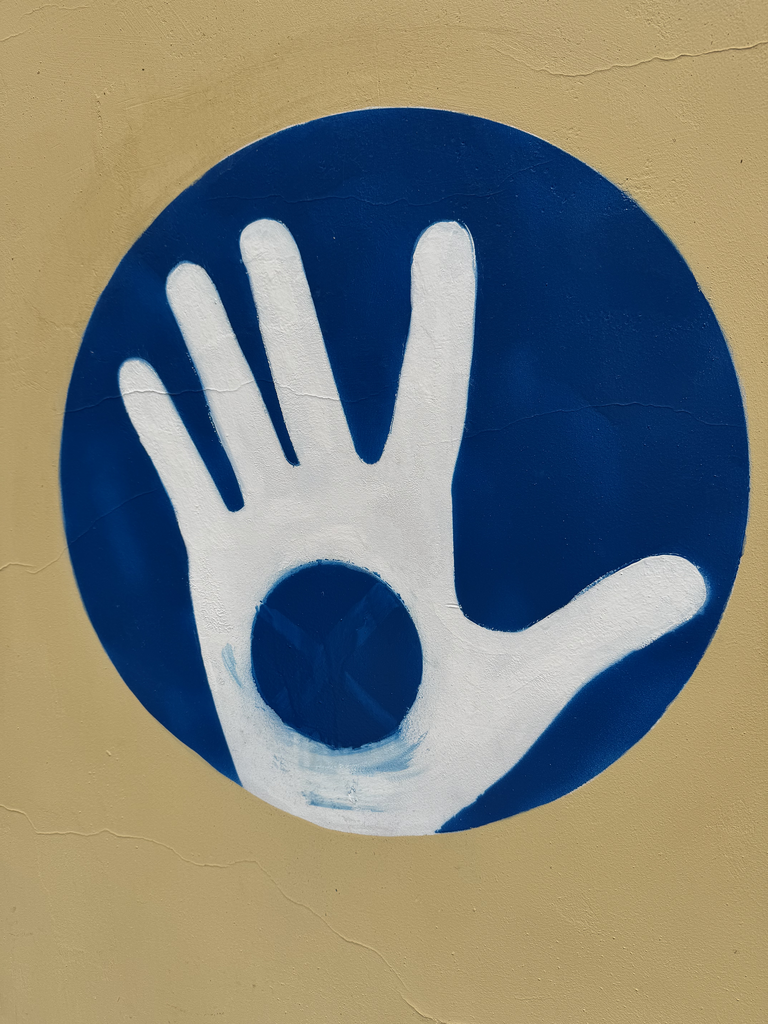
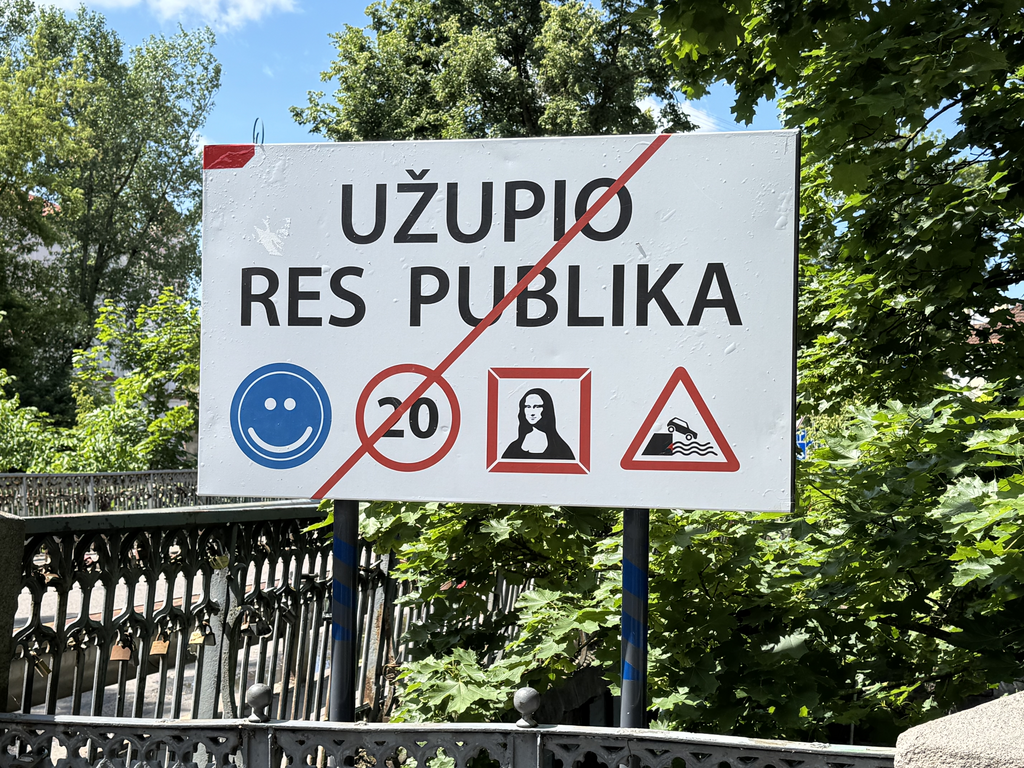
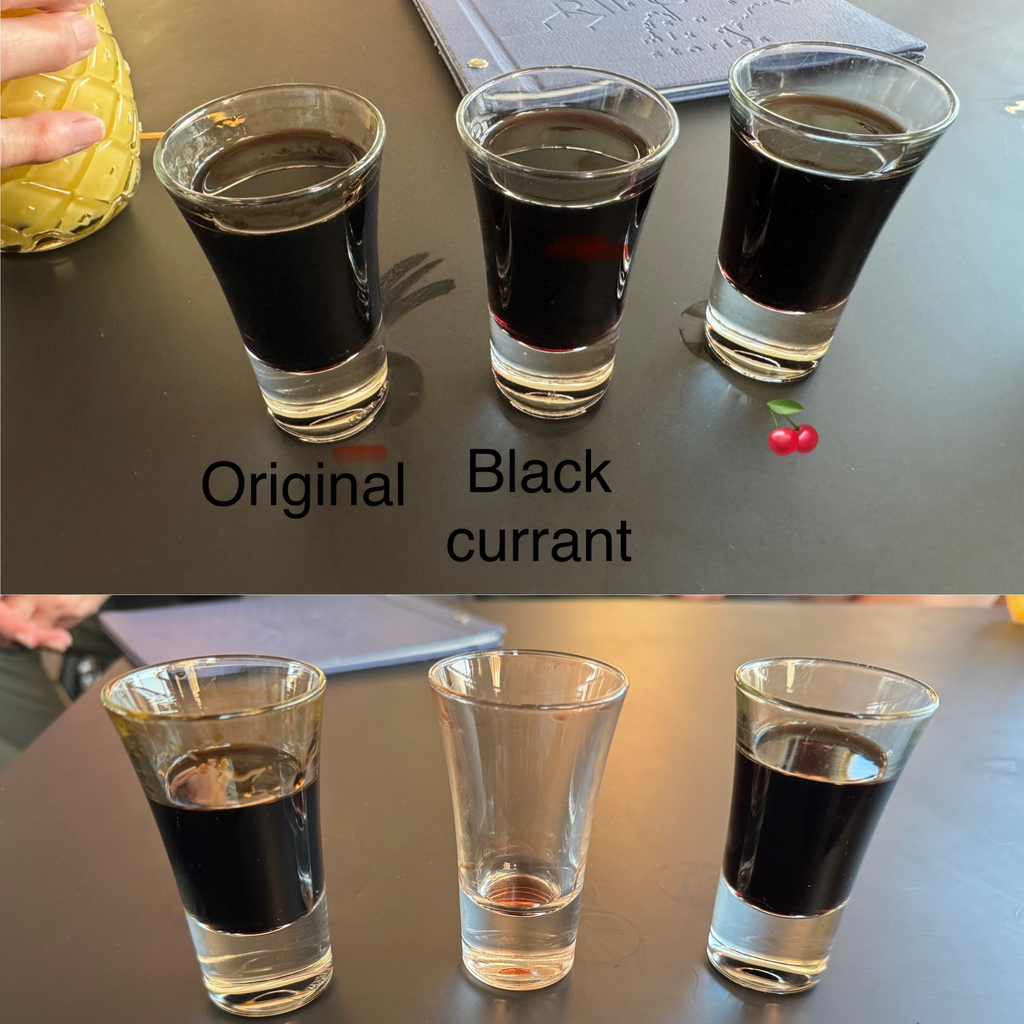
Some unforgettable items to add: 1. The amount of light available just made me happy. Sun not setting until 11 PM is a wonder and the light is so different from home. 2. In many ways, the Baltics have leap-frogged over early technology and jumped straight into the 21st century with contactless payments. The Laundromat in Riga, Smarzo, made it extremely simple to run and use. I was impressed with its efficiency: detergent was added based on the weight of the clothes you are laundering. You select the wash cycle etc from the screen. There was no fiddling with controls, except for the START button. 3. Fearlessness is demonstrated everywhere: in street art, decorations, and even changing street names. In 2022, Vilnius named the street where the Russian Embassy stands. It was unnamed, but now mail will only be delivered to the embassy if the new street name is used: Ukrainian Heroes Street. 5. Centuries of occupation have not dampened their spirit and culture. Case in point: The artistic enclave of Uzupis with it displayed constitution, the art, and the spirit of inclusion. The symbol of Uzupis is the open palm with a hole, symbolizing openness, integrity, not prone to being bought by external forces... 6. In Riga, I tried a sampler of Riga Black Balsam, original flavor, black currant, and cherry. I've included a pic of the result.